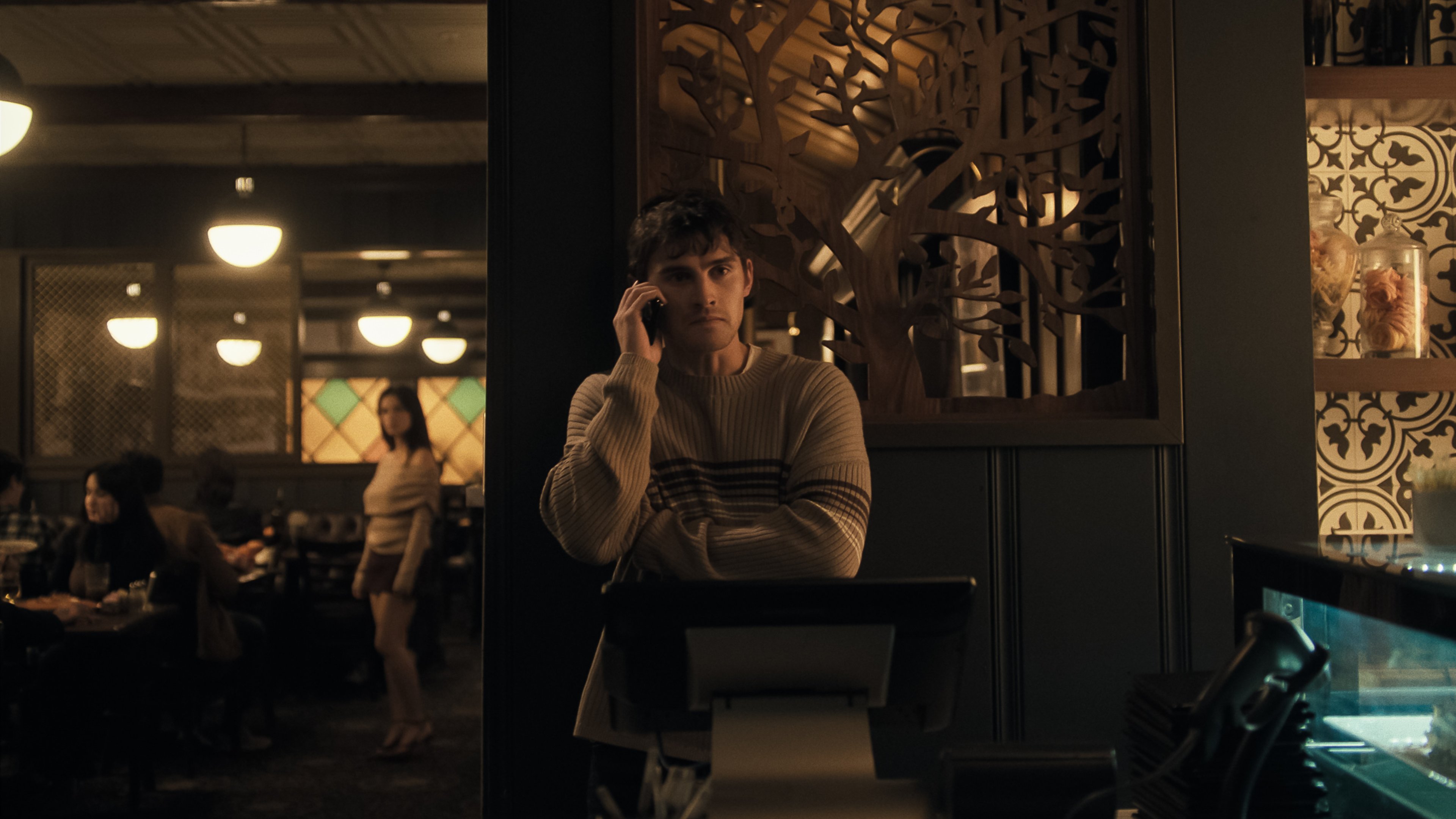
Obsession Cinematographer Looks Beyond the Darkness to What Lies Beneath
Q&A with director of photography Taylor Clemons
In Curry Barker’s Obsession, Bear (Michael Johnston) can’t quite figure out how to tell his co-worker, Nikki (Inde Navarrette), how much he likes her. But with the help of a novelty-store trinket called “One Wish Willow,” his desire becomes a reality, turning his day-to-day life into an unrelenting nightmare and pulling his best friends, Ian (Cooper Tomlinson) and Sarah (Megan Lawless), into his inescapable fate. RogerEbert.com writes, “Barker pulls nothing, getting darker, creepier, and bloodier with each passing scene in this study of extreme dependence.”
To help bring this darkness to light, Barker tapped cinematographer Taylor Clemons. New to the horror genre, Clemons brought his own experience and prowess to look beyond the obvious to find a new way of capturing terror and fear.
We spoke with Clemons about how he brought Barker’s vision to the screen in shooting Obsession.
The official trailer for Obsession
How did you get involved shooting Obsession?
I was living on a sailboat, trekking from Mexico to Costa Rica, when I first chatted with Curry. His producer, Haley Johnson, found me online completely by chance. To this day, I have no idea how she knew I was the right person for the job — we had never met and had zero mutual connections. After I read the screenplay, Curry started telling me what he wanted to do with Obsession. When he asked if I was familiar with Ari Aster and I said no, he was genuinely shocked. He told me I needed to come to LA to see Hereditary together. We watched all of Ari's films, and we had a really long conversation about why he thought they were so powerful. That night I knew I was dealing with a kindred spirit. Curry completely opened my eyes to what horror could be. I’ve been all in with him ever since.
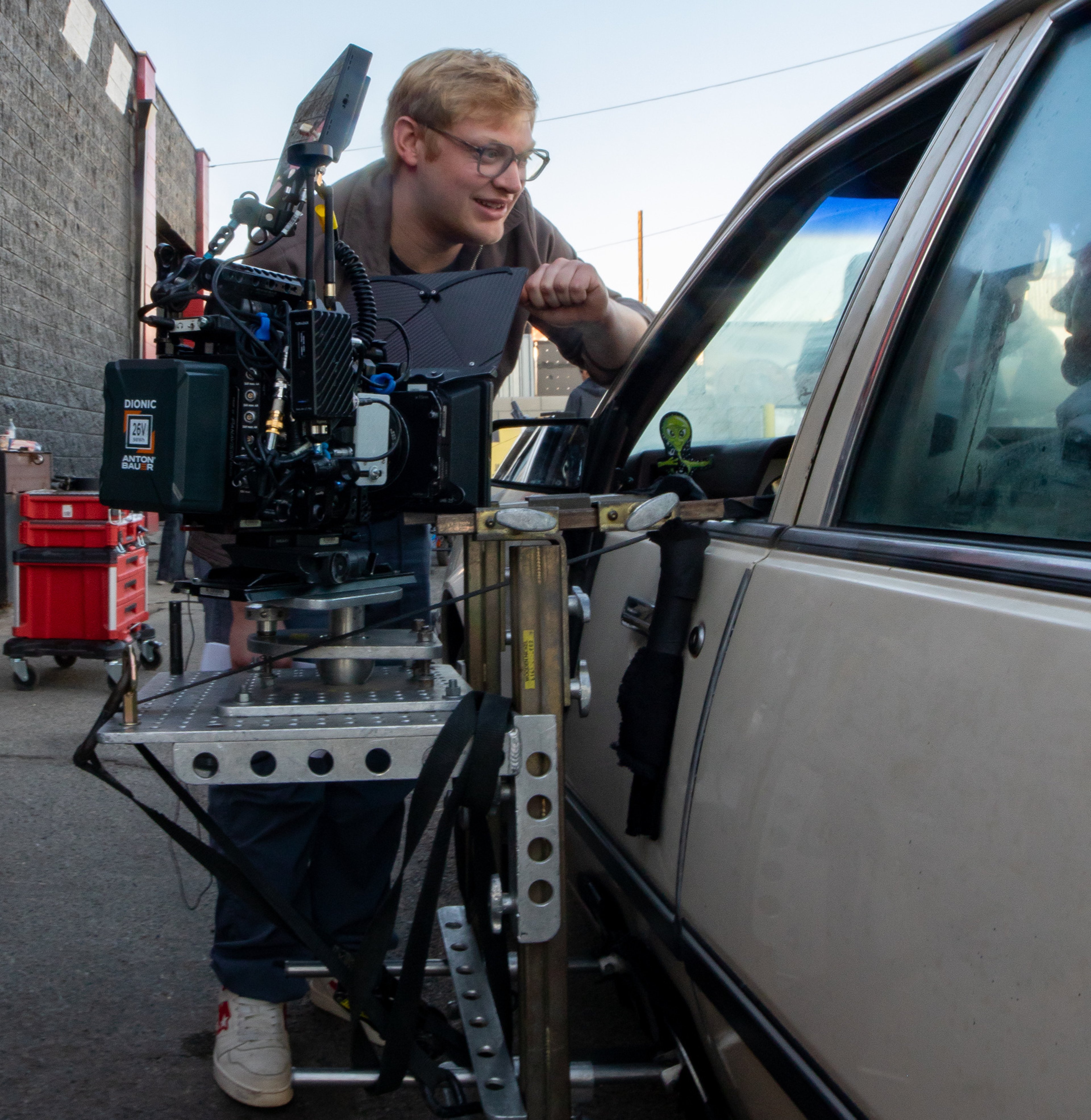
Curry Barker on the set of Obsession
How did you visualize the look of the film?
When I first read the screenplay and started talking with Curry, the process was very different from what I was used to. We never exchanged stills or made reference bibles—which was unusual for me. I’ve always made big visual pitches on other projects, but with this one it immediately felt like we were already too deep inside the details to rely on other people’s images. Instead, we needed to break it down scene by scene. We talked about what it feels like to be trapped in that world with Bear—the dreadful tone, the pace, and how the edit would cut. The look grew organically out of those conversations.
Did you have any other inspiration?
For my own reference, I kept returning to David Fincher’s Se7en. I’ve always loved how risky and oppressive that atmosphere feels. I wanted Obsession to be even darker but with its own distinct language.
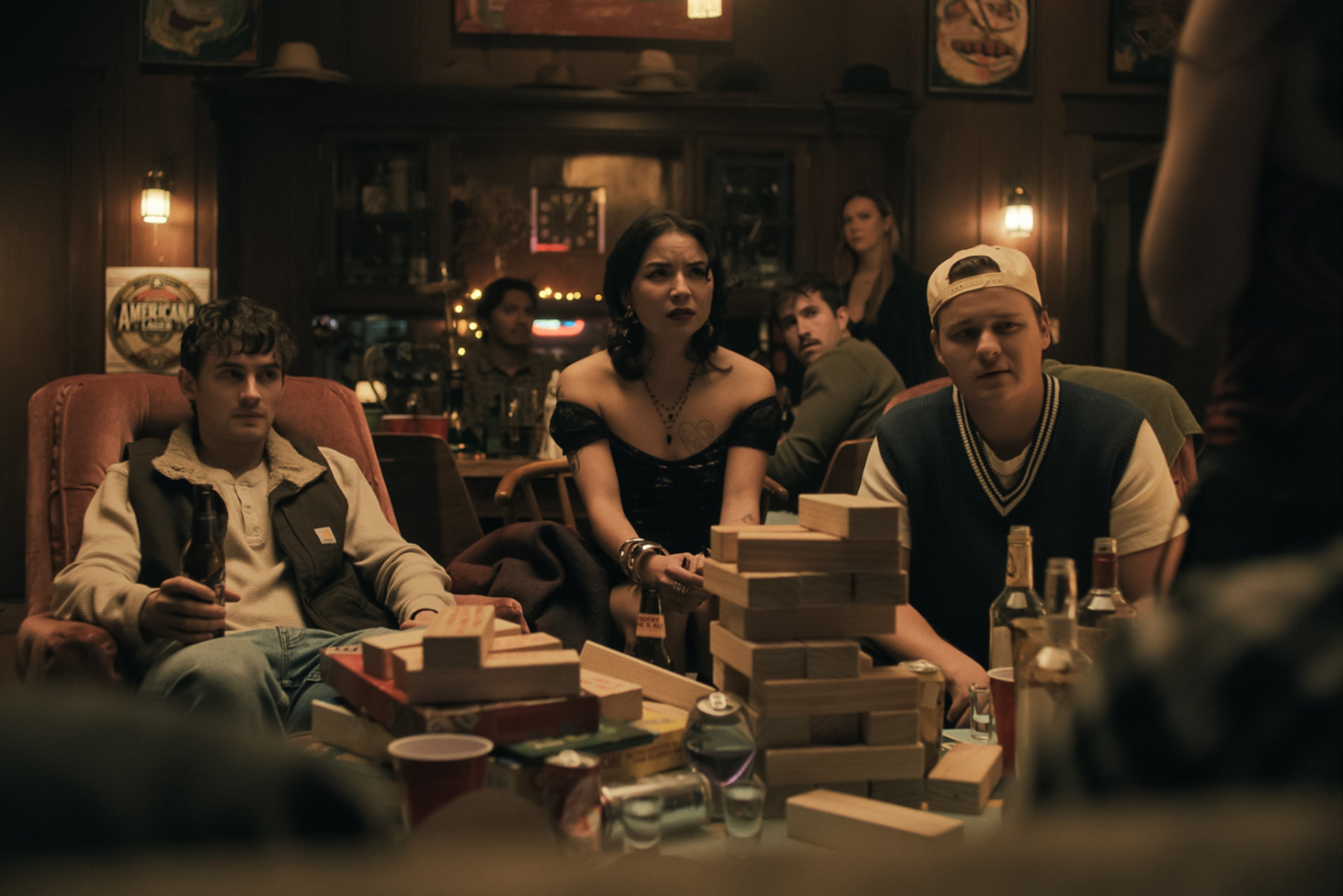
Michael Johnston, Megan Lawless, and Cooper Tomlinson in Obsession
How did you use shadows and dark spaces to compose the frame and set the mood?
I’m really interested in the empty dark space where the mind can fill in the details of a frame. I think the way our static cameras let you sit in that darkness, searching, adds to the anxiety in a way that is deeply felt.
Technically, I pushed way beyond my comfort zone with exposure. There were nights I woke up convinced I’d gone too far, only to check the dailies and keep attacking it even harder the next day. I was completely set on making this world feel as murky and dreadful as possible. I’m so grateful to our gaffer Chris Oh and our DIT Andrew Nibbi—they knew the assignment from the start and kept me brave. For me, in hindsight, what’s more interesting than the vast underexposure of it all is the contrast with the brighter scenes and where they sit in the story. They function as a sort of tension-and-release cycle. They come early on while stakes are being established, or in the music store when the protagonist wonders if things can ever go back to normal. Once we cross the point of no return, the film drags us back into that darkness, and it never really lets us go. This yin-and-yang wasn’t something I mapped out consciously in advance. It came from responding to the material and the spaces we were shooting in. Seeing people at the Toronto Film Festival say the movie was “the scariest thing I’ve ever watched” made me feel we’d struck an interesting balance.
Can you talk about the effect of obscuring Nikki’s face?
The motifs of silhouettes on Nikki were a perfect example of our “less is more” strategy. We shot a lot of those moments in long continuous takes. I think the shadowy shapes almost feel like they could be someone you know. That familiarity mixed with uncertainty is really potent. I give a lot of credit to Curry for showing me how not seeing the thing is actually what’s scary. He used my willingness to push far into the unknown perfectly for this film. I would never have gone this far without him having my back.
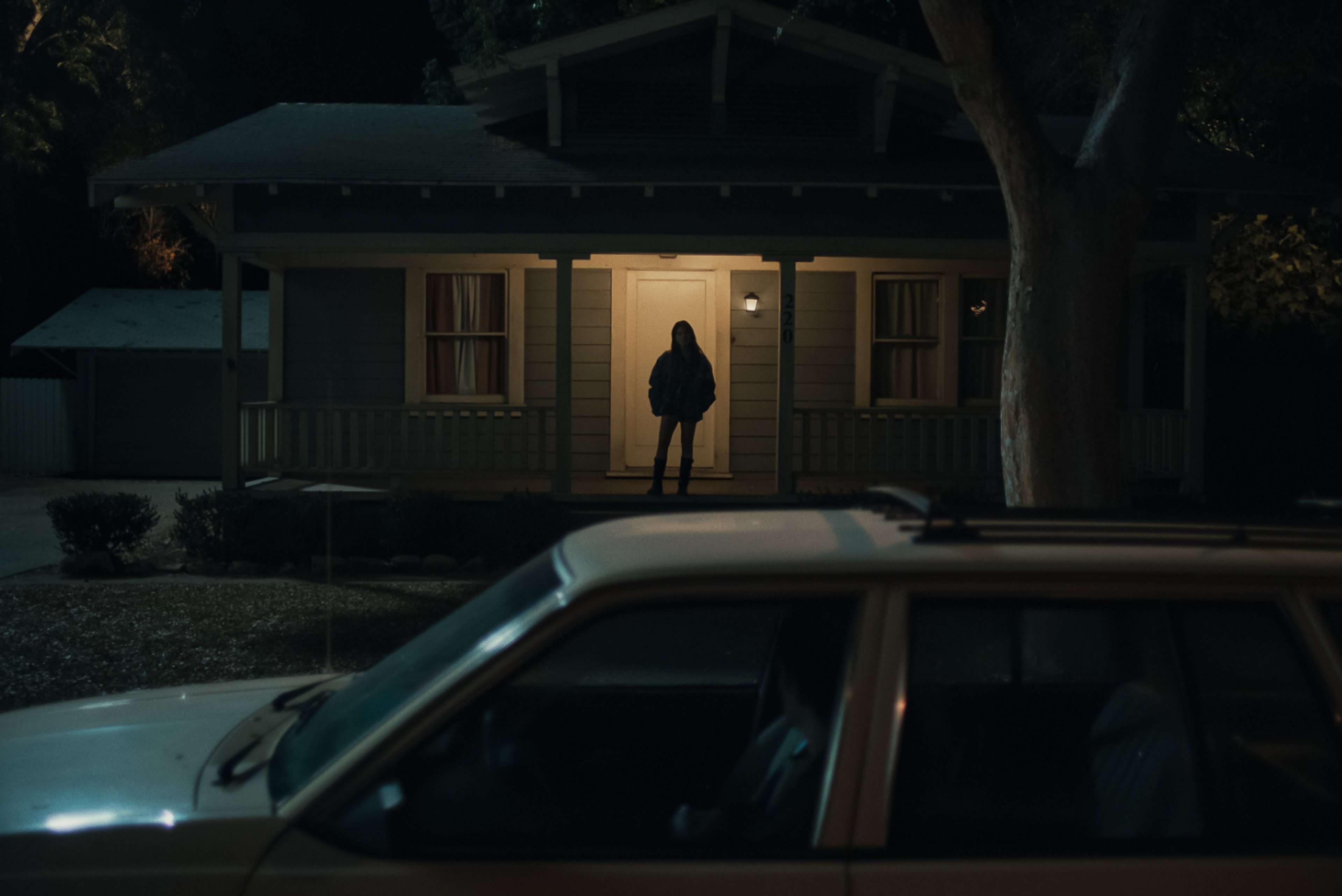
Inde Navarrette in Obsession
What makes shooting horror particularly fun?
This was my first horror film. While I think I had always understood the genre photographically, Curry showed me I could understand it story-wise—first, through Ari Aster’s work, and then, through the scripts he would write and direct. Horror was so freeing for me because I was able to finally see these stories through a much more expressionistic lens, letting go of the more naturalistic style I had often held myself to. For some reason, with a Curry Barker script, I felt I was no longer anchored to what I would expect the world to behave like. The only thing that mattered in the world we were building was keeping at any cost the audience in a specific emotional state for as long as the film lasted. Working with this mindset has been one of the biggest breakthroughs for me as a storyteller.
What do you hope people take away from the film?
I hope the audience feels as uncomfortable watching it as I did making it. We had this belief as a unit that what we were building was art and had purpose. Our crew made this movie what it was, and I’ll never forget how rare that kind of energy is. When you have the right people and the right energy, all the magic is possible.
This interview has been edited and condensed for clarity.
