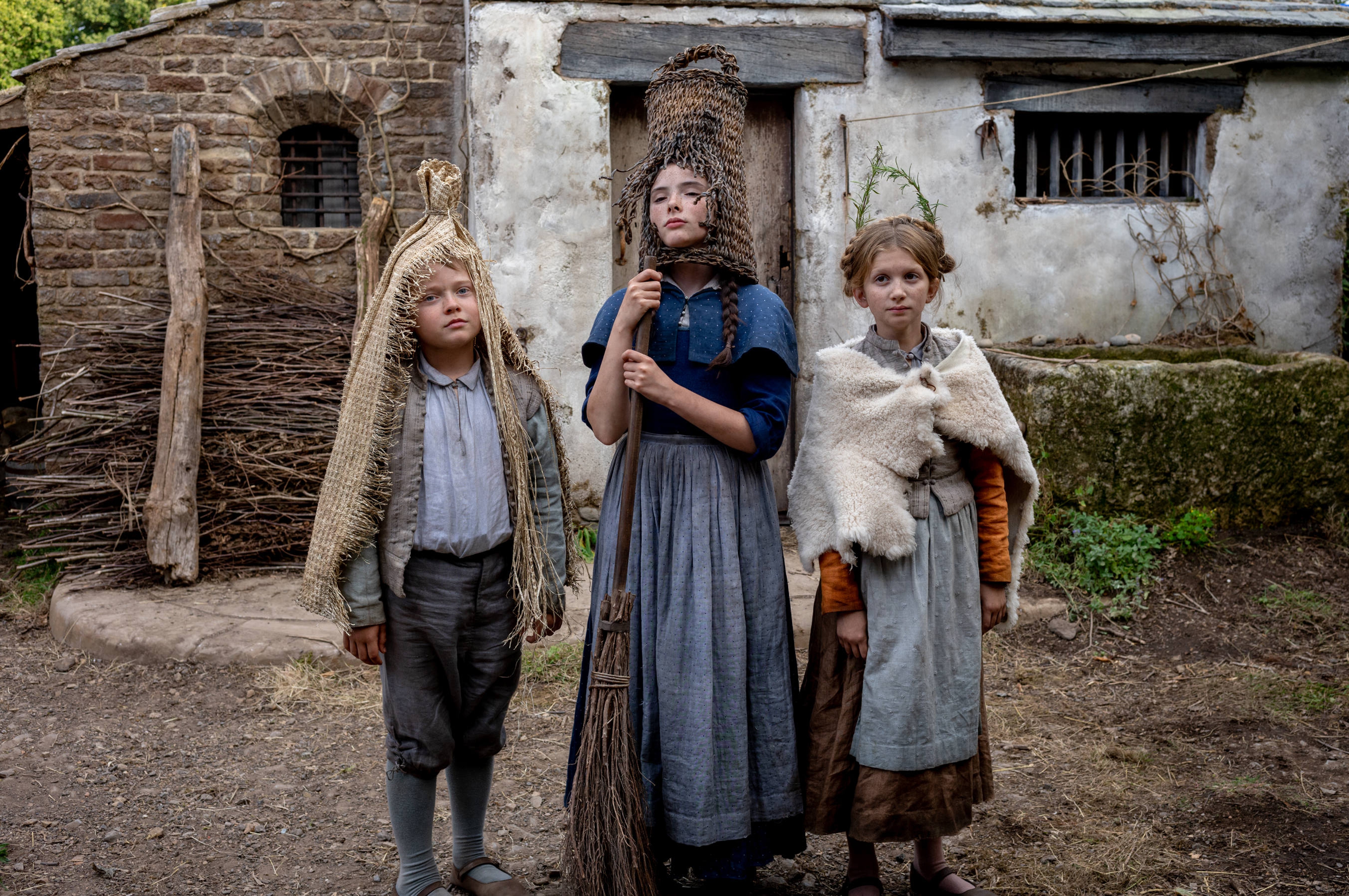
The Emotional Vibrancy Woven into Hamnet’s Costumes
An exclusive Q&A with costume designer Malgosia Turzanska
Chloé Zhao’s Hamnet explores the life of William Shakespeare (Paul Mescal) and his wife, Agnes (Jessie Buckley), unwrapping the remarkable mystery behind the creation of the play Hamlet. Following Will and Agnes’ journey from their young romance to the creation of their family to the heart-breaking events that preceded the creation of Hamlet, the film weaves an emotional tapestry that illustrates the mysterious power of art to challenge and heal.
To stage this period piece with accuracy and dramatic force, Zhao turned to costume designer Malgosia Turzanska. Born and raised in Krakow, Poland, Turzanska received an MFA from New York University’s Tisch School of the Arts, where she met Zhao when they were both students. Working on projects as diverse as the TV series Stranger Things to the medieval adventure The Green Knight, Turzanska has gained a reputation for her innovative and intuitive approach to costuming.
We spoke with Turzanska about her inspiration for the costumes, the use of color in the film, and the film’s powerful message.
The official trailer for Hamnet
How did you get involved working on Hamnet?
Chloé and I both went to NYU and we almost worked together on one of her first movies. When I heard she was working on this project, I reached out to a common friend who put us together. At that point, there was no script. There was just the book. Based on the novel, Hamnet, I made an early lookbook, which was a raw emotional response to the story. After Chloé saw that we were connecting to the book in a similar way, she asked me to be part of the film. I was super thrilled.
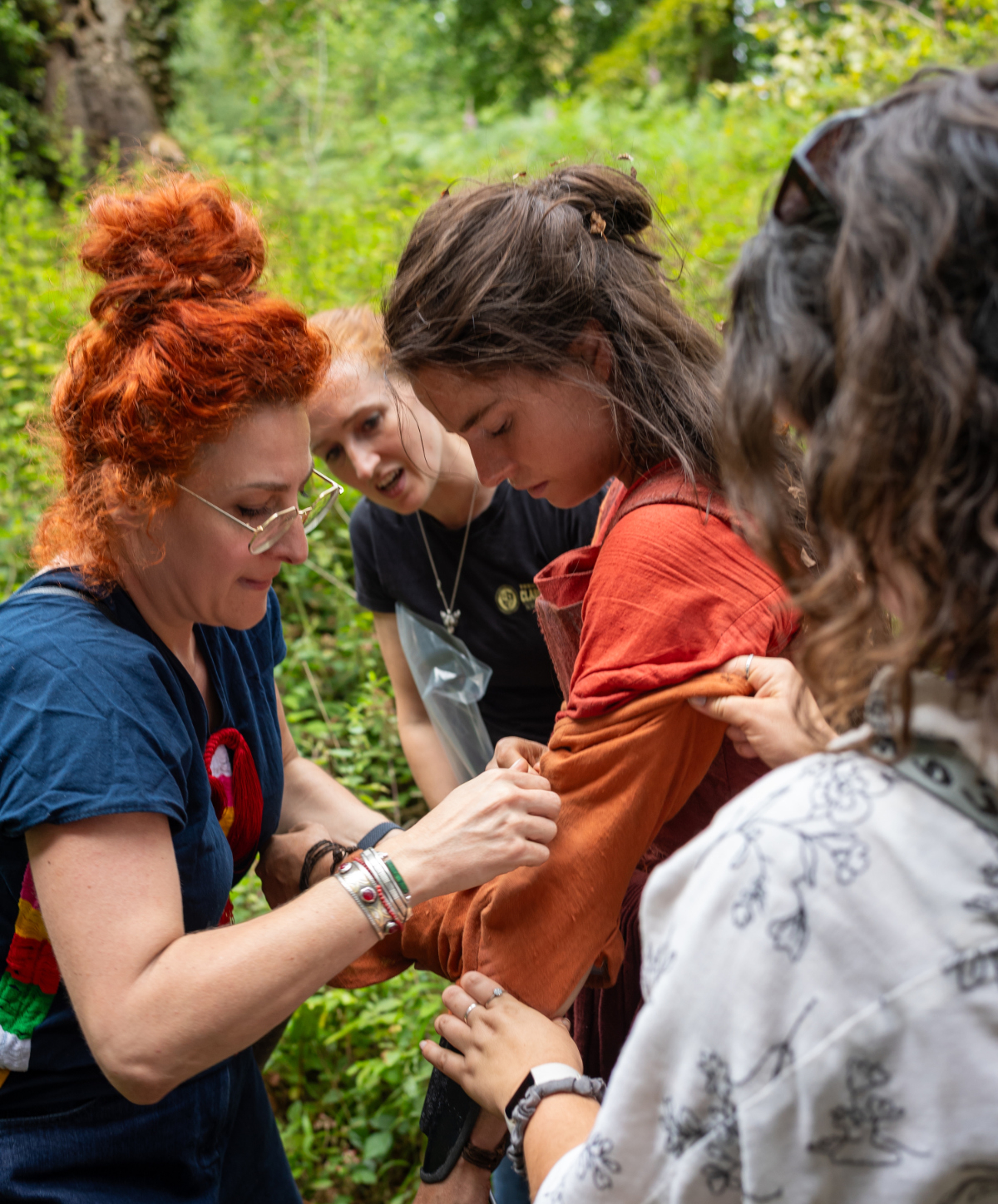
Costume designer Malgosia Turzanska and Jessie Buckley on the set of Hamnet
After you had read the book, what were your initial thoughts about costumes?
I always try to work from the inside out, whether the project is period or contemporary. The interiority of the character comes first. The initial lookbook was a reaction to the main character, Agnes, who is the beating heart of the story. She is so alive when we meet her. I wanted the audience to see her as Will did when he saw her for the first time. Her red dress and her other vibrant colors come from that moment.
We dressed Agnes in bright red and orange linen outfits that gradually evolved as she changed from being a wife, to a mother, then to someone dealing with a tragedy. Her bright red outfit slowly turns a little rusty over time, and then a darker purplish prune. By the end of the movie, however, her clothes get a little bit redder again as her life blood starts to flow back.
What was the costuming concept for Will?
Much of Elizabethan clothing was somewhat modular, so that you can take off parts, like a sleeve, and add it to something else. He has several pieces that are put together in slightly different ways throughout the story. I wanted to use Elizabethan fashion styles to draw attention to his emotional state. For example, the pinking, or slashing, of garments was very prominent. With Will, we first see only a few scratches and tears, but they gradually grow when he moves to London and his life becomes more complicated.
Over the period of the film, Will becomes successful in London. Do we see that change in status in his clothing?
My first response was to give him a larger earring and maybe more opulent clothing. But I remembered how stark it looks when we see him working in a sparse space. There is a line by Joe Alwyn's character, Bartholomew, how a man with the largest house in town is working in this tiny attic room. It made me realize that he didn’t wear his riches. He provided for his family.
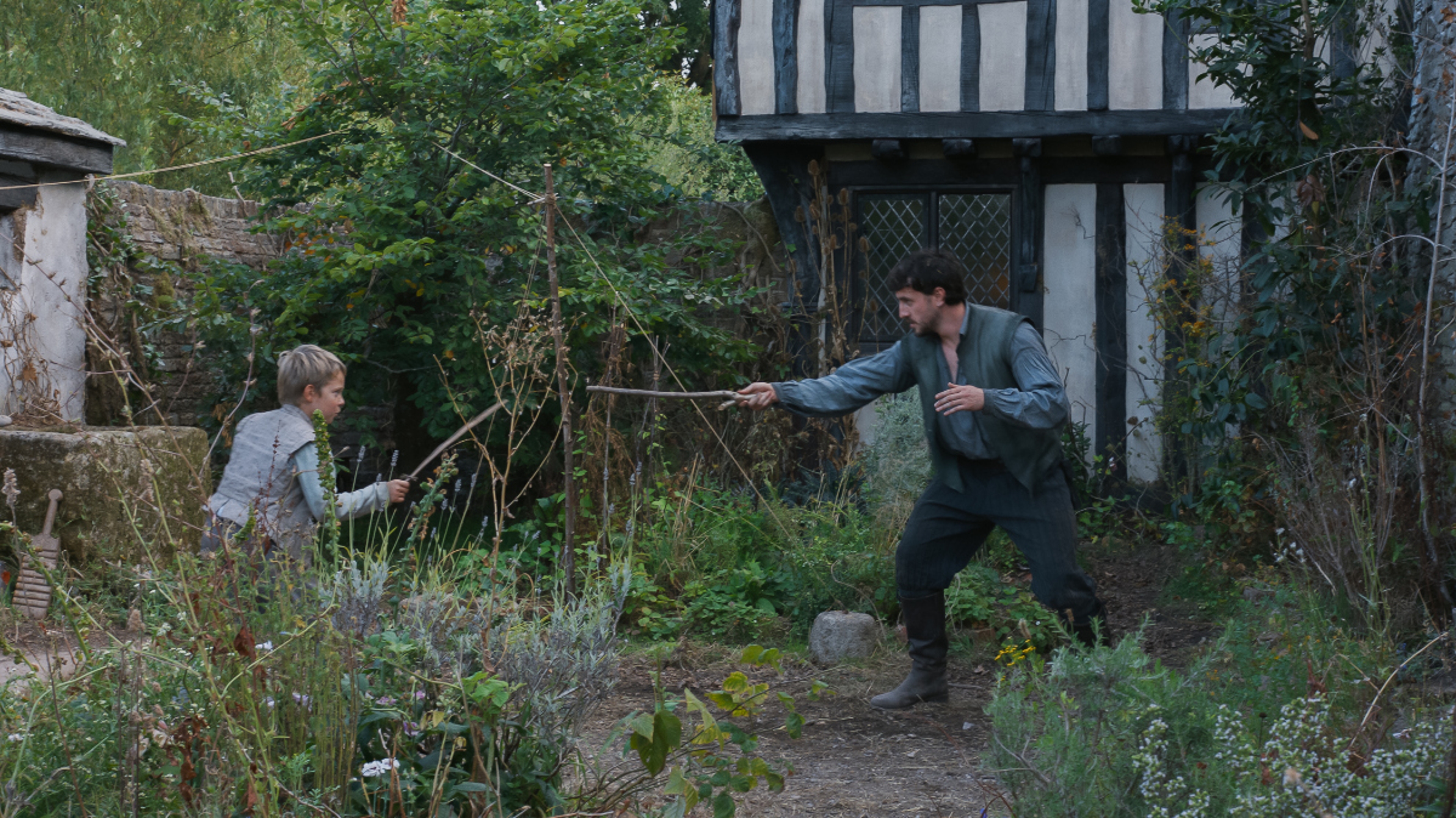
Jacobi Jupe and Paul Mescal in Hamnet
Can you talk about costuming the twins, Judith and Hamnet?
I did extensive research, looking at a lot of paintings from the time to see how children were clothed. The problem is that many portraits, especially of upper-class families, present the children in very stiff outfits. There was not much movement in them, which is so against the spirit of the twins. The paintings of Sebastiaen Vrancx were helpful because he captured both adults and children in very dynamic poses. They are falling down and tumbling and you see various layers of clothing—a shirt that is untucked or pants that are hiked up. It was helpful to see clothing in motion. I put that together with our research on Elizabethan garb to create the children’s outfits. I went away from traditional fabrics to make sure their clothing was a little lighter and that they could move in it.
How did the palette change throughout the film?
I worked closely with Łukasz [Żal, the cinematographer] and Fiona [Crombie, the production designer] to make sure we were always on the same page. The Shakespeare household is portrayed as quite monochromatic, very beautiful but very stern. There is a lot of darkness. As a nod to their wanting to avoid confrontation with Will’s father, John (David Wilmot), I wanted the household’s costumes to blend into their surroundings. The grey-black palette of the Shakespeare family was especially striking when Agnes joined them for dinner and she looked so out of place in her bright red dress.
Will, however, had more blues and greens in his clothing, which came from his connection to the river, both the Thames and the Avon. Whether he’s swimming or standing on the bank, Will is aligned with the water. As the story progresses, however, his clothing is increasingly drained of color and vibrancy.
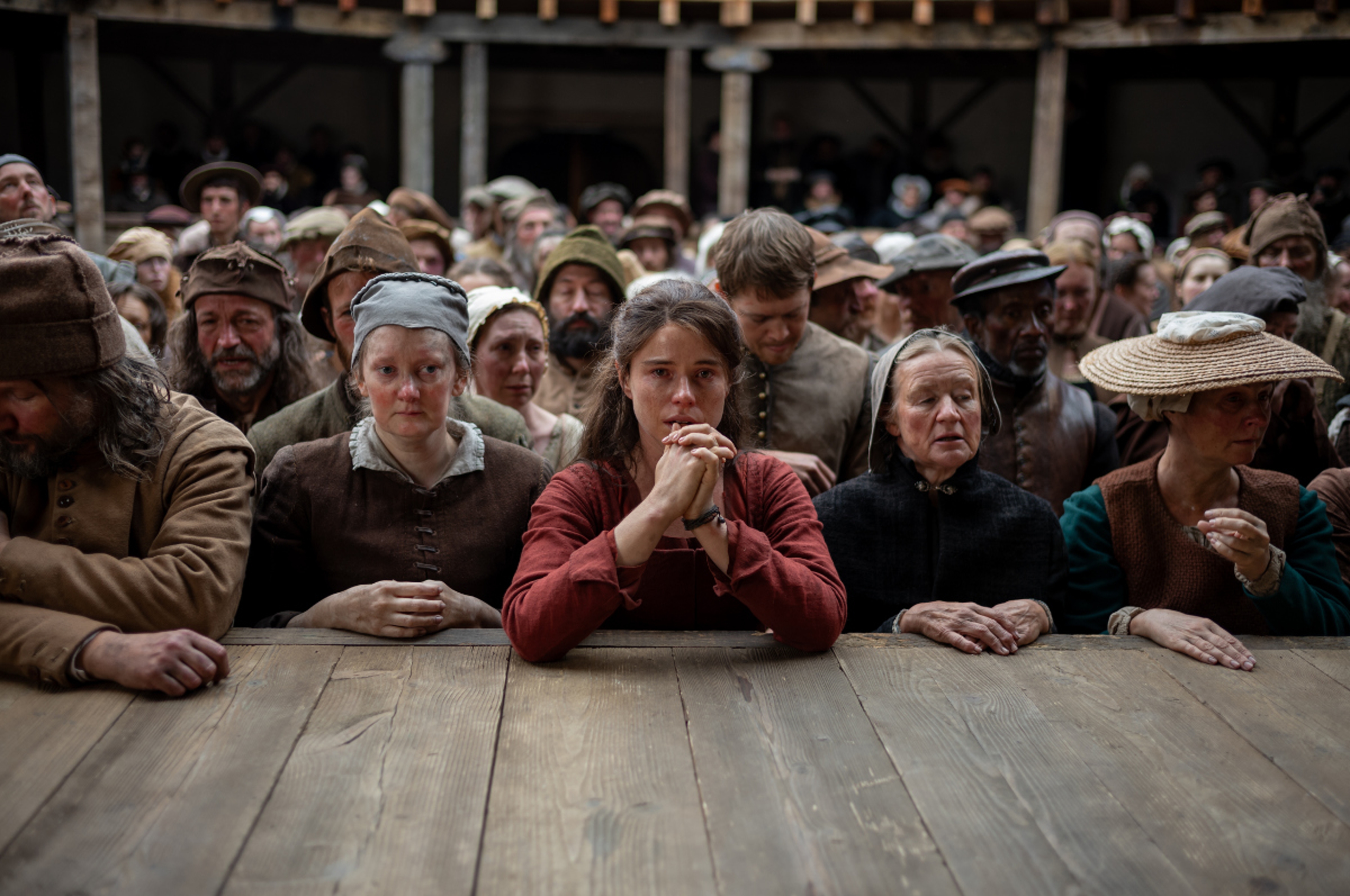
Jessie Buckley in Hamnet
How did you source fabrics for the film?
For Agnes, we used a lot of linens, as well as a bit of wool and leather, which were all period appropriate. There were a few items, however, which were not from that time. The bodice she wears when she is lying at the bottom of the tree in the beginning of the film is made from bark cloth. It is fabric made from this fibrous material that is between the bark and trunk of a tree. The bodice that we use in the film is from Uganda and was perfect for who Agnes is. Will is mostly in linen and leather. My favorite material for him was this thing we called mushroom leather because the scratches on it make it look like the underside of a mushroom.
Did you create specific dyes?
We did a lot of tests with plant dyes. I have worked a lot with plant dyes and was shocked by the vibrancy of weld, one of the dyes we used. It creates a bright acidic yellow, which we only used on the character of the step mother. It was the perfect color for her since she is so filled with bile.
We did some tests with iron gall ink, which is made from growths on an oak tree. We didn’t use it to dye Will’s clothes because we didn’t know how color fast it would be. We just used it as an inspiration for the color palette.
The Elizabethan period had strict sartorial laws governing who could wear what. Did those laws apply to colors, like Agnes’ red clothing?
Not for red. It was common for a lot of people to wear red smocks. One rule that we did break is that we have Will's father, John, wearing velvet, which a person of his class would not be able to do.
What do you hope audiences take away from the film?
I think the ultimate message is about the healing power of art.
This interview has been edited and condensed for clarity.
