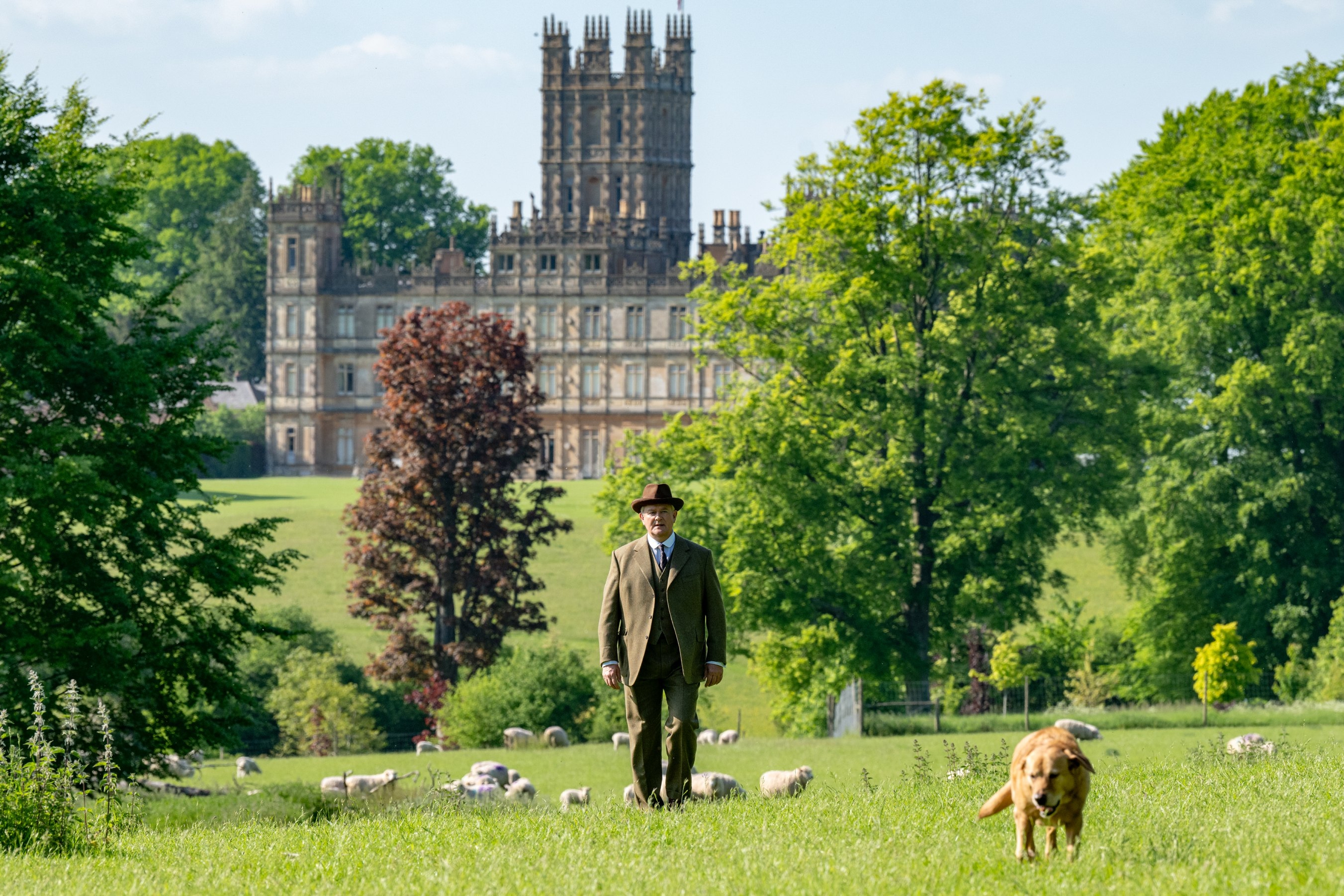
Reaching the Heart of Downton Abbey: The Grand Finale With Its Creator and Director
An exclusive conversation with director Simon Curtis and writer and creator Julian Fellowes.
In Simon Curtis’ Downton Abbey: The Grand Finale, the epic story that fifteen years ago sprang from the imagination of writer-creator Julian Fellowes comes to an end. As the world is rocked by an economic and social reordering, the Crawley family and their staff confront these challenges with compassion, humor, and elegant manners. Lady Mary (Michelle Dockery) navigates the scandal of an impending divorce, Lord and Lady Grantham (Hugh Bonneville and Elizabeth McGovern) struggle with economic insecurity, and Daisy (Sophie McShera) is taken seriously as a capable young woman. While introducing new figures like Noël Coward (Arty Froushan), the story also brings back Guy Dexter (Dominic West)—now Thomas’ (Robert James-Collier) constant companion—and Cora’s brother, Harold (Paul Giamatti). In the midst of change, the grand house continues. “Creator Julian Fellowes and director Simon Curtis have crafted a significant and rewarding ending so good that…will have you carrying a necessary box of tissues,” writes Showbiz411.
In 2010, Fellowes, who’d won an Academy Award® for his screenplay for Gosford Park, created a TV series about a fictional Yorkshire estate called Downton Abbey. Fifteen years, six television seasons, and three films later, the story of the Crawley family and the Downton staff has won a place in the hearts of people around the world. Curtis, who’d previously helmed the second film, Downton Abbey: A New Era, returns to collaborate with Fellowes on the third film, Downton Abbey: The Grand Finale.
We spoke with Fellowes and Curtis about bringing the saga to an end, orchestrating the remarkable number of characters and storylines in the film, and remembering Maggie Smith.
Get tickets for Downton Abbey: The Grand Finale now!
The official trailer for Downton Abbey: The Grand Finale
The film manages to juggle so many different characters and storylines so skillfully. How do you orchestrate them all, both in the writing and the production?
Julian Fellowes: I got into the habit of creating multi-arc, multi-narrative stories as a result of working with Robert Altman on Gosford Park very early on. That was his favorite form and I found it suited me. I focused on that from day one of Downton. We try to make sure that everyone gets a couple of scenes in which they figure and have their emotional tale. Over time, I suppose, a few characters have taken on carrying the principal narrative of the series. I saw Mary in that role really from the start.
Simon Curtis: It is a joy to work on this film because Julian is a master at giving everyone their mini arc.
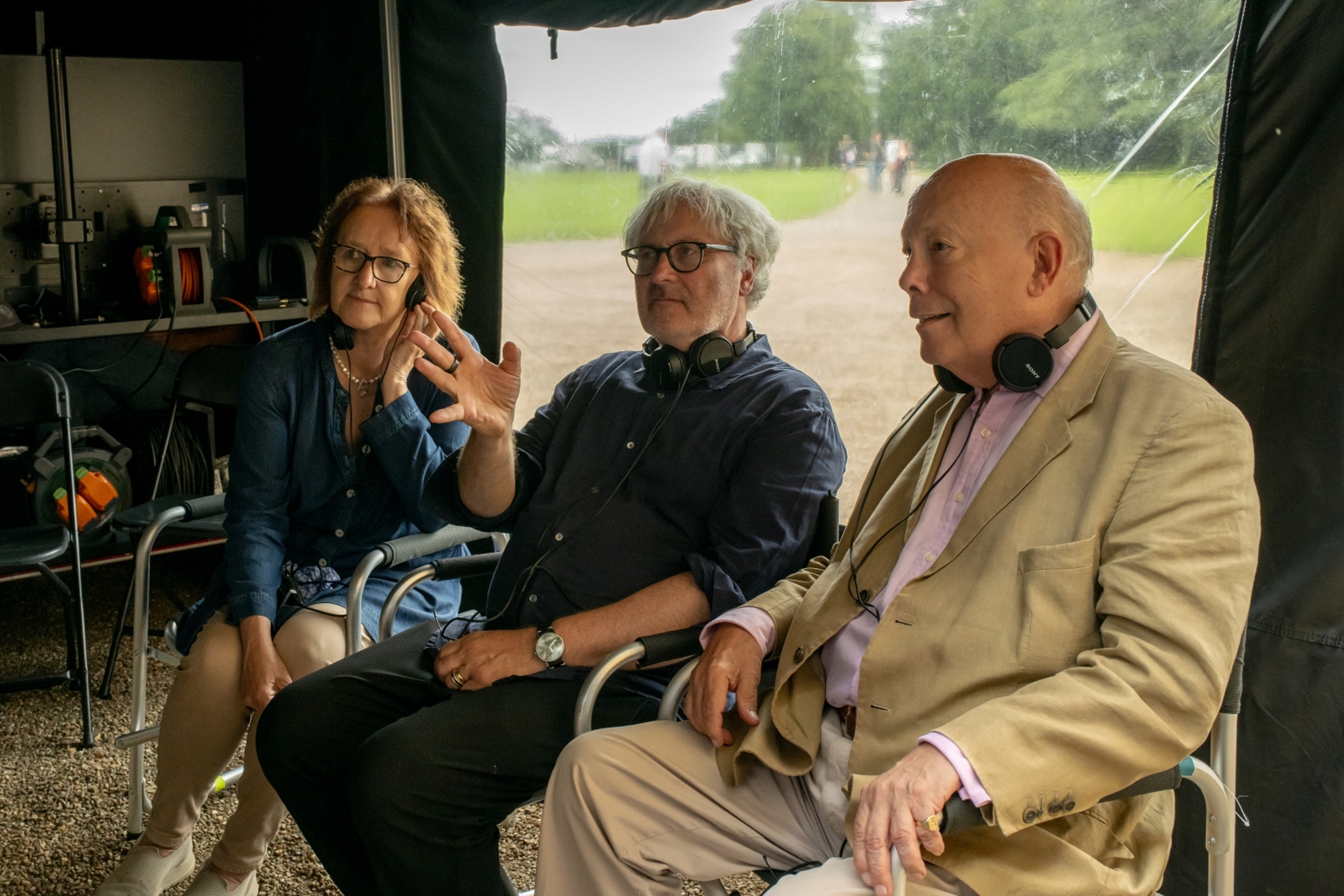
Producer Liz Trubridge, Simon Curtis and Julian Fellowes on the set of Downton Abbey: The Grand Finale
How much did the two of you work together to create this story?
Curtis: It's definitely Julian's script, but I would have conversations with him as it evolved. My job is to serve Julian's vision. To do that we had conversations with the actors and planned for scheduling.
Fellowes: There are essentially three stages. There's the preliminary talking about where it should all go and what it should all be about and so forth. Then there's a rather calmer middle bit when I actually write the draft so that we've got something to talk about. And then there's a third period when everyone comes back on board for the final details. We had a very collaborative group making the show.
This film starts in London in a theatre staging Noël Coward’s play Bitter Sweet. Is this the first time you've started an episode not at the estate?
Fellowes: Hmmm, I'm not really sure. We’ll have to ask a fan.
Curtis: When we cast the great English actor, Simon Russell Beale, he hadn't watched any of the Downton series. He had a crash course by watching all six series and both films before production. As such, he became our resident expert on the set because he remembered everyone's storylines so much better than any of the other actors. We had a long debate about delaying the arrival to Downton for as long as we do. I thought Julian's vision of putting the characters in the glamorous London season for an extended time was great. When we do arrive at Downton, about 20 minutes in, it’s all the more satisfying.
Fellowes: In the series, we spent years trying to establish the house as a character. But I think we've done that by now which really frees us up in how we can tell the story.
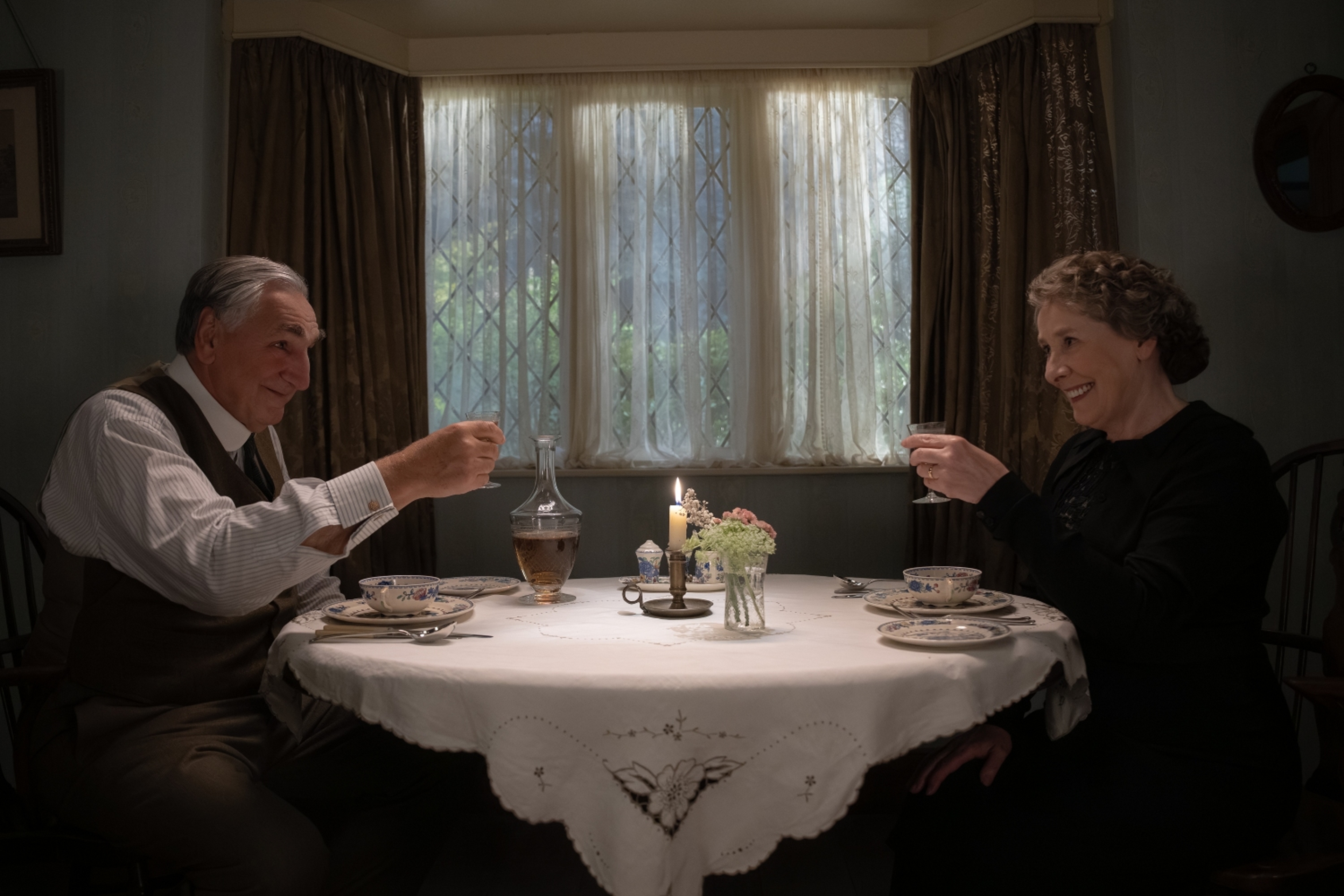
Jim Carter and Phyllis Logan in Downton Abbey: The Grand Finale
In the film, there are three different sorts of set pieces—the London theater, Ascot race course, and the local county fair—each of which mix the upstairs and downstairs in different ways.
Curtis: In the theater, we emphasized that with camera movement. And I'm very fond of that moment when the camera travels up from the Crawleys sitting in the best seats in the house to the three servants in “the gods,” as we say
What was important about those locales for the story?
Fellowes: We do make a distinction between something like the country fair, where everyone can go and it's a good time out for everyone, and Ascot, where we chose to show the upper-class version, which is not mixed. In telling this story, we are very careful not to over romanticize the period. This was a period of class distinctions. Robert and Cora, for instance, are perfectly familiar with their butler and their maids and valets, but the staff in the kitchen, I suspect, would be surprised if they knew their names. I don't think we've been false about that.
What has surprised you most since when you first envisioned the story and its characters?
Fellowes: Personally, what always surprises me is the extent to which I get caught up in the storyline. I remember at the end of series three when Sybil died and I was sobbing away on the sofa and my wife said to me, “Well, you wrote it. What did you think was going to happen?” I can't really explain how I am able to separate the story from the experience, but I do. The characters have become very moving to me. Obviously, I enjoyed Maggie very much all the way through. We had made two films together before we ever embarked on Downton. We weren't great pals who took a house by the sea together, but she knew how to say what I wrote and I knew how to write what she would say. Although Maggie had a great career before she ever heard of Downton Abbey, I was nevertheless pleased that we gave her a new level of fame. If she was here with us, she'd probably argue and say that it rather spoiled things because up till then she could win Oscars and still go to the grocers and be left alone.
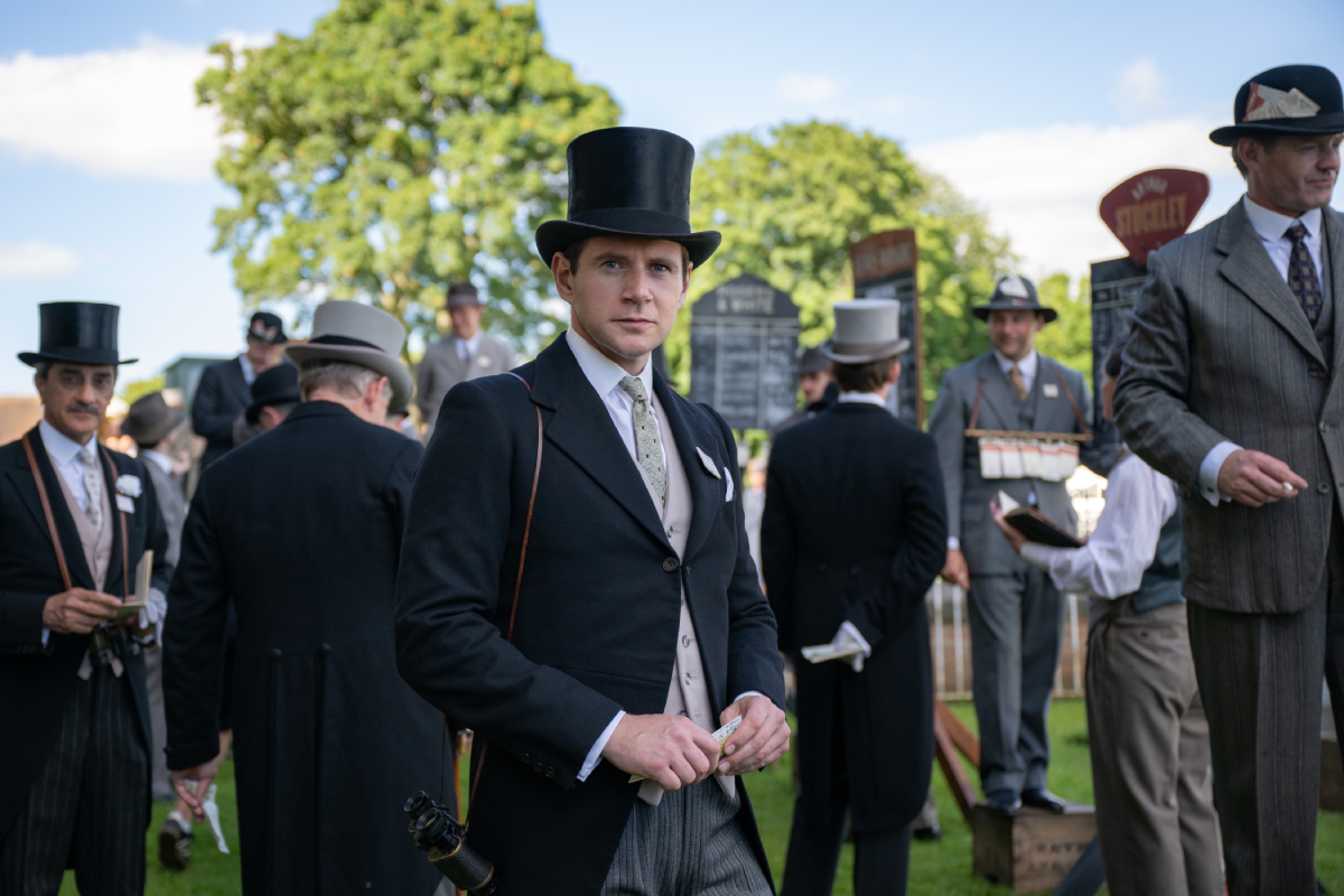
Allen Leech in Downton Abbey: The Grand Finale
What has surprised you most since when you first envisioned the story and its characters?
Fellowes: Personally, what always surprises me is the extent to which I get caught up in the storyline. I remember at the end of series three when Sybil died and I was sobbing away on the sofa and my wife said to me, “Well, you wrote it. What did you think was going to happen?” I can't really explain how I am able to separate the story from the experience, but I do. The characters have become very moving to me. Obviously, I enjoyed Maggie very much all the way through. We had made two films together before we ever embarked on Downton. We weren't great pals who took a house by the sea together, but she knew how to say what I wrote and I knew how to write what she would say. Although Maggie had a great career before she ever heard of Downton Abbey, I was nevertheless pleased that we gave her a new level of fame. If she was here with us, she'd probably argue and say that it rather spoiled things because up till then she could win Oscars and still go to the grocers and be left alone.
What was the inspiration for making Noël Coward a character in the film?
Fellowes: We knew that his play Bitter Sweet opened in 1930, which is when we were setting the film. Noël Coward was so much the voice of this particular interwar period in England. It was my son, actually, who said, “I think you're mad not to have Coward in it.” He was not part of Victorian England, which is, you know, still hanging on to the skirts of half of the characters. Although he became a cabaret star later on, Coward’s prime time was the ‘30s.
Curtis: It's interesting that people now think of Noël Coward as this old man. We present him at age 30, at the peak of his career, when he was the Harry Styles of his time.
Fellowes: He was so young when he hit the big time. When Bitter Sweet opened, it was the biggest, hottest ticket in London.
Curtis: He came off as a posh man, but in fact he was just a boy from Teddington.
Fellowes: He remade himself in the way people did then. But that's all gone now. I believe now, the rougher your background, the more you parade it to the public's delight. In that time, Coward was a man of his own charm and reinvented himself with a different voice. What is interesting is that he didn't tell untruths about his own past ever. He always presented the truth. But he presented it from the viewpoint of a very different kind of person.
Coward had such wit and charisma. How difficult was it to find someone who could capture that sort of brilliance?
Curtis: It was harder than I thought it was going to be. But we struck gold with Arty [Froushan], who was delighted to devour all the research he could find. And I think he performs the song, “Poor Little Rich Girl” very well. I'm thrilled with Arty's performance.
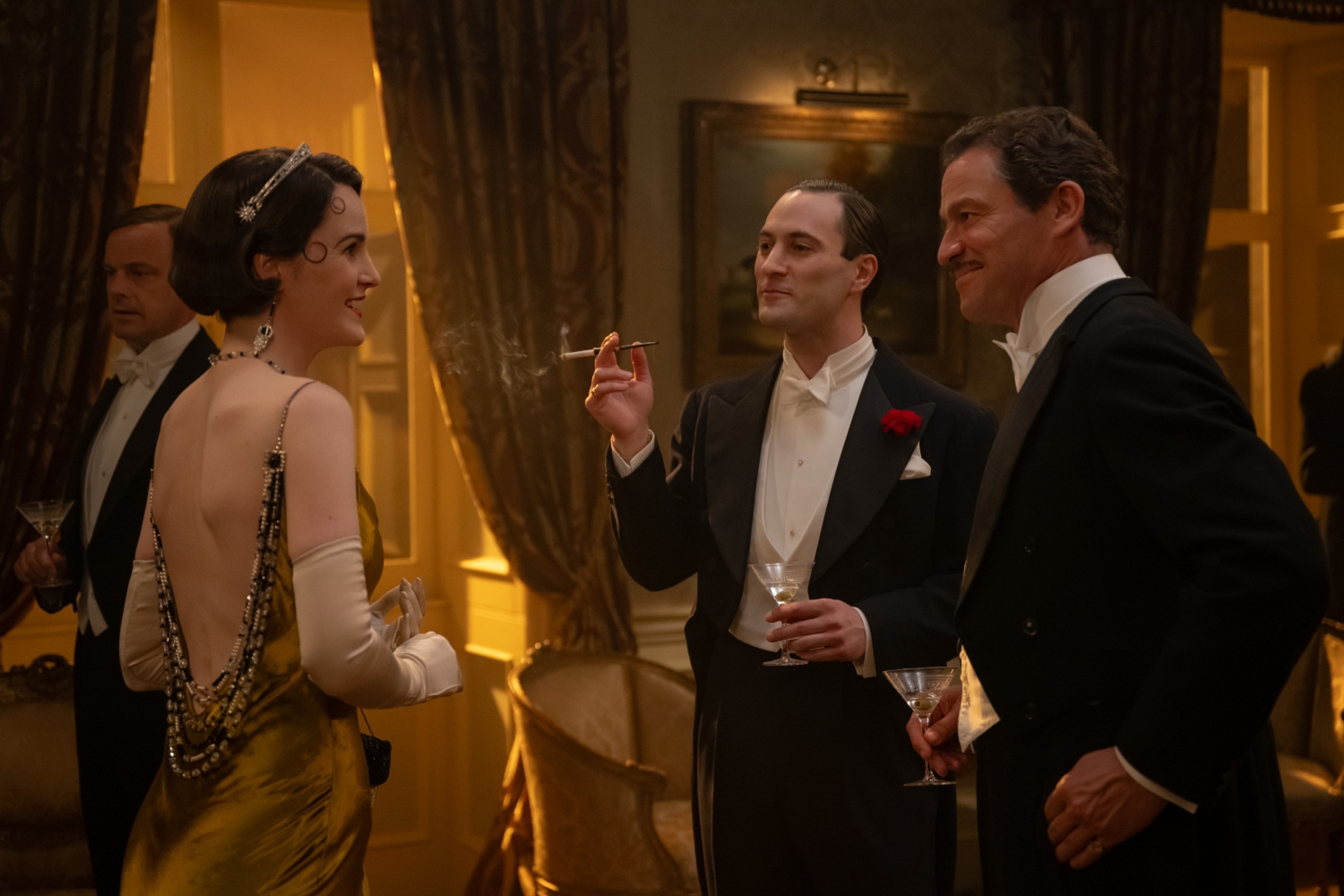
Michelle Dockery, Arty Froushan, and Dominic West in Downton Abbey: The Grand Finale
The story started in 1912 and is now ending in 1930. What makes this the right time?
Fellowes: I think the story is about change and about dealing with change. We chose to use a particular aristocratic family because between 1912 and 1930, their role in society changed so utterly. Although people from these aristocratic families would continue to appear in the government for another few years, the writing was on the wall by the time we say goodbye to them. If they were going to survive, they were going to have to exist in a different way.
In the film, there is such a difference between London’s energy and Downton’s stability. Was that contrast an essential part of this story?
Curtis: I wanted to make the London scenes as busy and different as possible. There is, for example, a sort of “Sex and the City” montage when the two sisters are shopping in London and jumping on and off a bus, something they would never have done before.
Fellowes: The thing about London is, like in all great capital cities, everyone is no one there in a way. The whole world is whirling around you. Whereas, of course, when you're the great landowner in a tiny village in Yorkshire, you are the bee's knees. Indeed, my own mother used to say if her family in Sussex ever got rather above themselves, “They don't get up to London enough, dear.” The point was that when you went to London, you were only considered interesting if you were in fact interesting—and not simply because you owned a big house down the road. In the film, we wanted to show the difference between London life and country life. It is in these major cities where the modern age is represented. And living in the provinces is a way of escaping that.
Curtis: Hugh captured that brilliantly on his face when the car drove up the driveway back to Downton. You can see the sigh of relief come over him knowing he's back at his home.
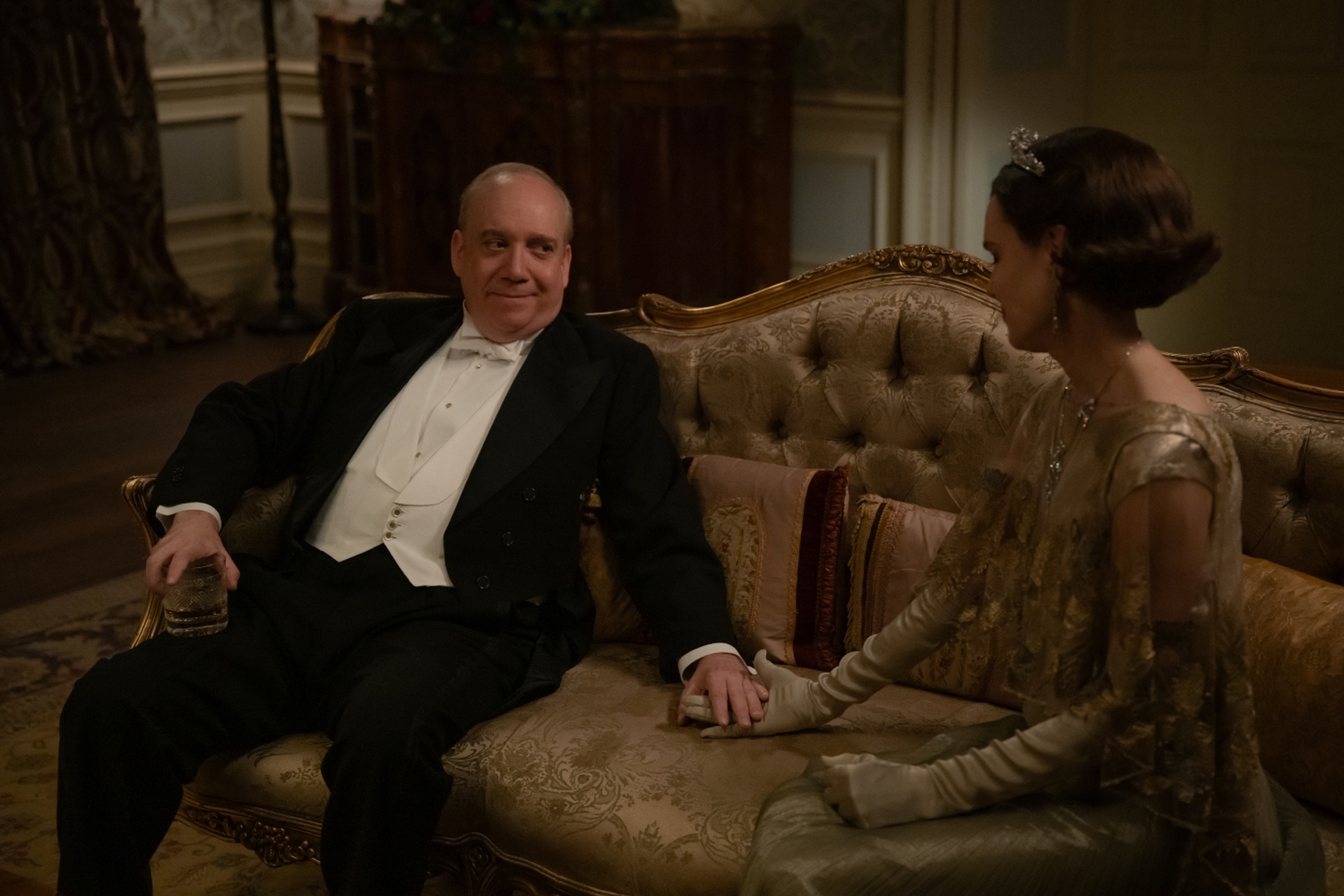
Paul Giamatti and Elizabeth McGovern in Downton Abbey: The Grand Finale
What do you hope audiences take away from this film?
Curtis: I think it's a sort of love letter to family, not just the Granthams but all the characters living together dealing with all these changes. Some of the changes are wonderful and some of them are heartbreaking. Everyone has a family of some shape or size. I think that sense of family will resonate with people who see the film.
Fellowes: Someone said, “Change is inevitable if things are to stay the same.” I think that is the lesson of this film. You know that the family is going to be OK. They're all going to go on living their lives as long as they accept change with reasonably good grace.
This interview has been edited and condensed for clarity.
