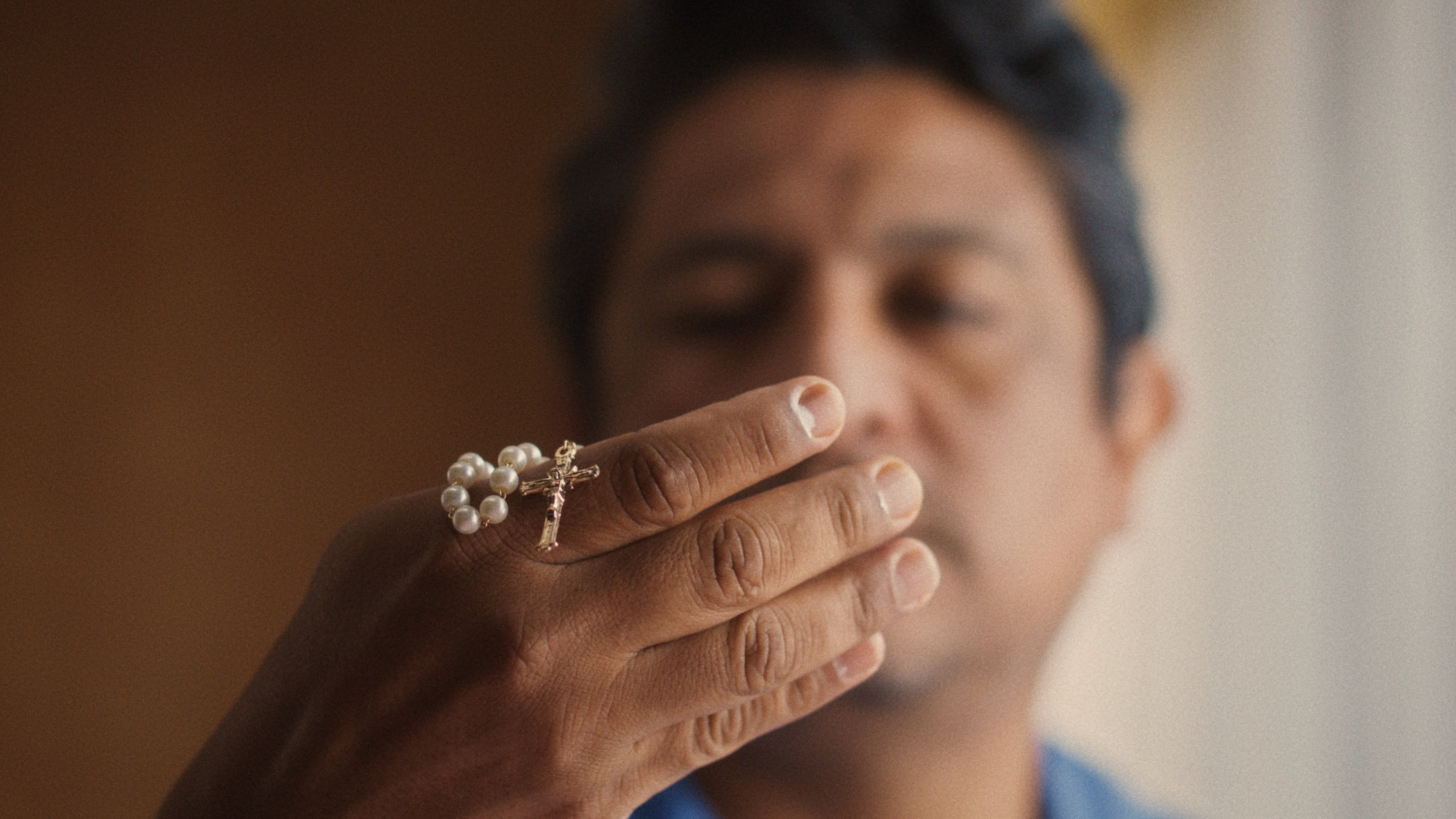
Meet Sergio Muñoz Esquer, One of the Winners of the 7th Annual Focus Features Short Film Showcase
A Q&A with the writer and director of Ballad of an Immigrant with Memory
Sergio Muñoz Esquer’s short film, Ballad of an Immigrant with Memory, is one of the works chosen by a special jury of filmmakers, curators, and critics for the Focus Features Short Film Showcase. Created as his MFA thesis film at the University of Texas at Austin, Ballad of an Immigrant with Memory was selected out of a pool of projects from a number of graduate programs across the country.
In Esquer’s Ballad of an Immigrant with Memory, an undocumented Mexican immigrant in the U.S. embarks on a surreal journey through his memories in Mexico in search of the rosary his mother gave him before he left the country over 30 years ago.
We asked Esquer to tell us about the inspiration for his film, the artists who influenced him, and his plans for the future.
Follow him on Instagram @ElSergioMunoz and learn more at www.sergiomunozesquer.com
Where did the idea for Ballad of an Immigrant with Memory come from?
My idea for the film came from wanting to tell a story that reflected my experience of leaving my hometown in Mexico to come to the United States and the feeling of leaving my loved ones behind without knowing if I would ever see them again. At the same time, I wanted to make an adventure film that felt like an emotional roller coaster for the audience, one that would allow me to experiment with different genres and tones (fantasy, adventure, horror, comedy, and ultimately drama). I also wanted to incorporate elements that connect me to my roots, such as food, religion, and sports.
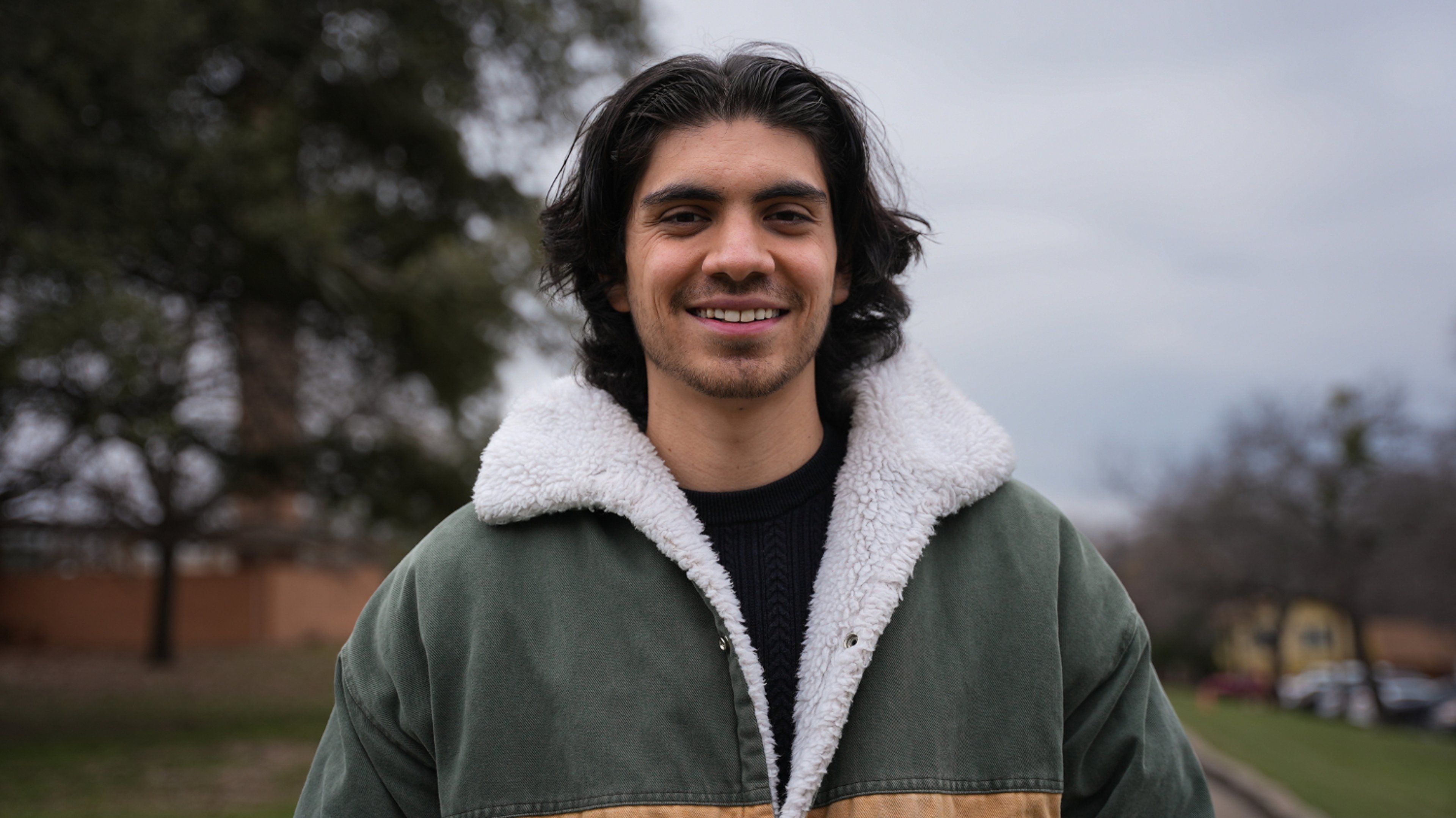
Filmmaker Sergio Muñoz Esquer
How did you find your cast?
I started by casting Fernando Monroy as the immigration officer because he is one of my best friends from college and I knew I wanted that character to be Latino. After Fernando read the script, he told me he knew the perfect person for the lead role—Omar Leyva.
I had a deck with a still image from Alejandro G. Iñárritu’s Bardo in which the protagonist of the film has an interaction with an immigration officer. What is curious is that when I watched Omar’s reel, I realized that he had played that immigration officer. I had a call with him that lasted almost two hours, during which he talked about how deeply he connected with the story and the character. I immediately knew he was the right person for the role.
I had seen Mercedes Hernández in Fernanda Valadez’s Sin Señas Particulares, which won two awards at Sundance and earned Mercedes the Mexican Academy Award. For me, she perfectly embodied the Mexican mother in that movie, exactly the kind of presence I wanted in my film. I sent her a cold email one night, and by the next morning she had already read the script. We spoke about the role on a call, and we immediately agreed to work together.
What in the final film best captures what you imagined when you first pictured the film?
The climax of the film, specifically the sequence where Alberto reunites with his mother. Every aspect of that scene—from the performances to the cinematography, sound, and production design—turned out exactly as I had imagined it. In particular, the shot where Alberto enters the kitchen and sees his mother from behind feels almost identical to what I first saw in my mind. Many migrants from different countries have told me that this moment resembles dreams they’ve had about loved ones they had left behind in their home countries. That was incredibly meaningful to hear. I definitely couldn’t have achieved this without the talented team who trusted my vision, especially my cinematographer, Carolina Bayón, my art director, Karina Tostado, my composer, Diego Rojas, and my actors, Omar Leyva and Mercedes Hernández.
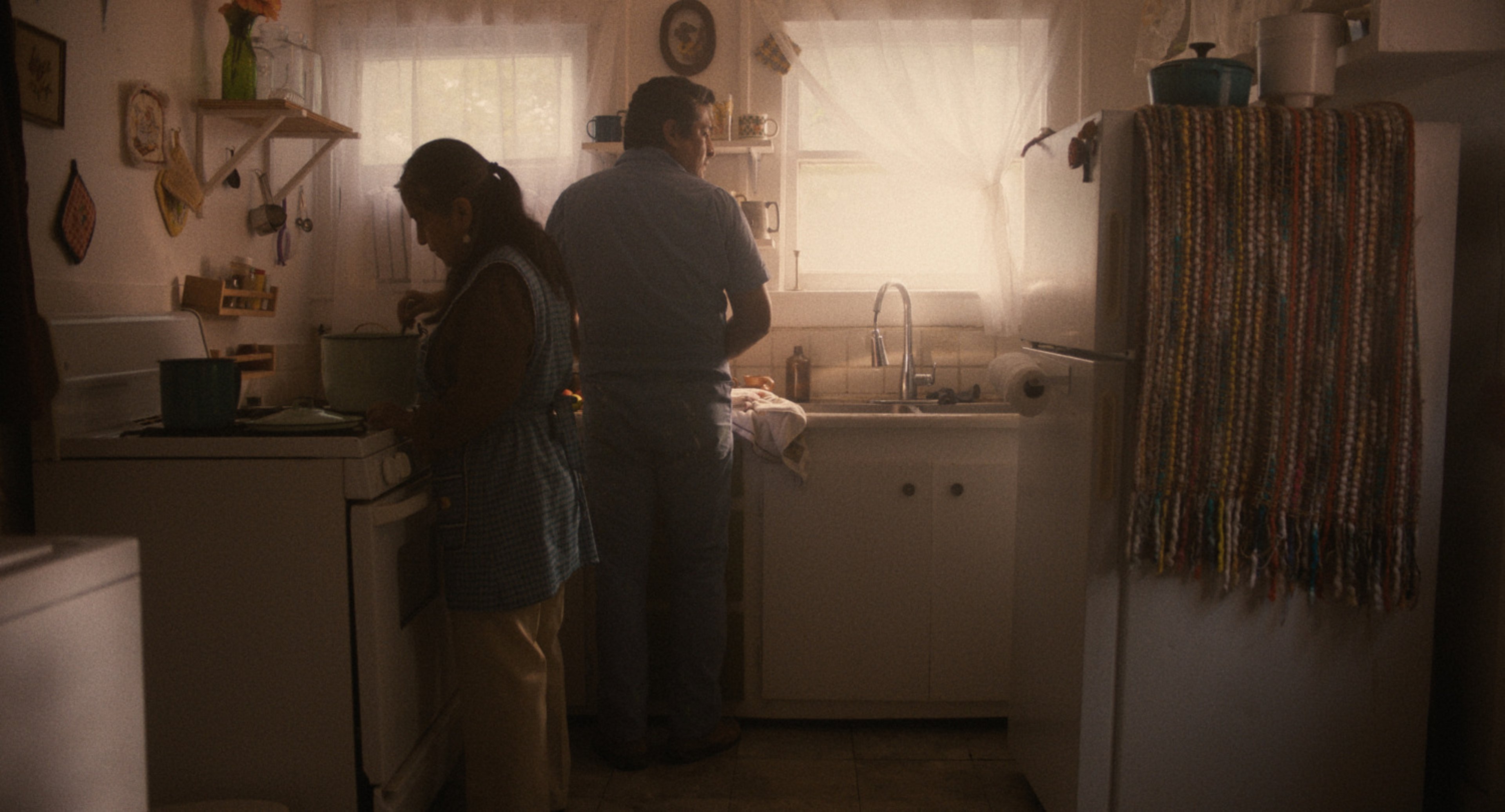
Mercedes Hernández and Omar Leyva in Ballad of an Immigrant with Memory
What was the biggest lesson learned working on Ballad of an Immigrant with Memory?
The biggest lesson I learned from working on Ballad of an Immigrant with Memory is that there will always be people who trust me and my vision, and because of that, I have to trust them as well. When I first started making short films, I was a bit of a control freak. I wanted to do everything myself and struggled to delegate. But over time, I made a conscious effort to trust the people around me. Since Ballad of an Immigrant with Memory was the most ambitious project I had taken on, I knew I had to fully rely on my collaborators. Fortunately, from the very early stages of development, I surrounded myself with some of the most talented people I know. I’m incredibly grateful for how much they believed in this project, one that was not only ambitious, but also deeply personal to me.
As an emerging filmmaker, who are your influences?
This will probably be a long answer, because I have a lot of influences. The first is Martin Scorsese, whose philosophy of what cinema is has had a huge impact on how I see film, not just in terms of making it, but also in fostering and preserving it. To me, that means that as a filmmaker, it’s my responsibility to support other artists in telling their stories. That said, when I’m asked which directors I’d like to have a similar filmography to, I always think of Steven Soderbergh, Alfonso Cuarón, and Rob Reiner. These three represent exactly what I aspire to do with my career: experiment with different kinds of stories, tones, and genres, while constantly trying to rediscover myself with each project. Other major influences on my work include Chantal Akerman, David Lynch, Mike Leigh, Steven Spielberg, the Coen Brothers, Kathryn Bigelow, William Friedkin, Thelma Schoonmaker, and Danny Boyle.
Among the people close to me, I have many influences as well. My parents have had a profound impact on my work ethic and the way I collaborate with others. I don’t know if I’m a good leader, but if I am, I learned it from them. And if I’m not… That’s their fault too.
The work of my friends, Fátima Wardy and India Opzoomer, both filmmakers I deeply admire, has also influenced me. I’ve learned a lot from reading their scripts and watching their films, and there isn’t a single project I’ve made without listening to their feedback. Finally, my partner, Luisa Fernanda Pérez, has been a major influence. Her work and perspective as an art historian and curator specializing in Latin American art have shaped the kinds of stories I tell and the angles I’m drawn to explore. On top of that, every project I make is, in some way, an attempt to impress her.
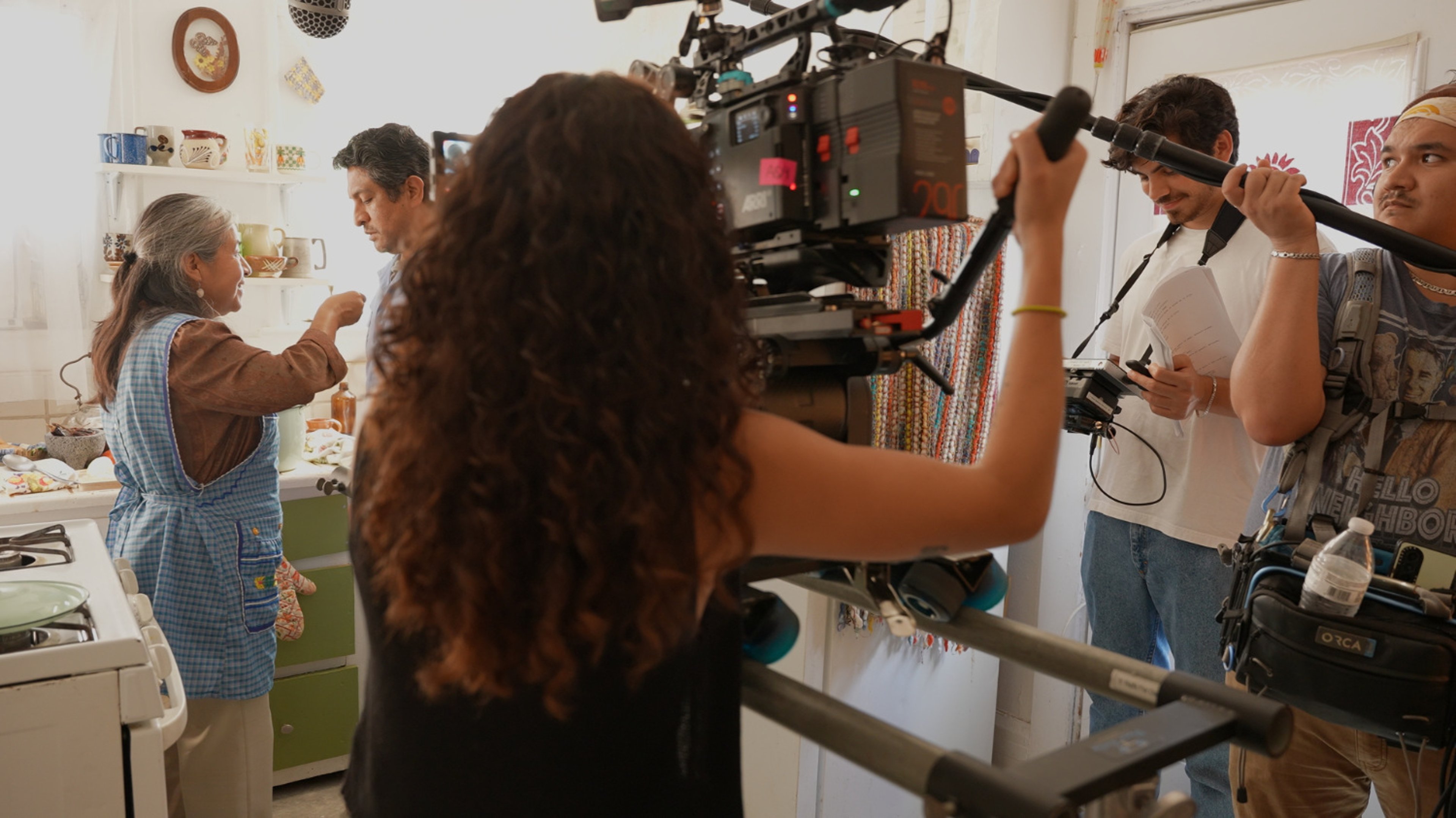
Mercedes Hernández, Omar Leyva, and Sergio Muñoz Esquer on the set of Ballad of an Immigrant with Memory
What was the first film you saw that made you want to be a filmmaker?
I have two. The first was Sam Raimi’s Spider-Man 2. It was, at least as I remember, the first film I ever saw in a theater. It was also the first time I became aware that what I was watching was like a magic trick. I remember that when the credits started rolling, I began reading the names of all the people responsible for that “magic trick,” and I told myself, “One day, I want to be part of that group of people.” I was six years old. Years later, when I was 13, an uncle who was visiting for Christmas was watching Sergio Leone’s The Good, the Bad and the Ugly on Turner Classic Movies (yes, we get TCM in Mexico). I vividly remember the moment I saw Tuco running through the cemetery, shot with a telephoto lens, while “The Ecstasy of Gold” by Ennio Morricone played. In that moment, I realized how deeply a film can make you feel through every decision a director makes. That’s when I truly understood what a director does and knew that it was exactly what I wanted to do.
Are you working on a feature film?
Yes. I’m currently working on three feature films. The first is Pincel, a documentary feature that follows a Mexican construction worker and artist in New York as he navigates his way into the Manhattan art scene. We’re shooting the film on a DJI Osmo Action, not only as a practical solution to capture footage inside construction sites, but also because it allows us to create a much more immersive point of view of our subject, José Luis. The film is currently in production.
The second is The New Parish Priest of Rosario, a dark comedy about a priest who, after being transferred to the small town of Rosario and realizing that no one wants him there, goes to extreme lengths to win over the community. The project is currently in development, with plans to begin shooting next year in Delicias, Mexico, my hometown.
The third is American Pesos, an adventure comedy that follows a group of friends who, after their former roommate is deported, discover a bag of money in his room. I’m currently writing the screenplay, which is tonally Shallow Grave meets Y Tu Mamá También. I’m hoping to shoot it next year in Austin, Texas.
This interview has been edited and condensed for clarity.
Ballad of an Immigrant with Memory dir. by Sergio Muñoz Esquer
