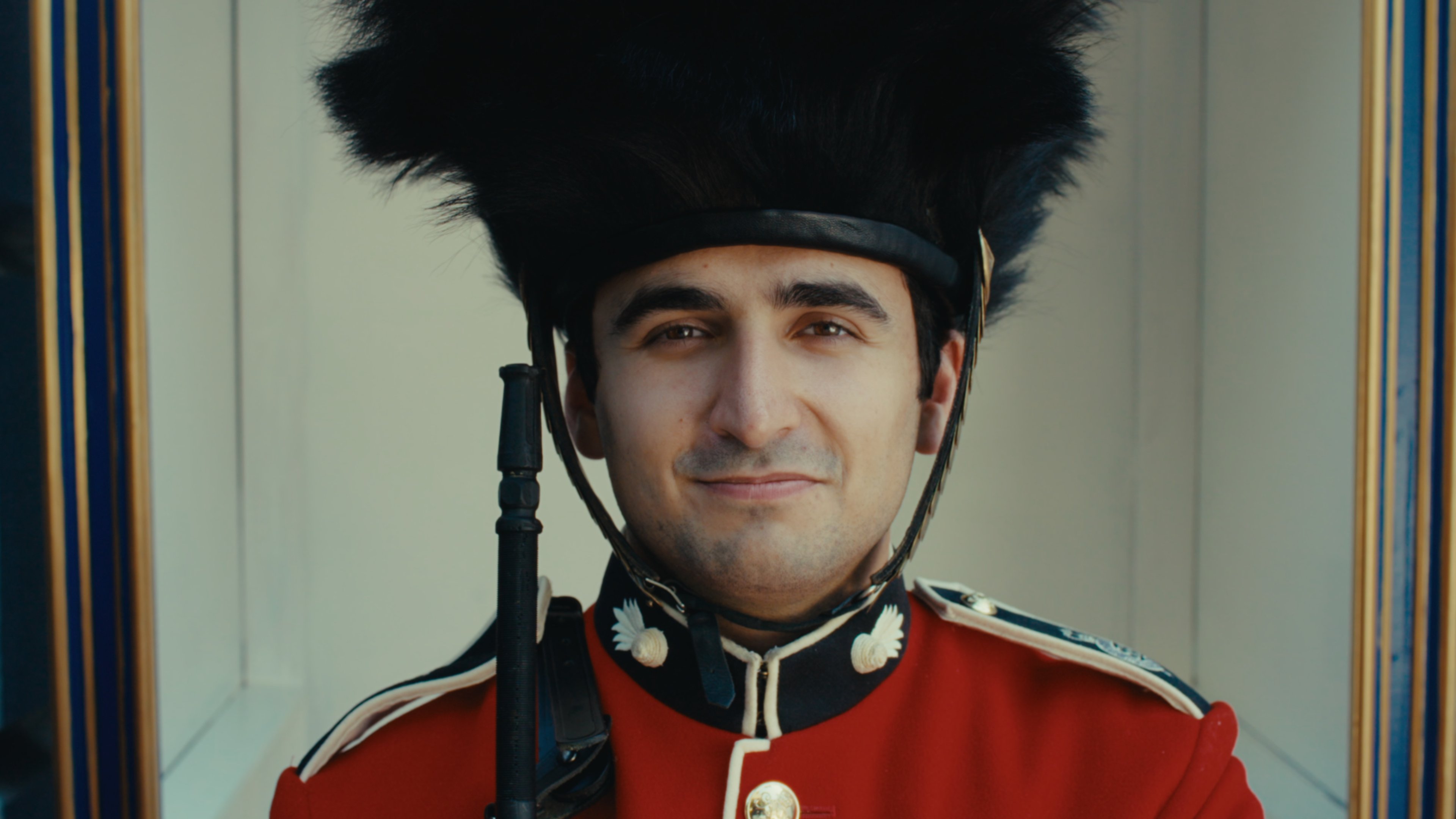
Meet Pranay Mathur, Winner of the First Look Awards’ Focus Features Best Film Award
A Q&A with the director of comedy Royal Foot Guards
Pranay Mathur won the Focus Features Award for Best Film for Royal Foot Guards at the First Look Awards ceremony.
In Mathur’s comedy Royal Foot Guards, Chester Popplestone, desperate to pass the test to become a Royal Foot Guard at Buckingham Palace, must surrender his delightfully cheery nature and embrace the world for what it is.
We asked Mathur to tell us about the inspiration for his film, the artists who influenced him, and his plans for the future.
Follow him on Instagram @pransmathur and @royalfootguards.
Royal Foot Guards dir. Pranay Mathur
Where did the idea for Royal Foot Guards come from?
Royal Foot Guards came from the mind of the writer, Levi Elias, who loves creating broad comedic characters with larger-than-life personalities. One day he found himself on the Wikipedia page for British royal foot guards. He was fascinated by how stone-faced and silent they are, and also by all the videos online of tourists trying to make them laugh. That sparked the idea: What if a royal foot guard was just a happy guy? Then Levi asked: What’s the funniest way for Chester to become as emotionally dead as the other guards? Of course, he becomes Goth. Which only deepened the visual absurdity. A smiling foot guard is wrong. A smiling Goth is wrong. A Goth royal foot guard is even more wrong. And that became the foundation of the film. The visual contradiction made me laugh immediately. Beyond the joke, that contrast created real internal conflict. Chester Popplestone wants to be the best royal foot guard, but his nature is the exact opposite of what the job requires. That tension drives the narrative. I met with Levi to discuss directing the project, and I came in with a lot of jokes that I thought could work for the story. I also prepared visual references from different TV shows like Ted Lasso and films like Jojo Rabbit and Shaun of the Dead, all pertaining to what I think the film should look and feel like.
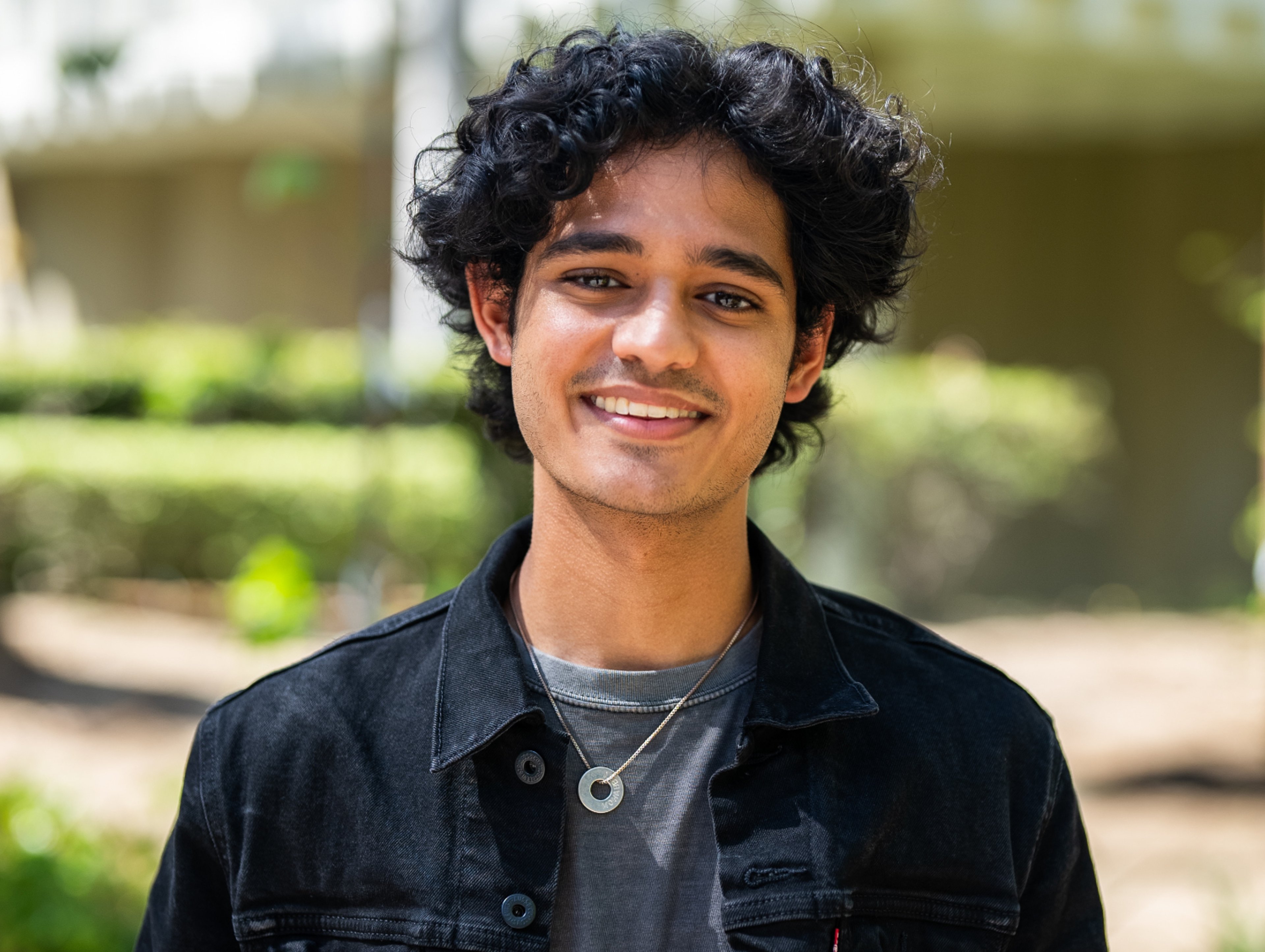
Filmmaker Pranay Mathur
How did you find your cast?
I truly love this cast, so I have to gush a little. Casting was the most challenging part of the process, but also one of the most exciting. We started with the Goth trio: Hellspawn, Deathbringer, and Peter. Lydian Blossom brought a real fury to Hellspawn in her audition. She immediately felt like a leader. Even on set, she carried herself like a commander—strong and graceful. Laura Boccaletti gave Deathbringer a lived-in quality. When she read, I immediately saw a woman who’d been part of the underground British rock scene for decades, someone fully living life on her own terms. She made Deathbringer feel like the badass I always imagined her to be. Peter was played by my friend Riley Skinner. I always knew he was funny, but it was his dramatic instincts that elevated the role. He brought a sincerity and a desire to fit in that made Peter feel like a fish out of water. It was hilarious to watch in real time. It was also fun to have him smoke a bunch of herbal cigarettes.
Simon, the Sergeant’s nephew, could have gone in many directions. In auditions, I paid attention to actors’ first instincts with him. KJ Odea, who I did sketch comedy with in college, brought something we couldn’t ignore. He was funny but also slightly terrifying. KJ made him feel like a Gen Z, social media-addicted version of the Joker. I never knew the character could be interpreted in that way, and his portrayal influenced my directing decision to never show the character come through a door. He should always pop out of nowhere to surprise and intimidate everyone. Sergeant McNally was always written as Scottish, and I wasn’t sure if Los Angeles had a booming Scottish population. I still don’t really know, but I’m glad we found Mark Coulter. Mark sent us an audition tape. We loved it, and we invited him back for another audition. He emailed us saying, “I was born to play this role. I won’t let you down.” And he absolutely didn’t. His commitment set the tone for the whole production.
For Chester, our lead, we knew early on that casting a British actor would ground the satire. If we were going to turn Los Angeles into London, the performances had to feel authentic. We also needed someone with a smile so pure that the audience would root for it to survive. That’s when we found Michael MacLeod. He comes from a dramatic, theater background, and that depth gave Chester real emotional weight. He didn’t just play the joke; he played the person. Watching him bring that balance to life was incredibly rewarding. He’s also the sweetest man in real life, so I thank Michael for his leadership. I’m also deeply grateful to our background actors throughout the movie and friends like Collette McCurdy and Sam Pozen for their cameos. Additionally, Isabel Blasquez, who played the little girl at the end, truly helped land the emotional core of the film. Casting taught me how collaborative and celebratory filmmaking can be. It’s now one of my favorite parts of the process.
What in the final film best captures what you imagined when you first pictured the film?
It had to be the ending. Our production designer, Riley Levine, and his entire production design crew built a guard booth in the back of our yard, carefully modeled and painted to be as accurate as possible to the real ones in front of Buckingham Palace. Our cinematographer, Ian Jackson, and I watched numerous reference films and planned in detail what the shots should look like. The match cut into the final scene was especially crucial for us to nail so we could see that Chester lived out his dream, but not in the way he intended. Going into production, we knew selling London was going to be our biggest challenge. Buckingham Palace is not easy to pull off in Los Angeles, so we had to be extremely intentional about what we showed and how we framed it. But emotionally, everything built toward that final interaction. When the little girl walks up to Chester at the end, the goal was to make her feel like a reminder that the world doesn’t have to be all dark and gloomy. Throughout the film, everyone keeps telling Chester “No,” reshaping and hardening him. She’s the first person who simply meets him where he is. Throughout the film, Chester holds on to a daisy, which demonstrates how optimistic he feels about the world. When his optimism dies, so does the daisy. It was a motif that Levi and I worked hard to weave naturally throughout the story. At the end, when Chester gives the girl the daisy, it shows he’s still retained part of who he is. In the script, Levi beautifully wrote: “Chester gives a little smile. Not a huge smile like he used to do, a small smile. But it’s a nice smile.” That line completely guided how I directed the scene. Chester doesn’t immediately go back to who he was, but he’ll hopefully get there. He’s learned something about the world and about himself. I wanted to leave the audience with a sense of hope, the feeling that even if things don’t instantly become better, there’s still something worth holding onto. That final moment felt exactly like what I imagined when we first talked about making the film.
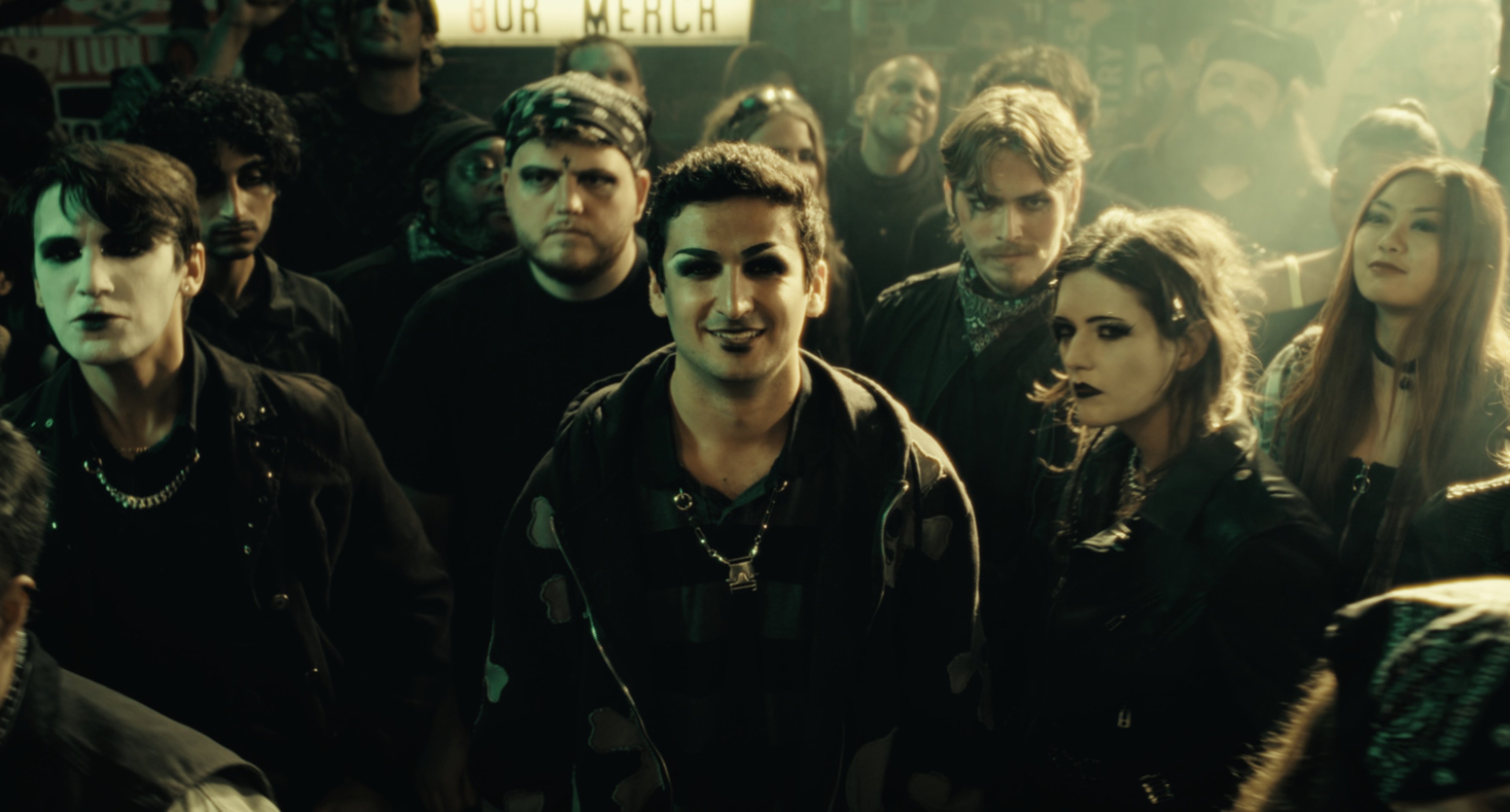
Michael MacLeod in Royal Foot Guards
What was the biggest lesson learned working on Royal Foot Guards?
Do not limit your creativity. When the project was greenlit, my first instinct was to start trimming. I was thinking practically about what’s feasible under the school budget, what’s realistic, what we will have to cut. But my producers and department heads pushed me to think bigger. They encouraged me to design the film we actually wanted to make. That shift changed everything. We built large-scale set pieces, staged a concert with dozens of extras, and coordinated across multiple locations. I went from making films with a handful of collaborators to leading a crew of nearly fifty people. The biggest lesson wasn’t just about scale; it was about collaboration. The film improved when the department heads and I brought our full creativity into it. The final product is stronger because of everyone’s tireless effort. Thank you to my Heads of Department: Billy Tsiolis, Joe Grode, Levi Elias, Olivia Brancato, Riley Levine, Ian Jackson, Angie Rockey, Sam Abunassar, Devyn Dyett, Keith Berlanga, Jason Liu, Henry Haber, Zach Shenouda, and Eric Huang.
As an emerging filmmaker, who are your influences?
As a kid, I went to comedians for inspiration because I found them to be some of the most playful and free people in the world. I grew up watching Conan O'Brien and sketch shows like Key & Peele, really paying attention to how a joke builds and how character drives comedy. In the last few years, I’ve been especially interested in how humor can live inside harsher truths. Atlanta has been a huge influence on me in that way. It’s funny, but it’s also uncomfortable and existential at times. That tonal balance really resonates with me. I also love Richard Linklater’s approach to dialogue. I admire how his conversations feel lived-in and natural, like you’re just observing real life unfold. Filmmakers like the Coen brothers, Edgar Wright, and Zoya Akhtar have shaped how I think about rhythm and visual storytelling, especially from a structural and editorial standpoint. Outside of film influences, I’m inspired by Anthony Bourdain. My brother introduced me to him years ago, and what I admire most is his curiosity and his willingness to sit with people very different from himself and simply observe. He showed the world what they’re missing by not stepping outside of their comfort zones. Ultimately, though, I try to look inward. I think the most interesting material comes from interrogating your own life and contradictions. There are so many small, strange, meaningful moments in our everyday experiences that feel ordinary in the moment, but years later, you realize how revealing they were. My friends and family are some of my favorite storytellers. They inspire me constantly in that way. At the end of the day, I’m just trying to stay curious about people, about the world, and about the things we don’t immediately understand.
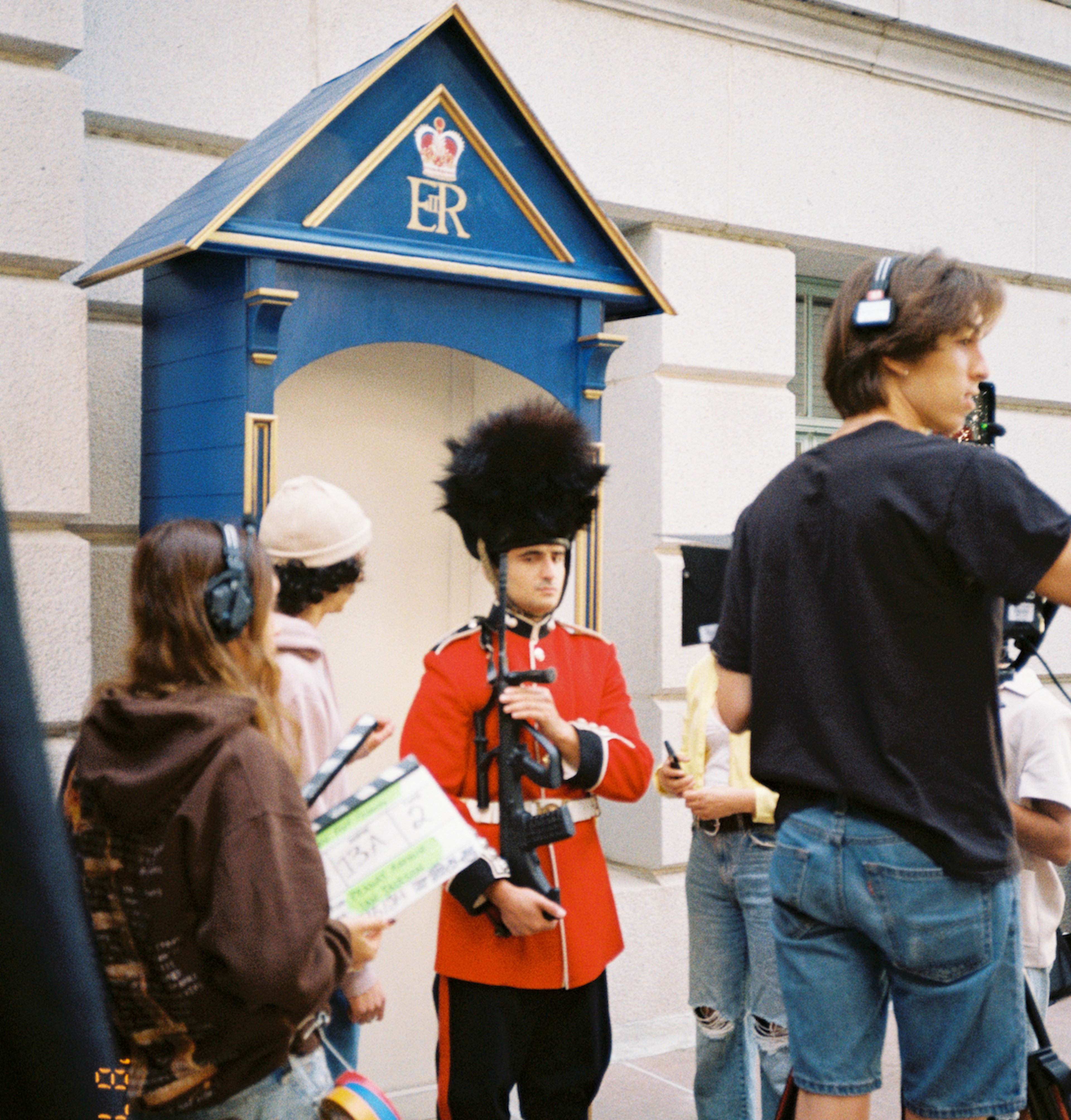
On the set of Royal Foot Guards
What was the first film you saw that made you want to be a filmmaker?
Starting when I was little, my parents would take my brother and me to India every other summer to visit family. Those trips were always the highlight of my childhood, and one of the things I remember most vividly was how excited everyone was to go to the movies. The theaters in India would have lines stretching for blocks. The cinema felt almost worshipped there. People would leap out of their seats in excitement, cry when their favorite actor was on screen, and some would even call their loved ones during the movie to tell them how good it was. It was one of the first times I remember feeling like I was part of an event. Experiences like that made me curious about all kinds of movies and how I could get an audience to react with excitement about something I created. When we got back to the U.S., I would drag my dad to the Family Video Store near our house so we could rent something to watch for the weekend. Over time, that curiosity turned into something more active. I started reading scripts online, coming up with movie ideas, and eventually wrote a very bad fifty-page spy script that I tried to convince my friends to shoot with me. We never finished the movie, but I still like to think there was some potential there—not in the script, but in the dream. Even at that age, I understood something that still drives me today: movies are more than just stories on a screen. When they’re done right, they become experiences that people remember and share together for a lifetime.
Are you working on a feature film?
I’m currently in the process of writing a feature. In high school, speech and debate was a huge part of my life, so the film is inspired by that world: the competition, the friendships that form, and the fun and chaos that comes with it. In many ways, it’s a love letter to my family and friends who shaped that time in my life. Alongside that project, I’m always writing with friends and trying to create as much as possible. It’s definitely a challenging process, but it’s also a really rewarding one, and I’m enjoying the ride.
This interview has been edited and condensed for clarity.
