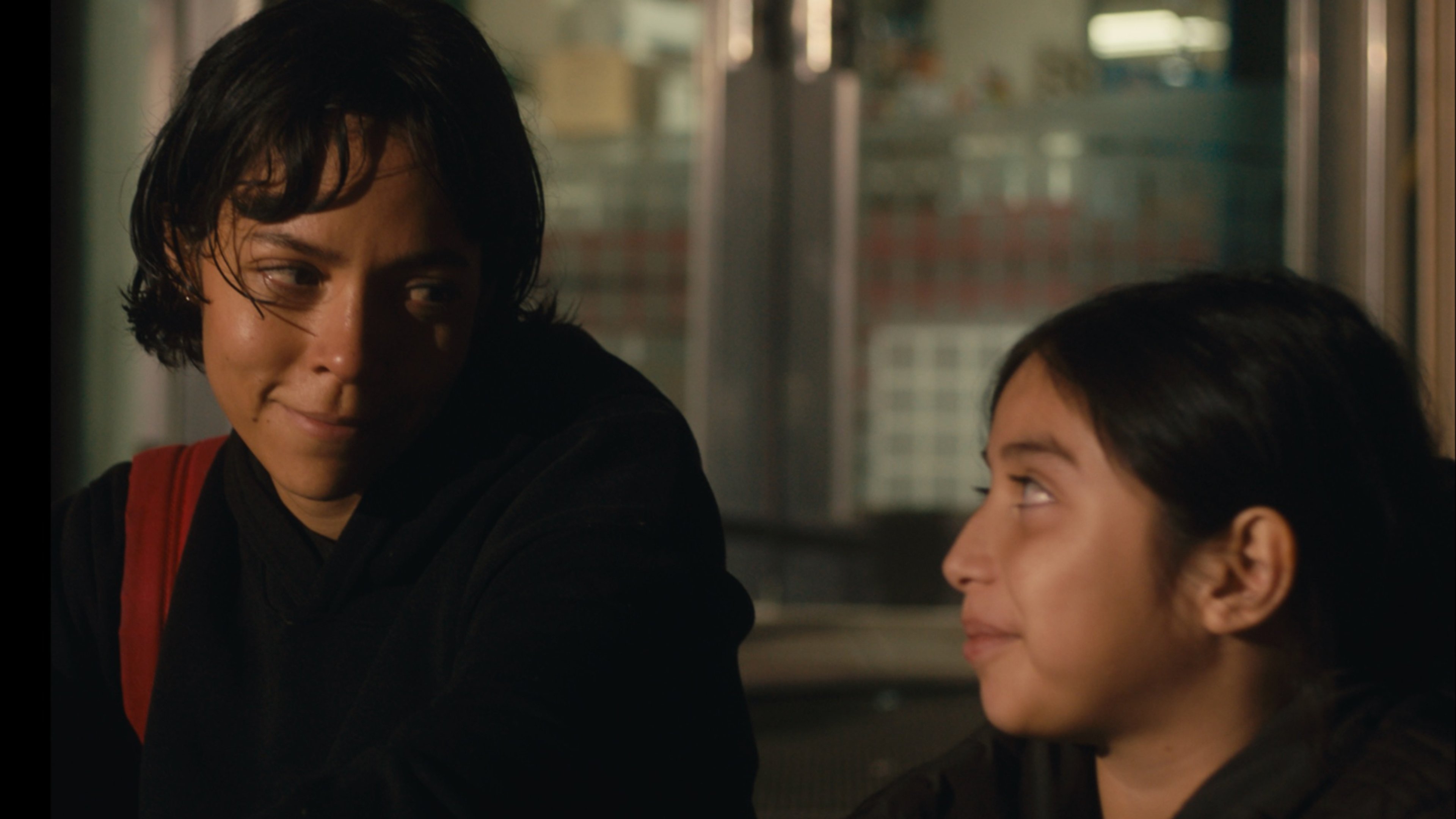
Meet Maria Regina Rios Ceja, One of the Winners of the 7th Annual Focus Features Short Film Showcase
A Q&A with the writer and director of Maybe I'll Find You in a Robbery (Tal Vez Te Encuentre En Un Asalto)
Maria Regina Rios Ceja’s short film, Maybe I'll Find You in a Robbery (Tal Vez Te Encuentre En Un Asalto), is one of the works chosen by a special jury of filmmakers, curators, and critics for the Focus Features Short Film Showcase. Created as her MFA thesis film at Loyola Marymount University, Maybe I'll Find You in a Robbery (Tal Vez Te Encuentre En Un Asalto) was selected out of a pool of projects from a number of graduate programs across the country.
Ceja’s Maybe I'll Find You in a Robbery (Tal Vez Te Encuentre En Un Asalto) is about a little girl who devises an innovative scheme to reconnect with her imprisoned mother during Christmas.
We asked Ceja to tell us about the inspiration for her film, the artists who influenced her, and her plans for the future.
Follow her on Instagram @talvezcortometraje and @mrxgina.
Maybe I'll Find You In a Robbery dir. Maria Regina Rios Ceja
Where did the idea for Maybe I'll Find You in a Robbery come from?
The idea started in 2021 when I was teaching a creative writing course at a social reintegration center in my hometown. There, I got to know many inmates, their stories, and how the prison system in Mexico actually works. I learned that many children are born in prison and stay there with their mothers for the first three years of their lives. After that, they are separated and usually sent to live with relatives or placed within the system while another home is found for them. That reality stayed with me long before I applied to my MFA program. I knew I wanted to tell a story that came from that world.
The film also comes from my thinking about the importance of family in Mexico. Families here look very different from one another: sometimes it’s a mother and father, sometimes a grandmother becomes the main caregiver, and sometimes older siblings have to step up and hold everything together. I was interested in portraying those forms of family, the ones that are built out of necessity but also out of love.
I also wanted to capture the innocence of a child: their dreams, their longing, and the way they believe everything is possible. The film speaks to anyone who has ever needed an escape, or who has had to pause their dreams because of life. At its core, it’s a very tender and honest story.
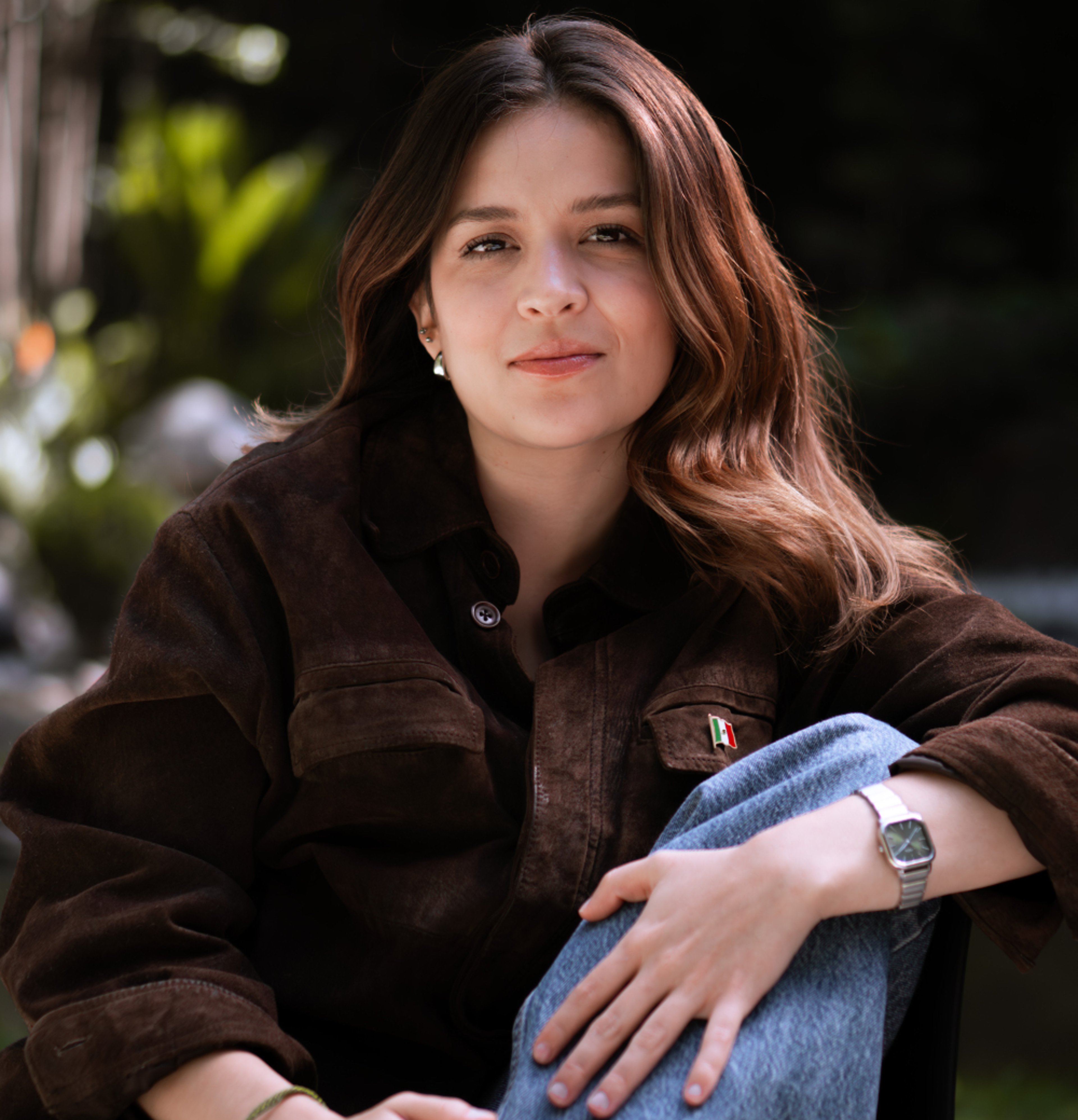
Filmmaker Maria Regina Rios Ceja
How did you find your cast?
For the role of Laura, Paola’s aunt, I knew from the beginning that I wanted to work with a professional actor from Mexico. That’s how we found Ruth Ramos, an incredible actress with a strong presence and an emotional depth. From the start, she was genuinely excited to be part of the project. She brought so much generosity and commitment to the film. For Paola, our protagonist, we held a nationwide casting call. We met many talented girls, but the moment we saw Luisa Lerma’s tape, we knew it was her. There was something very honest and tender in her presence that immediately stayed with us. This is her first film. It was a really beautiful process to watch her discover her own talent, to connect with her emotions, her body, her memories, and to fall in love with acting. The rest of the cast came from a mix of friends, local actors, and people from the community. Some of them have theater experience, and for others, this was their first time in front of a camera, which gave the film a very real and grounded energy.
What most captures what you saw in your mind when you first imagined the film?
I think the final scene captures it the most. It’s the moment when Laura and Paola finally find a real connection. Maybe it’s not something that will last forever, maybe it’s only for that night, but they return to the emotional place where they needed to begin.
In the end, it’s just a slice of life. We don’t know if things will get better for them or fall apart again. They’re simply at peace for a moment, alone in a very big world, but together, at least for that night. That scene was very important to me when I wrote it. Seeing it in the finished film felt like everything I had imagined finally landed. It holds the essence of what I wanted to say. Luisa and Ruth’s performances were so beautiful, honest, and grounded that they made the moment feel even more intimate and real.
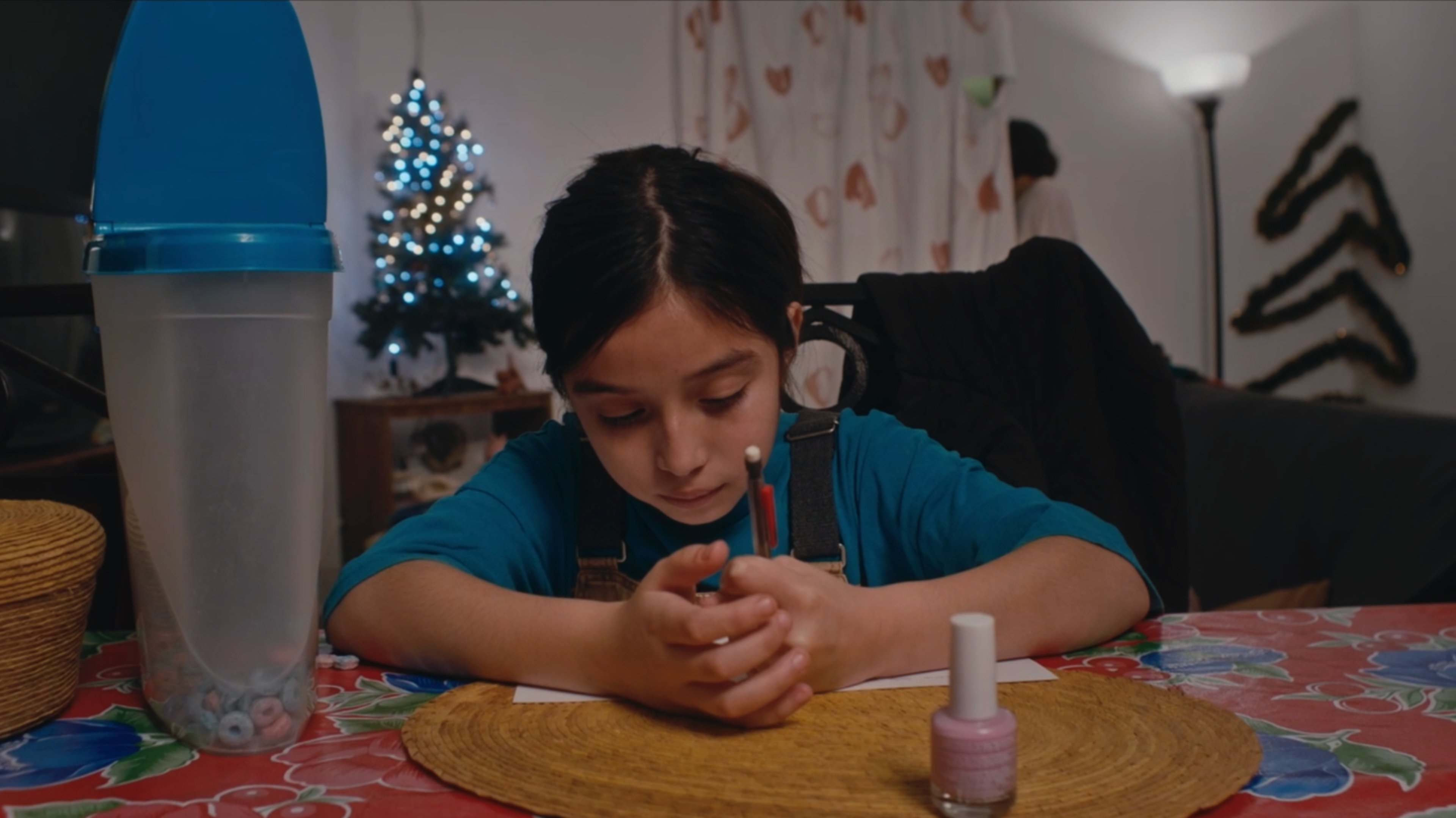
Luisa Lerma in Maybe I'll Find You in a Robbery (Tal Vez Te Encuentre En Un Asalto)
As an emerging filmmaker, who are your influences?
One of my biggest influences is Tatiana Huezo, a Salvadoran-born filmmaker who built her career in Mexico and whose work has deeply shaped the way I think about cinema. Her films feel very tender and intimate, and I’m especially moved by how she transitioned from documentary into fiction without losing that sense of truth. I really connect with the way she moves the camera, her patience, and the way she allows both the performances and the audience to breathe. Her gaze is very human, very close to her characters, and that has influenced the style I’m trying to build, one that feels honest and observant. More than anything, her work reminds me that cinema can be quiet and powerful at the same time, and that intimacy can be a form of storytelling strength.
What was the first film you saw that made you want to be a filmmaker?
I grew up in a town where there wasn’t a movie theater, so watching a film was never something casual. Maybe once a month, my family and I drove about two and a half hours just to see a film. Because of that, cinema always felt like an event, something rare and very meaningful. I think that distance made me value the experience from a very young age, and it slowly became something essential in my life.
One of the first films I remember watching and the one that really stayed with me was E.T. by Steven Spielberg. I became completely obsessed with it. Part of it was the story and the sense of wonder, but it also connected to my dad, who loved talking about space when I was growing up. Watching that film felt emotional and personal in a way I couldn’t fully explain at the time. I remember the scene when E.T. is about to die and Elliott is crying. I couldn’t stop crying either. That was one of the first times I understood, even as a child, that a film could make you feel something deeply. As I grew older, I realized that was exactly what I wanted to do: create experiences that move people, that stay with them after the film ends. Cinema became important to me not only because of what it made me feel, but because of the effort it took to access it. And maybe that’s why, to this day, I still see filmmaking as something precious, not just what I do for a living, but something I truly care about.
Are you working on a feature film? What is it about?
Yes. I’m currently in development on a feature film called Todo Crece Aquí / Everything Grows Here. I co-wrote it with my colleague Juan Carlos Reyes and we’re planning to co-direct it this year. The story follows Lía, a musician who returns to her hometown after being told her father has died. She travels back expecting to attend his funeral and reunite with her brother, Julián, who stayed behind to take care of the family ranch. But when she arrives, she learns there is no funeral. Her father disappeared in the desert and was never found. That revelation becomes the starting point of the film. What begins as a return home turns into a search for her father, for answers, and for the relationship between two siblings who have grown apart. As they venture into the desert together, memory and present time start to overlap, and the journey becomes as emotional as it is physical.
At its core, the film explores grief, family, and the different ways people carry absence. It’s about what it means to return to a place you once left, to face what remains unresolved, and to understand that sometimes the search is not only for someone else, but for a way to reconnect with yourself and with where you come from.
This interview has been edited and condensed for clarity.
