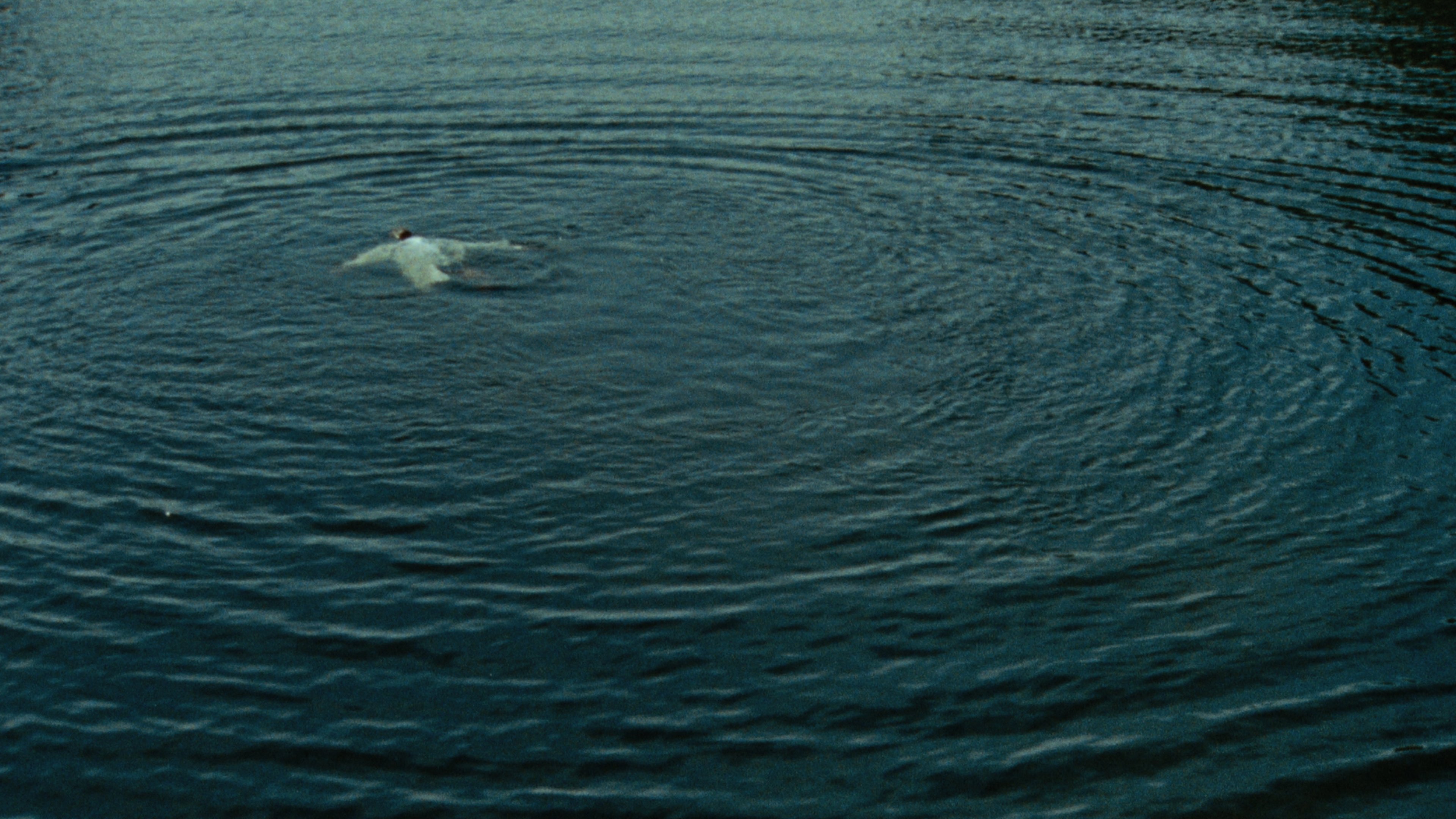
Meet Cameron Clay, one of the Winners of the 7th Annual Focus Features Short Film Showcase
A Q&A with the writer and director of JESUS IS COMING (to take the Church away)
Cameron Clay’s short film, JESUS IS COMING (to take the Church away), is one of the works chosen by a special jury of filmmakers, curators, and critics for the Focus Features Short Film Showcase. Created as his MFA thesis film at Columbia University, JESUS IS COMING (to take the Church away) was selected from a pool of projects across a number of graduate programs across the country.
In Clay’s short film, JESUS IS COMING (to take the Church away), a devoted reverend and his son suspect an extraterrestrial explanation when faced with mysterious disappearances in their small rural town.
We asked Clay about the inspiration for his film, the artists who influenced him, and his plans for the future.
Follow Clay on Instagram @cm.cly and learn more about the filmmaker at www.camerondclay.com
JESUS IS COMING (to take the Church away) dir. Cameron Clay
Where did the idea for JESUS IS COMING (to take the Church away) come from?
The title of the film comes from a lyric I heard in the gospel song “Keep Your Head to the Sky” by Rev. Thomas L. Walker. It is a relentlessly hopeful song, urging the listener to hold tight to the promise that Jesus will come down to carry the faithful to a better place. This is a familiar message—but something about the language used, and a lifetime of watching Ancient Aliens with my mom, made the parallel between being carried to heaven and UFO abduction imagery suddenly obvious. I kept finding similar language in gospel songs: there is someone in the sky watching over you. A ship will take you from this place to a greater one. All you have to do is believe. It got me thinking about resilience, and the dogged hope that has been necessary for us to survive here. If there was anyone in America who could find a ray of hope in a UFO abduction, it would be Black folks.
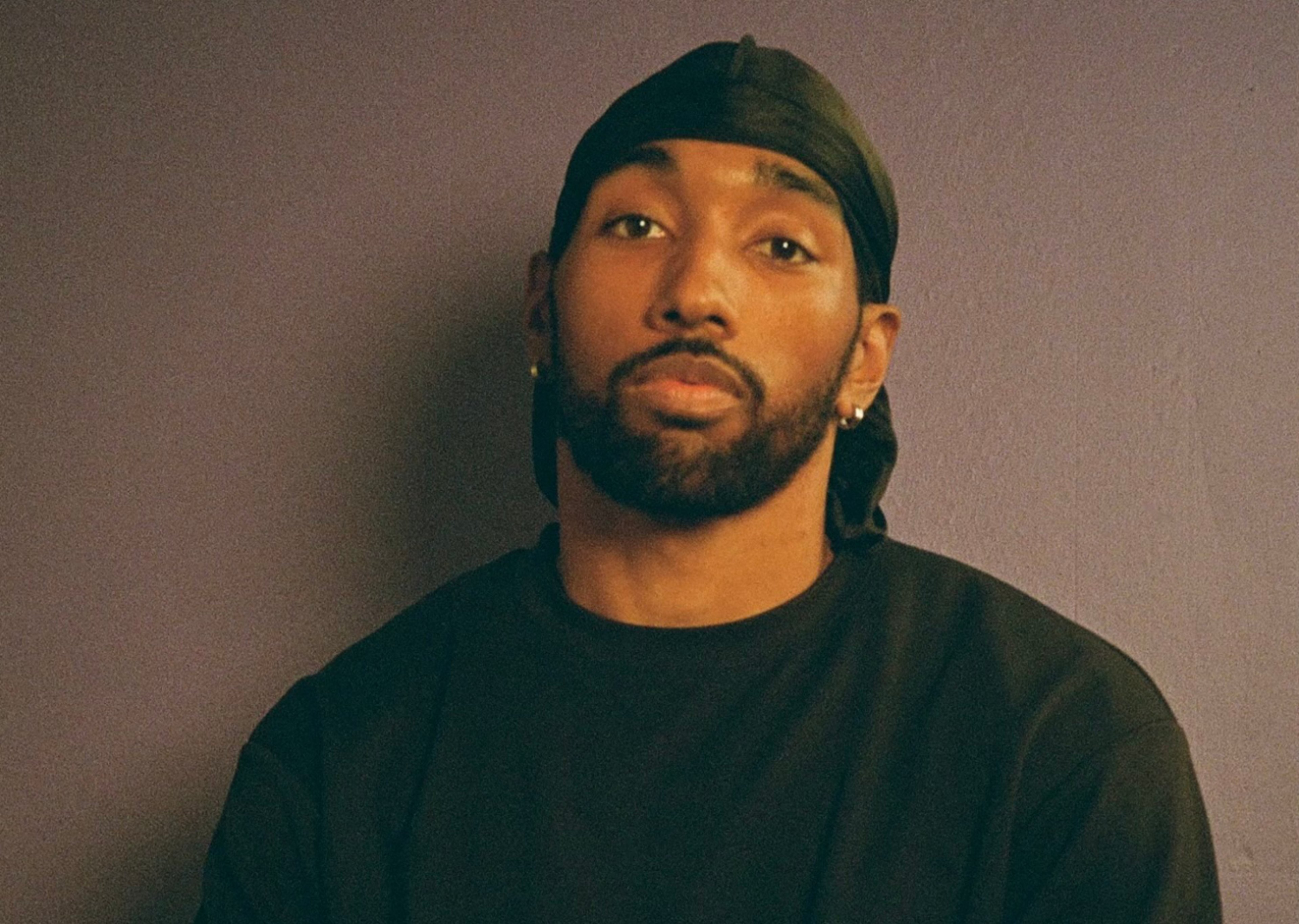
Filmmaker Cameron Clay
How did you find your cast?
In the church scene, my grandmothers are sitting right next to each other. My Uncle George is behind them. My cousins are wearing my great-grandmother Bertha’s old church hats. My mom even plays the role of the mother of the missing boy in the movie. This movie is filled with my family. We filmed in Roxboro, North Carolina where my folks are from. When we needed a ton of extras to populate the vigil and church scenes, my mom put the call out. I have a big and very supportive family, so it was no surprise that so many answered.
What in the final film best captures what you imagined when you first pictured the film?
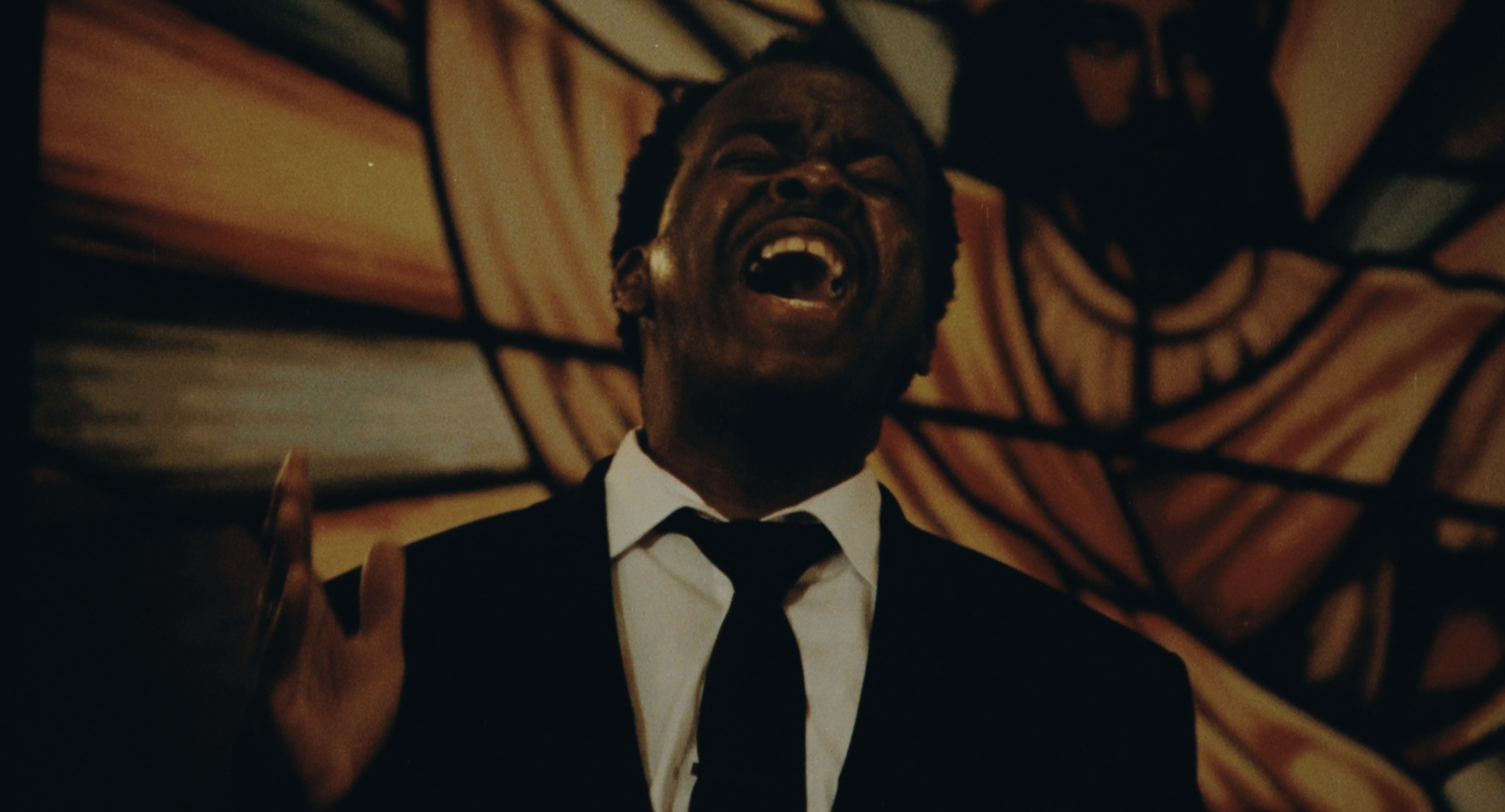
The church sequence. As a kid I remember watching a whole church full of people become one unified instrument of praise. I was inspired by this: people connected in this communal release of a week’s worth—sometimes a life’s worth—of pain. I had no idea how we would be able to capture a moment like that within the artifice of a film set. I did not know if it would work until I heard the choir rehearse. I was instantly teary-eyed. I had to step off set.
It was one of our toughest filming days and we were running way behind on time. We had a real church, pews filled with real family and neighbors, and a real choir. There was so much dialogue. There was a musical number. We were filming with two different 16mm cameras. There were so many moving parts. Everyone was waiting. The pressure was on, and it mostly fell on the shoulders of our young star, Donovan Cornelius. Like his character, Donovan rose to the moment. Seeing him actually struggle, hearing my own family in the congregation lift him up with encouragement, and then seeing that final cascade of music and praise made all my worries go away.
It is a complicated moment befitting a story about our relationship with religion. No matter what we have struggled against in this country, we have been able to find those moments of community and shared release in the church. It felt like we captured lightning in a bottle on set that day.
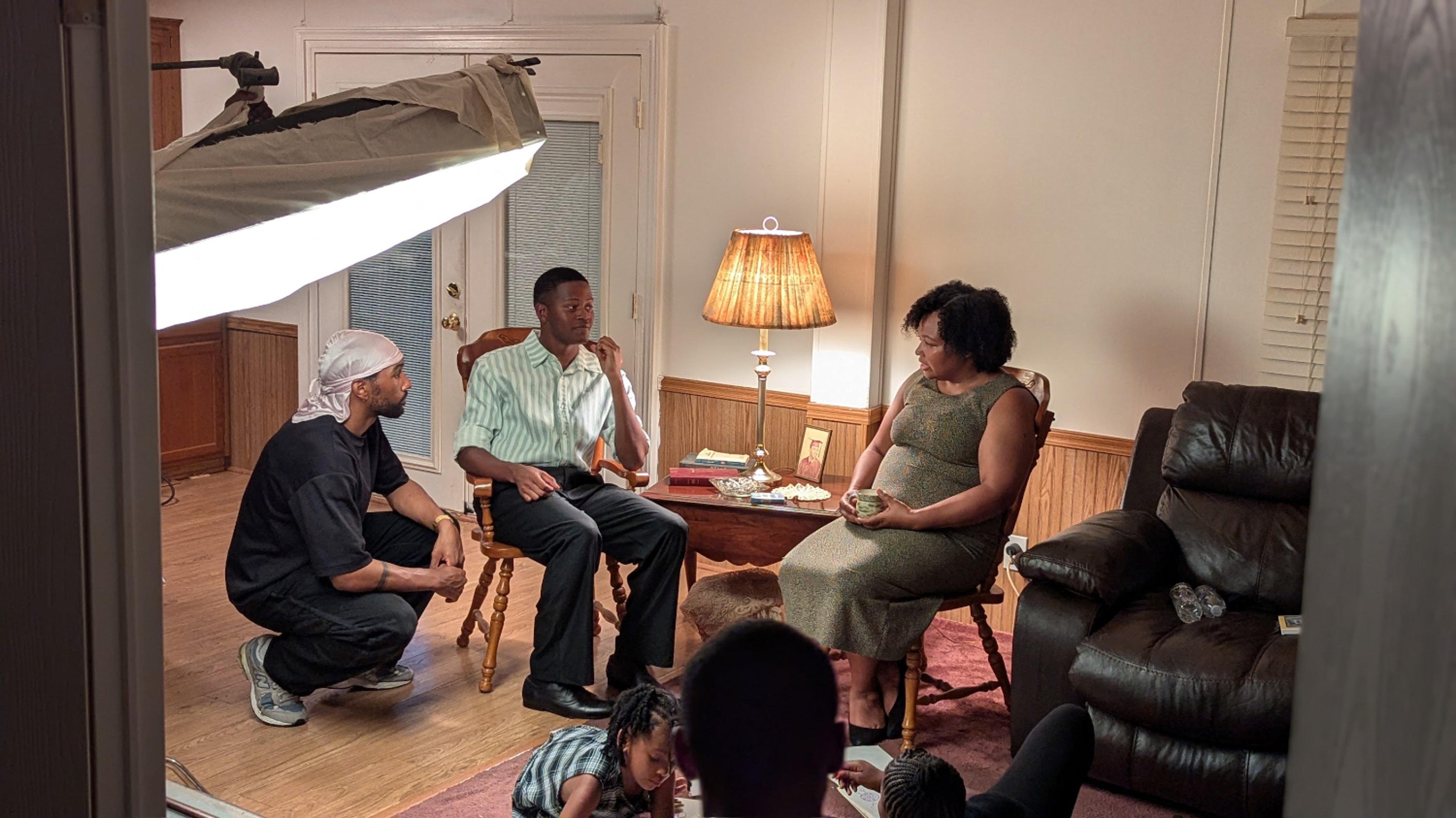
Cameron Clay on the set of JESUS IS COMING (to take the Church away)
What was the biggest lesson learned working on JESUS IS COMING (to take the Church away)?
Pay attention to what is in front of you. My friend, Tosin Popoola, who shot the super 8 footage in the film, is an incredible photographer whose work and ethos has really pushed me to be looser in my process. It always goes back to the feeling and keeping your antenna up. We had a tough shoot. Trying to make a movie on 16mm film in tobacco fields, on lakes, and with dozens of extras in the sweltering heat of a North Carolina July was a real challenge. My producer Yaél and I were trying to squeeze everything we had out of our limited resources. It’s stressful, it’s exhausting, and it feels impossible—but at the end of the day you just have to take what has been given to you and lean in. We got rained out the day we were supposed to shoot our church exteriors. It ruined our schedule and forced us to shoot the driving in heavy rain. That shot ended up being one of my favorites of the film.
So much of the story of the movie is about surrendering to what you cannot control. Trees that don’t bend will break. Sometimes it takes a while for me to truly learn a lesson, and often when I’m making a film I’m wrestling with a lesson that I still have to learn. Loosening your grip and being at the mercy of something greater than yourself was on my mind when I wrote, but the filmmaking process really hammered the point home.
What was the first film you saw that made you want to be a filmmaker?
It’s funny because I think it happened before I even saw the movie, but The Strangers (2008). I grew up in a household that adored horror movies. We watched everything. My mom especially would be so excited to go to the theater and see the new scariest thing out. My whole childhood I remember my mom talking about her favorite horror movie—the one that scared her the most—and she would always talk about The Strangers. It developed a certain mythical quality. She had seen and would watch anything, but here was this one movie that really shook her up. I just loved the way she talked about it. It was like a monster that I would have to prepare myself for.
The fact that a movie could make someone feel like that is a thrill I’m always chasing. Horror is still my favorite genre because you can make someone feel something so viscerally. It’s definitely shaped the way I think about making movies: I just want you to feel it. When I got older and finally watched The Strangers, it scared the shit out of me.
Are you working on a feature film?
I got a couple on me. The first is a horror film, Wretched, that is an extension of this short. It is set in 1970s North Carolina and follows a pastor who begins to suspect that he has a direct line of communication with God after he is abducted by aliens. The second is a dark comedy about a man who develops a street fighting addiction after getting knocked out in front of his wife and kids.
This interview has been edited and condensed for clarity.
