Making Finding Emily a Rom-Com for a New Generation
An exclusive Q&A with director Alicia MacDonald
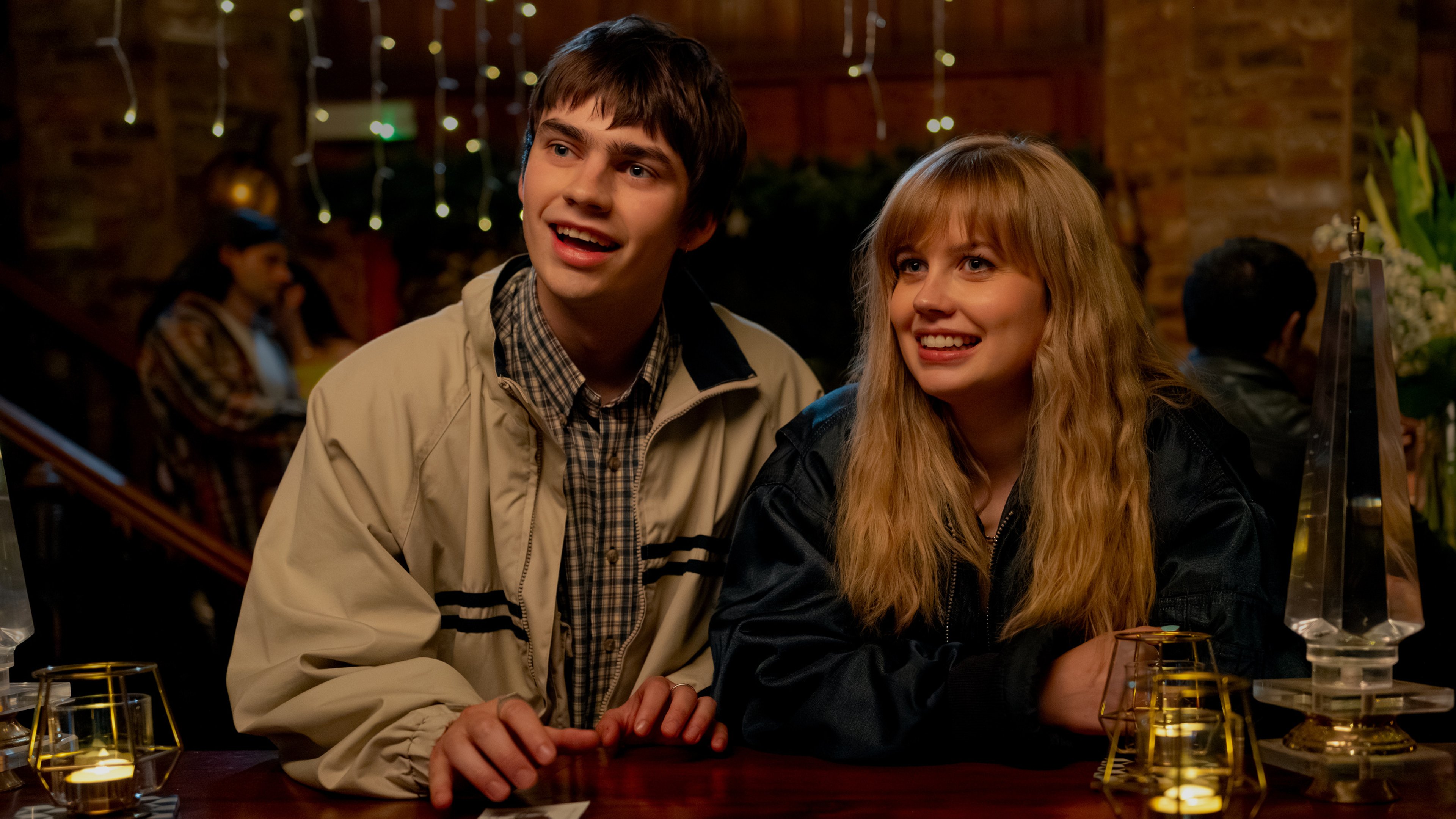
In Finding Emily, Alicia MacDonald brings a fresh energy to the classic rom-com by letting romance blossom with honesty and wit on a modern college campus. When Owen (Spike Fern) meets the girl of his dreams one night, his fantasy fades when he realizes her phone number doesn’t quite work. Another Emily (Angourie Rice) offers to help him find his beloved, while also chronicling his romantic gestures for her psych dissertation. As their best intentions spark a social media storm and on-campus chaos, the two push forward, learning to trust their own hearts.
After honing her comic chops on a number of TV series, MacDonald brings her bright style to give warmth and depth to Rachel Hirons’ screenplay. “Alicia MacDonald is the real deal,” writes the Telegraph. “There are dozens of characters here all nailing laughs by being 100 per cent themselves: that takes not only inspired casting and acting, but a person in charge who knows how to wring the juice out of every syllable.”
We spoke with MacDonald about finding the perfect lead actors, falling back in love with rom-coms, and grounding her romance in Manchester.
The official trailer for Finding Emily
What drew you to direct Finding Emily?
Truth be told, I didn’t want to direct a rom-com. I’ve always been interested in comedy and satire, but I had (misplaced) prejudices about rom-coms. I loved and revered the iconic ones of the ’90s but romantic comedies seemed to have slid out of cultural favor. What I’ve since come to believe is that I’m not sure what is more important or indeed universally worthy of the big screen than romance? Or comedy.
I did a lot of research and watched a lot of rom-coms. The lessons in almost all of them feel vital for just being a person in this wily world. Where else do we learn that love should be fun? That miscommunication equals chaos? And that, in the end, honesty and vulnerability are the key to a healthy relationship? How you execute the formula is absolutely everything. In making this film, I went on my own meta journey from cynic to romantic and am now fascinated by how we as a society hold onto our romanticism and idealism in an increasingly cynical, disconnected world. I loved the idea of trying to make something satirical and funny but also soulful, cinematic and emotionally engaging.
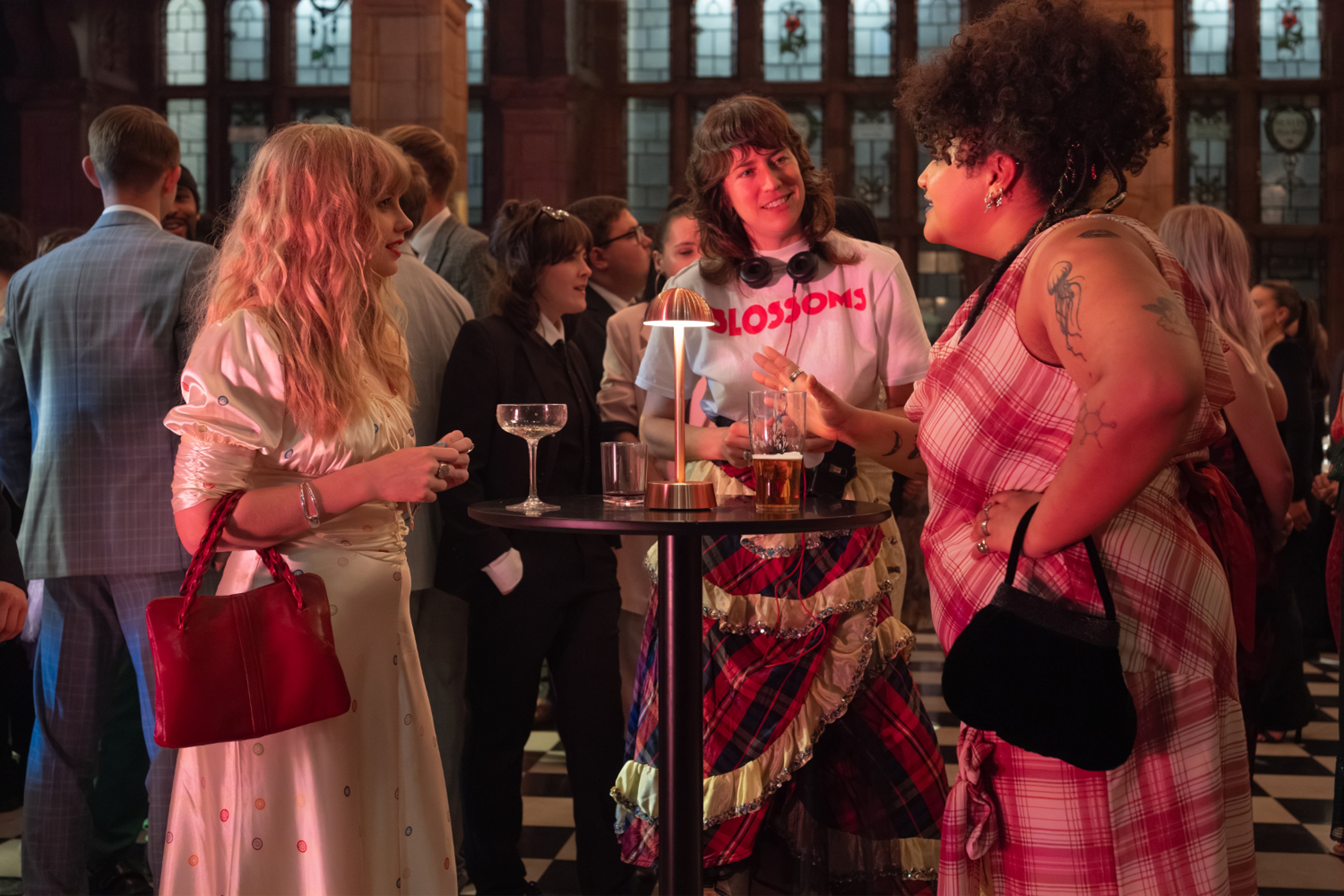
Angourie Rice, Alicia MacDonald, and Amber Grappy on the set of Finding Emily
In creating a new kind of romantic comedy, were there examples of the genre that helped set the tone for Finding Emily?
I wanted to create a fully-realized comedy campus world in the vein of the iconic 10 Things I Hate About You and Clueless. I love those movies. They’re so tightly structured and self-aware. I was really inspired by the proper conversations in When Harry Met Sally. I wanted Owen and Emily to fall for each other in a similar way—through ambling conversations, jokes, and gestures, gently revealing to each other their fears, contradictions, and vulnerabilities. That kind of slow-burn love felt real to me. I knew I had to deliver on the tropes of the genre but I wanted them to be actioned by characters who felt like real people as opposed to just characters in a movie. The Worst Person in the World was a key reference for people behaving absolutely authentically and battling real-world issues. I was also inspired by the snappy, clever dialogue of classic movies like His Girl Friday and It Happened One Night. The fast pace of the dialogue creates a tumbling, captivating momentum where the characters almost can’t talk quickly enough. It creates a feeling that there really is no time to lose. I wanted that kind of existential energy for Finding Emily.
Casting the two leads in a romantic comedy is obviously crucial.
The performances had to be anchored in honesty. I wanted actors who understood the math of comedy but who could also hook into the messy truth and confusion of just being a person in the world, human beings just trying their best with the information they have in front of them at that moment. Angourie and Spike both do this so gloriously. They have completely different processes as actors but they were both so kind, giving, and respectful of their different approaches. I think they learnt a lot from each other too, which was such a gorgeous thing to watch.
Spike’s tape came in a day before the chemistry reads, which looking back now feels dramatically fated. I wasn’t entirely sure what I was looking for in Owen. I was hoping I would know it when I saw it. And I did! Seeing the two of them for the first time as the characters—the way they physically and emotionally impacted each other—was mesmerizing. It was awkward and stilted, clumsy and tender, achingly self-conscious. I almost couldn’t watch. Indeed, I only had them do one take (with everyone else I’d done at least two) which I couldn’t really explain at that moment but I felt sort of stressed by watching them, as if I’d seen enough of their specific alchemy and didn’t want to waste another drop of it.
How did Manchester become essential to the story of Finding Emily?
I think the best romantic comedies have a specificity of time and place. I wanted to treat Manchester with as much reverence and respect as New York or London. It really is one of the coolest cities in the world. It’s a city of passions—sports, music, political activism, groundbreaking science (the atom was split there), food, culture, art. I wanted all of that to be bubbling under the surface. I wanted the city texture to affect the story, so we carefully chose the pubs, bars, student areas, graffiti-covered side streets, and music venues which would appear in the film.
Our location managers were all so excited to put their city on the big screen. I wanted to shoot outside as much as possible to anchor the film in Manchester. Equally, I didn’t want to shoe-horn in Manchester’s iconic landmarks just for the sake of having them in the film. Their appearance had to feel earned and part of our characters’ real lives. During Owen’s cycling sequence at the start of the film, I wanted to be sure that his route was genuinely the way he’d get to work and that we weren’t having him swing round the Pankhurst statue gratuitously. I wanted the city to feel like a character that impacted everything but one that held the action lightly, casually, and coolly, never jostling to be front and center. Shooting on the infamous Canal Street was a glorious coup. It added such amazing scale, while also providing a story insight into Owen’s despairing state of mind. Despite it being complicated for the locations dept, they really pushed for it, knowing that it would enhance the film's flair and authenticity.
You orchestrate a great cast of supporting actors to bring in drama, diversity, and more comedy.
Our guiding light was always honesty; real people behaving authentically and that included the supporting cast. I wanted them to be fully rounded characters with their own lives, problems, and backstories, which I think makes them more interesting to watch. It felt real to me, for example, that Owen would call Freya and not Matt when he was feeling down. But it was also really important that Matt wasn’t the stereotypical cruel older bro, that he cared so much about his little brother but just didn’t always have the words to express his feelings. It was important that Emily and Owen had people around them who were looking out for them, caring for them, who would call them on their bullshit but also knew how to pull them out of their sadness.
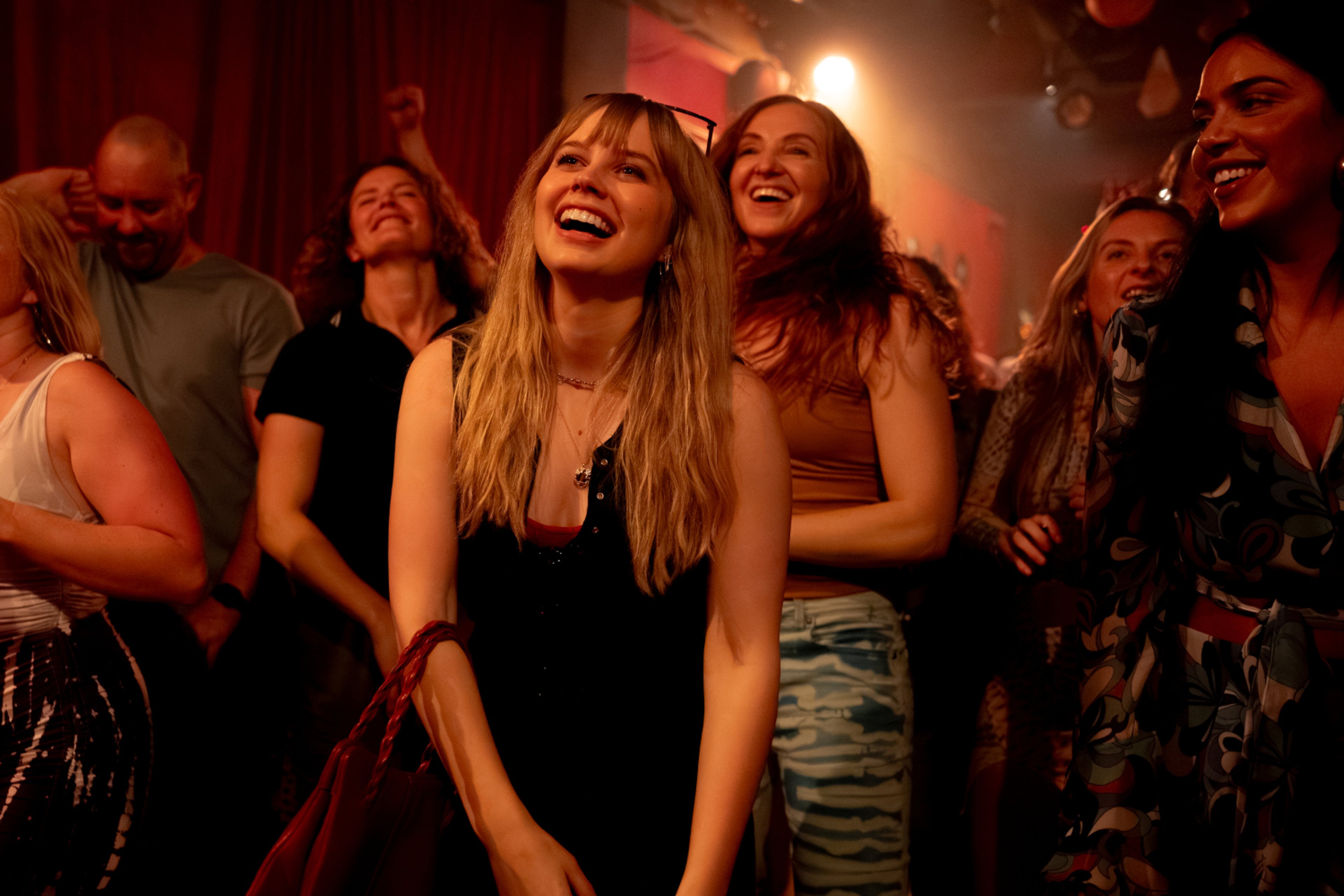
Angourie Rice in Finding Emily
Can you talk about how you made social media a storytelling element in the film?
It wasn’t until I was in the edit that I realized that we needed a social media montage to explain what the outside world thought of Owen. I didn’t want to lean too much into graphics, because it would not fit with the rest of the film's nostalgic feel. Editor Phil Hignett and I wanted the social media sections to be funny and surprising as well as informative. I wrote a script and split it up into one line for each actor. We thought it could be cool if each line or word was linked to the next so that it felt like the characters were finishing each other's sentences. It was a lot of trial and error in the edit but so fun to do. It was also an opportunity to add more layers of authenticity as we used real influencers from around the world. We sent them the podcast scene to watch and showed them Owen’s email and asked them for their real-life reactions.
The soundtrack reflects Manchester’s historic role as a music center. Can you talk about how you used music in the film?
Music is always vital in my work but I knew it was going to take on a new level in a film set in Manchester. Some of the best bands in the world have come from here. While it was important to show reverence for the city’s incredible musical legacy, I also wanted to showcase new bands and artists like Antony Szmierek and WH Lung. We also wanted a score to give heart and depth to the story. Morgan Kibby brought so much soul and gentle awe to the score. I remember when she first played me the piano theme that plays as Owen runs, I bawled my eyes out.
Can you talk about finding the right rhythm for the film?
In terms of the rhythm, the film had to be set absolutely in the present day but I wanted it to have a classic feel to it. In many ways, I shot the film in quite an old-fashioned way. A key visual was to hold Emily and Owen in the same frame wherever possible in order to build their chemistry. The director of photography Rachel Clarke and I implemented this wherever we could, foregoing close-ups in big emotional moments in favor of keeping our pair in an engaging two-shot. In the edit, we could choose our favorite take and let it play out. Finding the tonal balance of satire and sincerity, romance and comedy, was an ongoing conversation in the edit.
What do you hope people take away from Finding Emily?
“True freedom in this life is knowing you’re cringe and doing it anyway.”
This interview has been edited and condensed for clarity.
