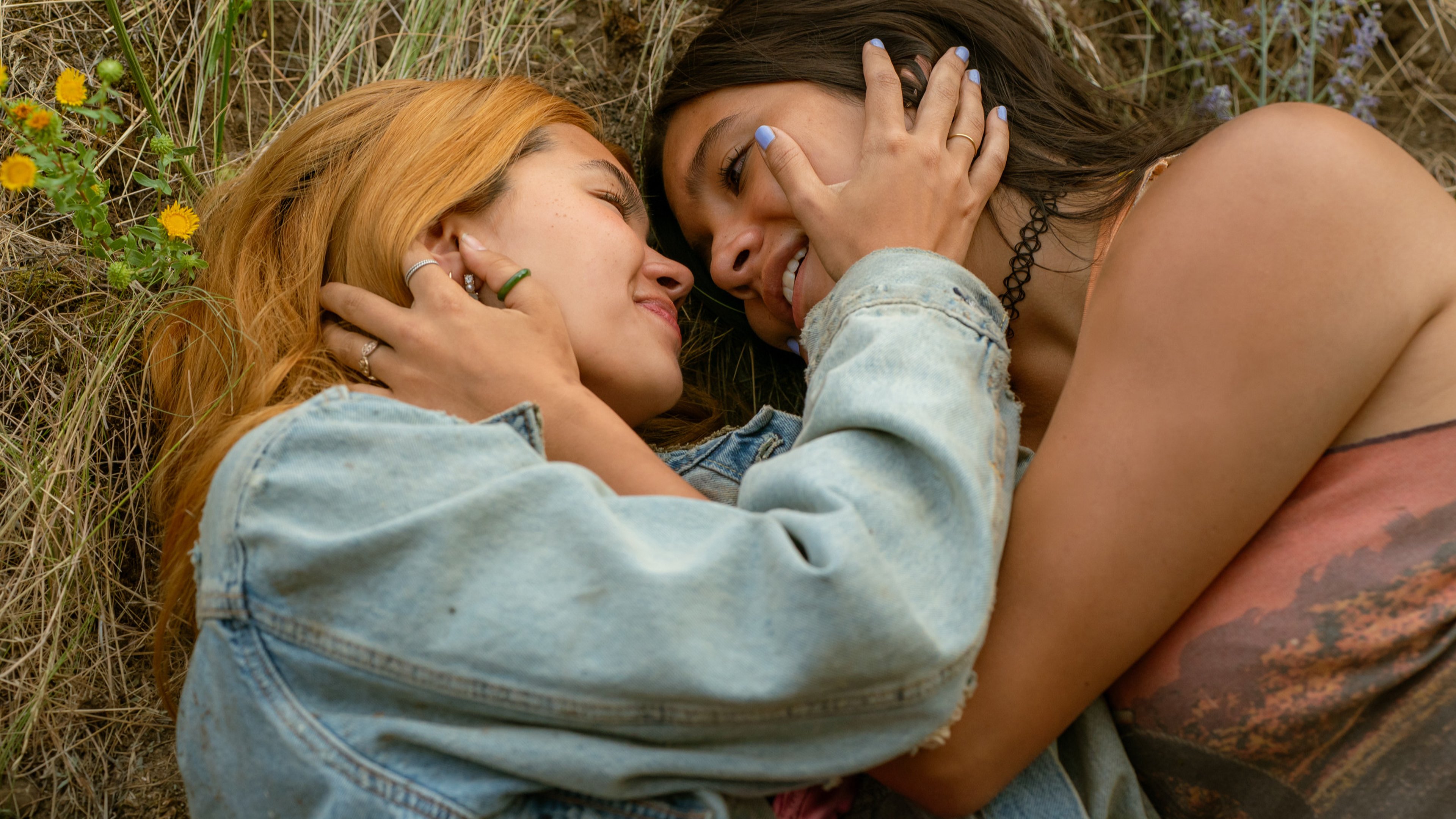
Lensing the Look of Love in Girls Like Girls
An exclusive Q&A with cinematographer Sonja Tsypin
Set in a small town in Oregon in 2006, Hayley Kiyoko's Girls Like Girls follows Coley’s (Maya da Costa) journey from being the new girl in town to falling in love with Sonya (Myra Molloy) to growing up. Resonating with the warmth of summer and lazy afternoons outside, the film “captures the easy swoon of young love,” writes Mashable. What began as a hit song, Kiyoko transformed into a music video, novel, and now feature film.
Cinematographer Sonja Tsypin worked with Kiyoko to bring all the many iterations of the story into a cinematic style that explores the complex feelings of falling in love. Indeed, Variety writes, the film is “bathed in the all-day magic-hour glow cast by DP Sonja Tsypin’s gorgeously hot, honey-dipped lensing,”
We spoke with Tsypin about making the secret feelings of the characters visible, allowing each scene to breathe, and falling in love with Kiyoko’s world.
The official trailer for Girls Like Girls
How did you get involved with shooting this story?
From what I understand, I was the first DP to interview for the project. I was on a job in Estonia at the time and had to jump on the video call with Hayley at some bizarrely late hour, but from the moment we started talking, I felt we were on the same wavelength. When I first read the screenplay, I could see the world Hayley had been creating for the better part of a decade vividly in my mind. There was a lot of overlap in our instincts about the story as well as in our communication style. We are both very straightforward people with a lot of ideas, and we unapologetically follow through on them. The collaborative dynamic between us formed pretty effortlessly and before I knew it I was offered the position of director of photography.
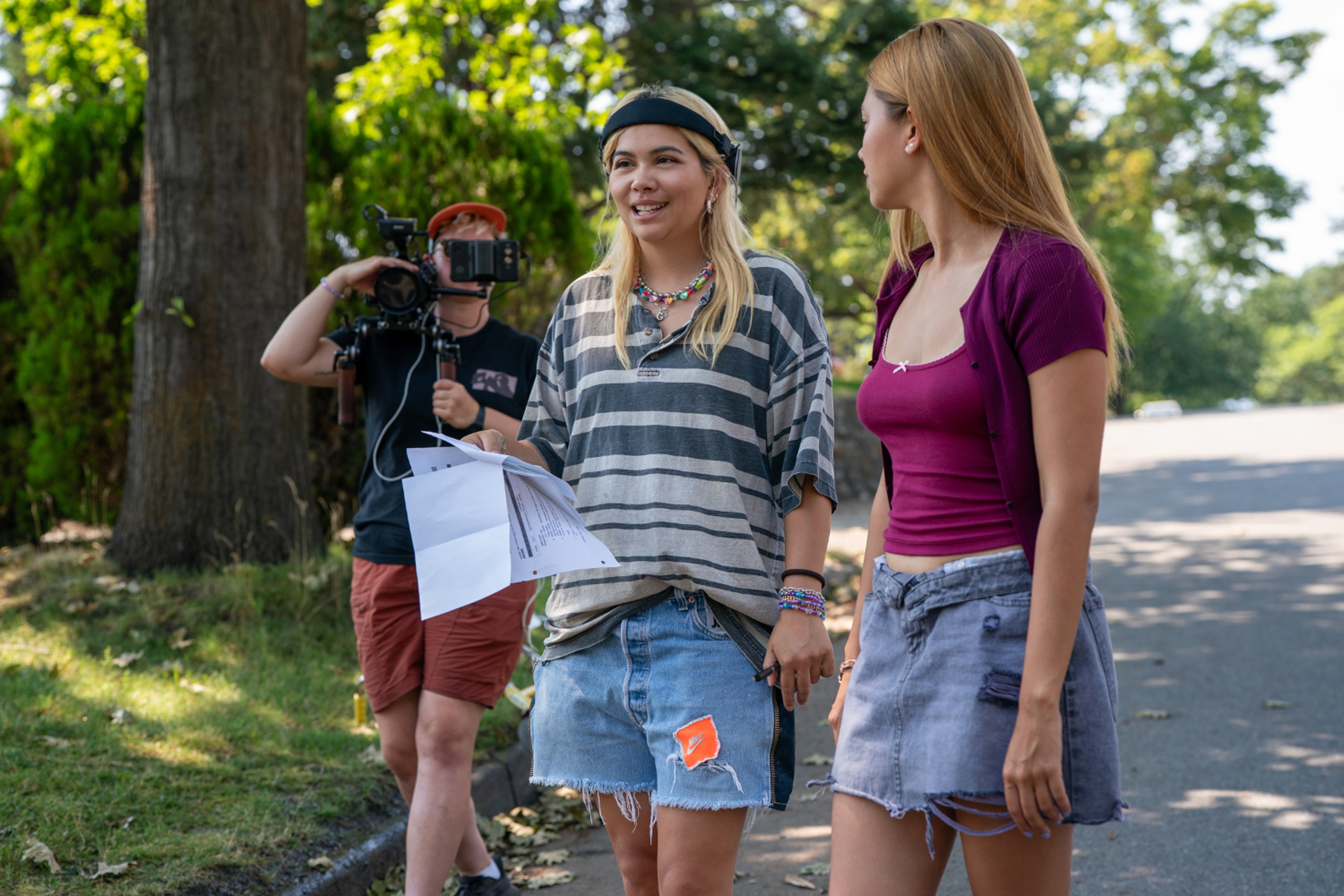
Hayley Kiyoko and Myra Molloy on the set of Girls Like Girls
What were your original conversations about the look of the film?
The first words Hayley used to describe the world of Girls Like Girls were not actually visual descriptors but rather sensory ones: hot, sticky, and existing somewhere between the present tense and a memory. We worked to keep those initial instincts at the forefront of our minds throughout the process of building the overall visual landscape of the film. As our conversations deepened, we turned our attention to the central drivers behind the film’s aesthetic choices: character and story. Our priority was to capture the complicated and often competing internal motivations, fears, and desires of our protagonist, and to eventually reveal Sonya’s inner world as well—which is intentionally shrouded in mystery early on. People, especially young adults, often work so hard to keep those first flutters of love and attraction hidden; we wanted to make the invisible visible.
Did Kiyoko and you look at particular films or photography as references?
Hayley and I did try to look inward as much as possible for clues on how to best tell the story, drawing both from Hayley's personal history that inspired the script as well as from universal experiences which we can all tap into of love and heartbreak. That being said, there were films that stood out to us for their especially evocative visual language and thematic relevance. Frank van den Eeden shot Lukas Dhont’s 2022 Belgian film Close, which did an incredible job illustrating complex emotions like stifled inner longing and the type of grief that accompanies loss at a young age. Fittingly, considering its title, Close reinvented the close-up for me. It reminded me to never underestimate how every minuscule decision can have colossal impact, down to the exact shape of the light reflected in a character's eye. I wanted to bring that level of precision to this project. Other films that inspired my thinking throughout the process included We The Animals, American Honey, and other work by Andrea Arnold, as well as a music video for the song “plus rien n'est grave (Nothing is Serious)” by Wallace Cleaver.
How much did the original music video influence the look of the film?
It was very important to honor the gravity of what this music video has meant over the years to such a large community of people. We had a lot of conversations about which elements we can take with us as sacred artifacts, not only of the video but also of the song, the book, and the love story as it exists in the collective imagination of everyone who grew up with it. In making a feature-length film, one of our aims was to retain the overall warmth, in all senses of the word, that contributed to the potency of the music video. This included the literal warmth and sun-drenched tones, but also the intimacy and empathetic gaze of the camera work. What I was hoping to achieve was a broader expression of these characters and environment, to allow audiences to enter into an even deeper, multidimensional version of the world they had already fallen in love with. In this case, that meant expanding the color palette and contrast to be able to encompass more situations and feelings in a naturalistic way.
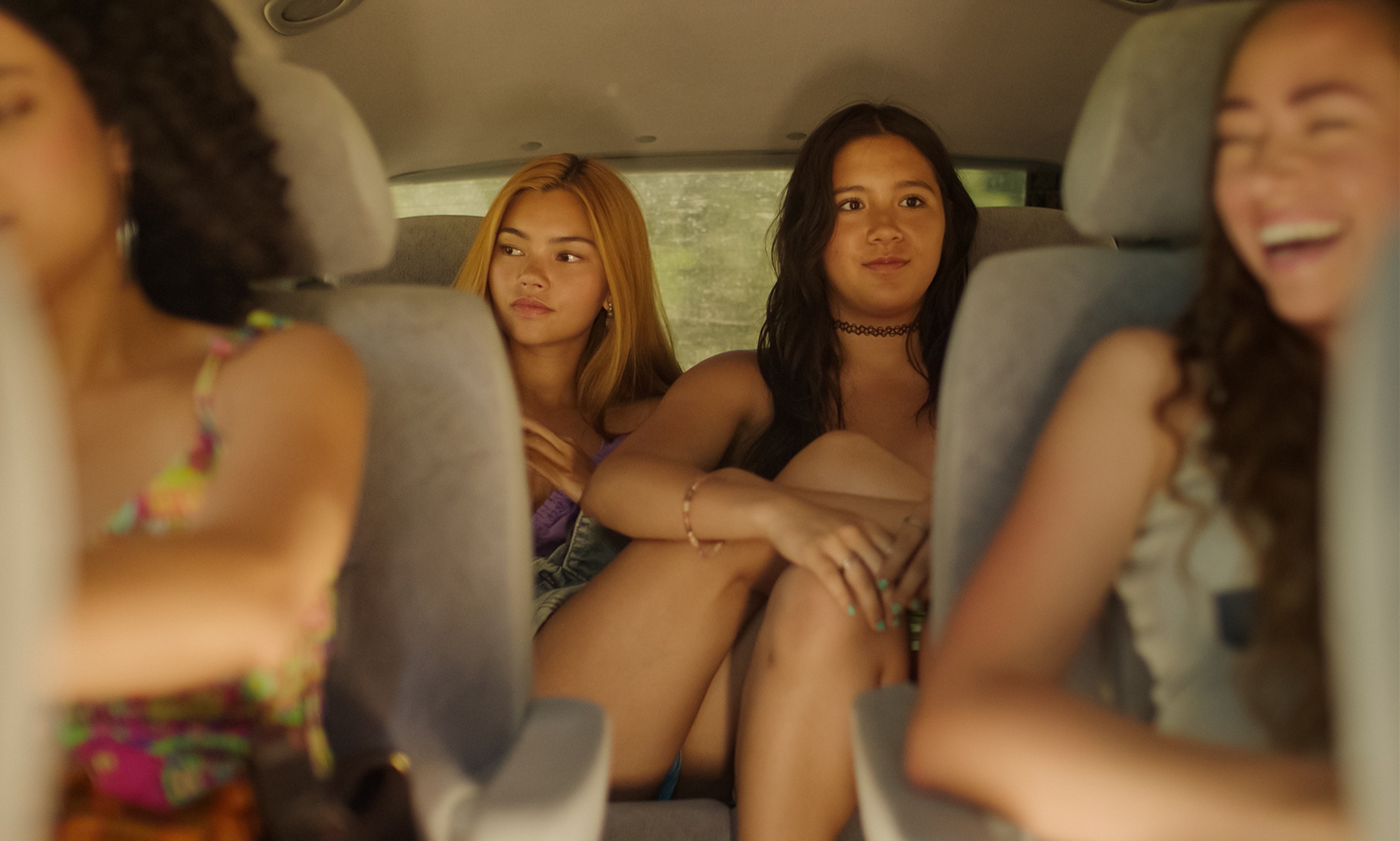
Myra Molloy and Maya da Costa in Girls Like Girls
How did you work with the production designer and costume designer to create the film’s palette?
I had an incredibly close collaboration with our production designer, Lindsey Moran, and costume designer, Kellie Dunsmore. Early on, we decided to limit our palette to what we called “off-wheel” colors, meaning we would gravitate towards the more unexpected cousin of any given hue whenever possible (periwinkle instead of purple, salmon instead of pink, etc.). In terms of how the color palette changes throughout the film, Hayley and I wanted to create a sine wave of tonal progression that would echo the peaks and troughs of Coley’s narrative development. We needed our lens and filtration choices to support that range of not only color but visual texture, so I was really looking at how the glass we tested responded to various qualities of light and, for instance, which colors showed up in the flares depending on different variables. We ended up landing on one of my most tried-and-true lens choices, a set of Canon K35 primes supplemented by a few FD-X focal lengths and one single Arri/Zeiss Signature Prime which we used to bring a heightened level of detail rendition to a few very specific moments in the film. All of us collaborated on making sure the costumes and production design followed that same emotional roadmap to form a coherent color story which journeys from warm gold, peach, and lime hues to deeper jewel tones, cyan, and muted steel blue as Coley grapples with the depths of loss and confusion. Eventually, we find our way back to the palette we started with as the girls find their way back to each other.
Can you talk about how you shot the film, especially your use of soft and shallow focus in parts.
Considering the intimate and contemplative quality of this story, we ultimately opted against any sort of conspicuous or overly stylized approach that risks drawing undue attention away from Coley and Sonya’s immediate emotional realities. Instead, we focused on honoring the quiet creative choices that highlight subtle shifts within them and let us deeper into their perspective. Hayley and I dedicated a lot of time to breaking down each character's journey to make sure we never lost the connecting thread of emotional logic that holds their story arcs together. We felt that handheld camera movement reflected the ever-changing and kinetic energy of a new connection and gave me the freedom to react to the actors and the small emotional shifts in real time. We chose to contrast that with Curtis’ grounded energy as he tries his best to provide Coley with some stability, which we reinforced with more composed static shots. When Coley finally chooses to open up to her dad, we go back to handheld as a nod to the idea that Coley is letting him into her world (and literally into her room) for the first time.
I also felt that a large sensor size would serve this story well; I find that it often adds a sense of grandness to the image and wraps around faces in a more amplified way, which could appropriately mirror how everything in our teen years feels like life or death. The shallower depth of field is an inherent characteristic of larger formats, and although in the past I have sometimes associated it with isolation, in this film, I wanted to use it to help guide the viewer’s eye to the character’s exact point of hyper-fixation in any given moment, whether that be a body part, a photograph, or an AIM message. If something is all Coley can think about, it is all we can see clearly in frame. My goal was for this to ground us even more in her POV. As Coley learns more about herself, navigates the stages of acceptance, and becomes more open to new friendships and support systems, the depth of field increases, and we gain a wider perspective at the same time as she does.
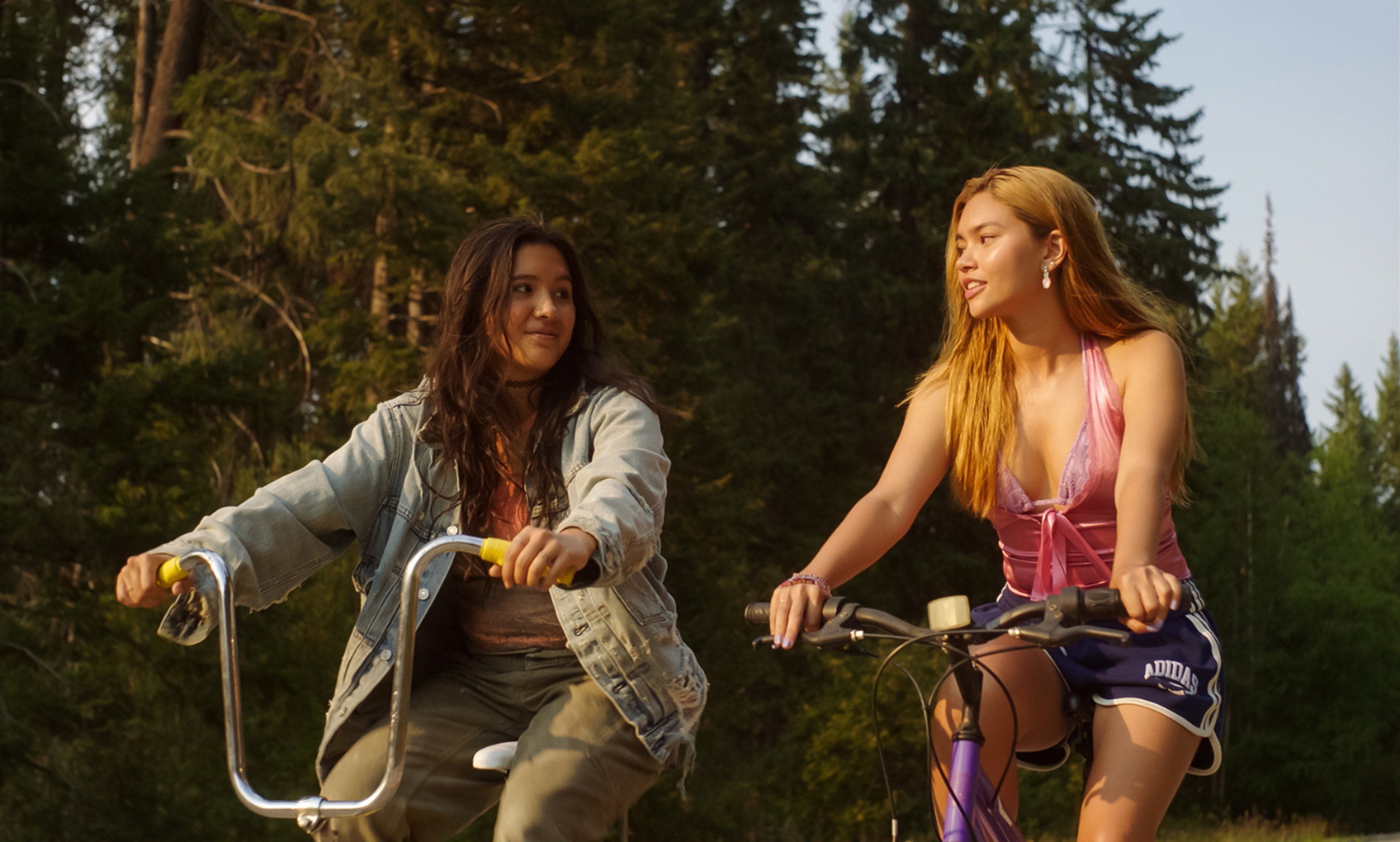
Maya da Costa and Myra Molloy in Girls Like Girls
The film captures the ineffable emotion of falling in love, especially the rather giddy sense of first love. How did you capture that cinematically?
Someone once told me that if your film can be watched without sound and still be understood, you've succeeded. I kept that in mind throughout the process of making this film. Love, especially, happens in the unspoken moments, and that is what we worked to capture: the feeling of someone’s gaze on the back of your neck, the electric skin contact that no one else saw, the premature thoughts that threaten to be revealed if you make eye contact for too long. Hayley is incredible in that she truly wears her heart on her sleeve. This allowed her to be consistently present with her emotions throughout filming, which is a very rare and difficult thing to do in the face of all the logistical challenges of set. If a take didn’t immediately elicit the feeling she was going for, she would just cut and say, “I didn’t feel it, change it.” I found this to be a huge gift for me as a filmmaker, because it forced me to also put my technical and managerial brain aside in those moments and let my emotional compass guide me towards stronger creative decisions. Often, it was as simple as adding a subtle push in or being slightly more below eye level than before, and when we would finish a take that did work, we didn’t even need to check in with each other; we both knew we had gotten it. I would catch someone wiping tears at the monitor almost every day of filming, so I knew we had something special on our hands.
What do you hope audiences take away from the film?
I hope that audiences will take the film as an opportunity to slow down in this environment of instant gratification and accelerated storytelling and appreciate the simple gestures that constitute human connection. This story isn’t about big tangled plotlines or big shocking twists, but it is a story with big meaning. Ultimately, I hope viewers see themselves in the vulnerability of these characters, and feel, in one way or another, represented on this screen.
This interview has been edited and condensed for clarity.
