How The Uprising’s Medieval Rebellion Casts a Light on Our World
A Q&A with writer-director Paul Greengrass
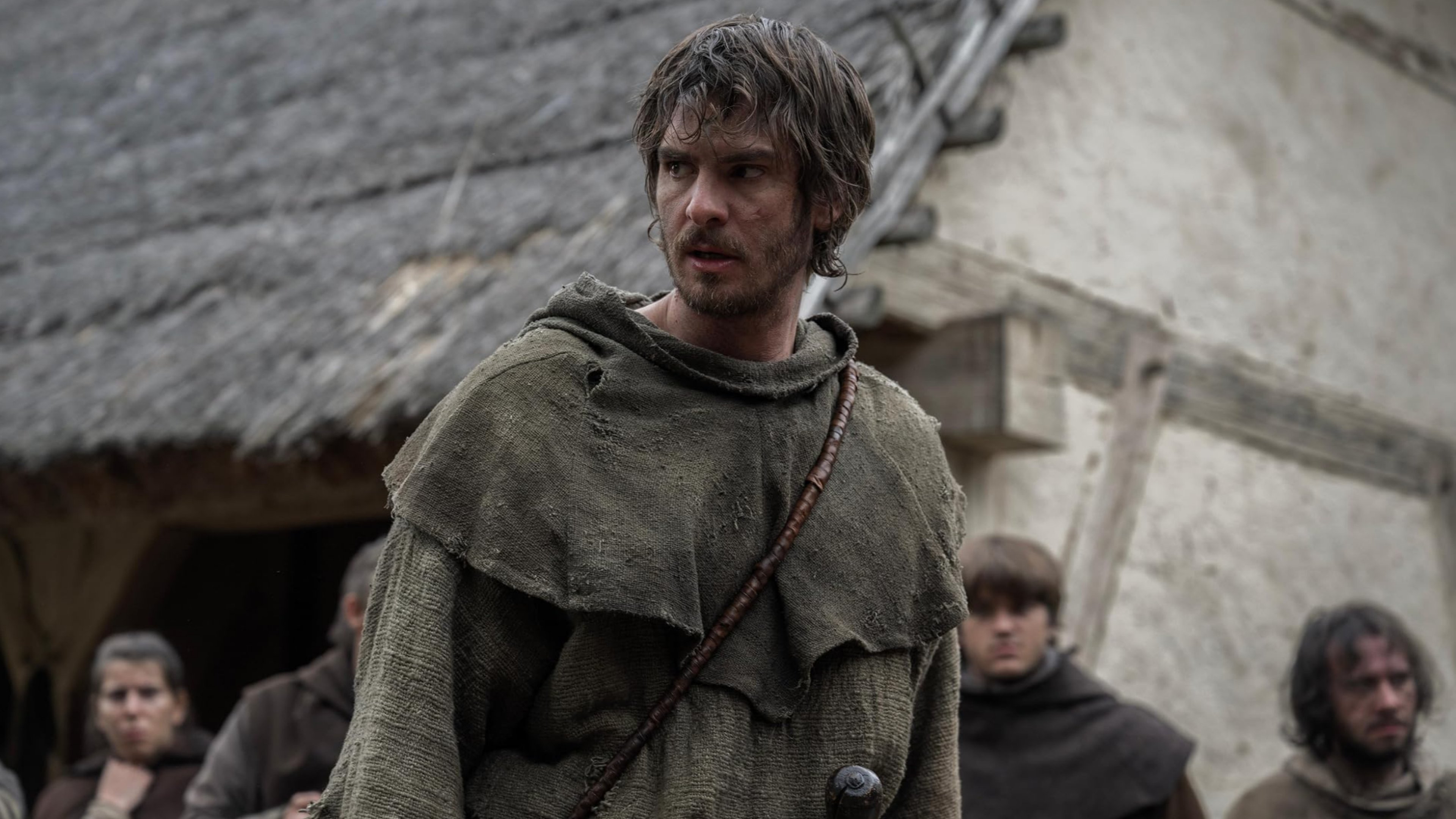
In The Uprising, writer-director Paul Greengrass revisits the Peasants’ Revolt of 1381. “It’s a rip-roaring adventure, but it’s also got something to say without hitting you over the head,” Greengrass told Empire. Using the historical accounts of figures like John Ball (Jamie Bell) and Wat Tyler (Cosmo Jarvis), Greengrass crafts a wholly original account that follows a single Ploughman (Andrew Garfield) who leads his fellow citizens to march on London to ask the 14-year-old King Richard (Woody Norman) for relief from the crushing tax burden. This unprecedented act of peasants requesting to speak directly to their king unleashed a series of events that violently turned London inside out and ultimately created a seismic shift in the nature of governmental power.
Working with a remarkable cast that also includes Thomasin McKenzie, Katherine Waterston, Tom Hollander, Stephen Dillane, and Jonny Lee Miller, Greengrass and his production team bring to the screen the visceral reality of life and death in medieval London.
Greengrass talks about his inspiration, his cast, and ways he transformed modern Nuremberg into never-before-seen London.
The official trailer for The Uprising
Where did the idea for a film on the Peasant Rebellion come from?
I definitely had been thinking about a story about an English rebellion for quite some years, probably because of what has been happening in Britain and America over the last 10 or 15 years. There have been insurgent rebellions against the status quo, the sense that things have to change, and yet the system doesn't want to change. All of that was in my mind. I knew quite a lot about the history. The first thing about the Peasants' Revolt is that it's a fantastically exciting story— it happened in a compressed timeframe over about seven days, and that's good for movie storytelling. Really, it sort of wrote itself.
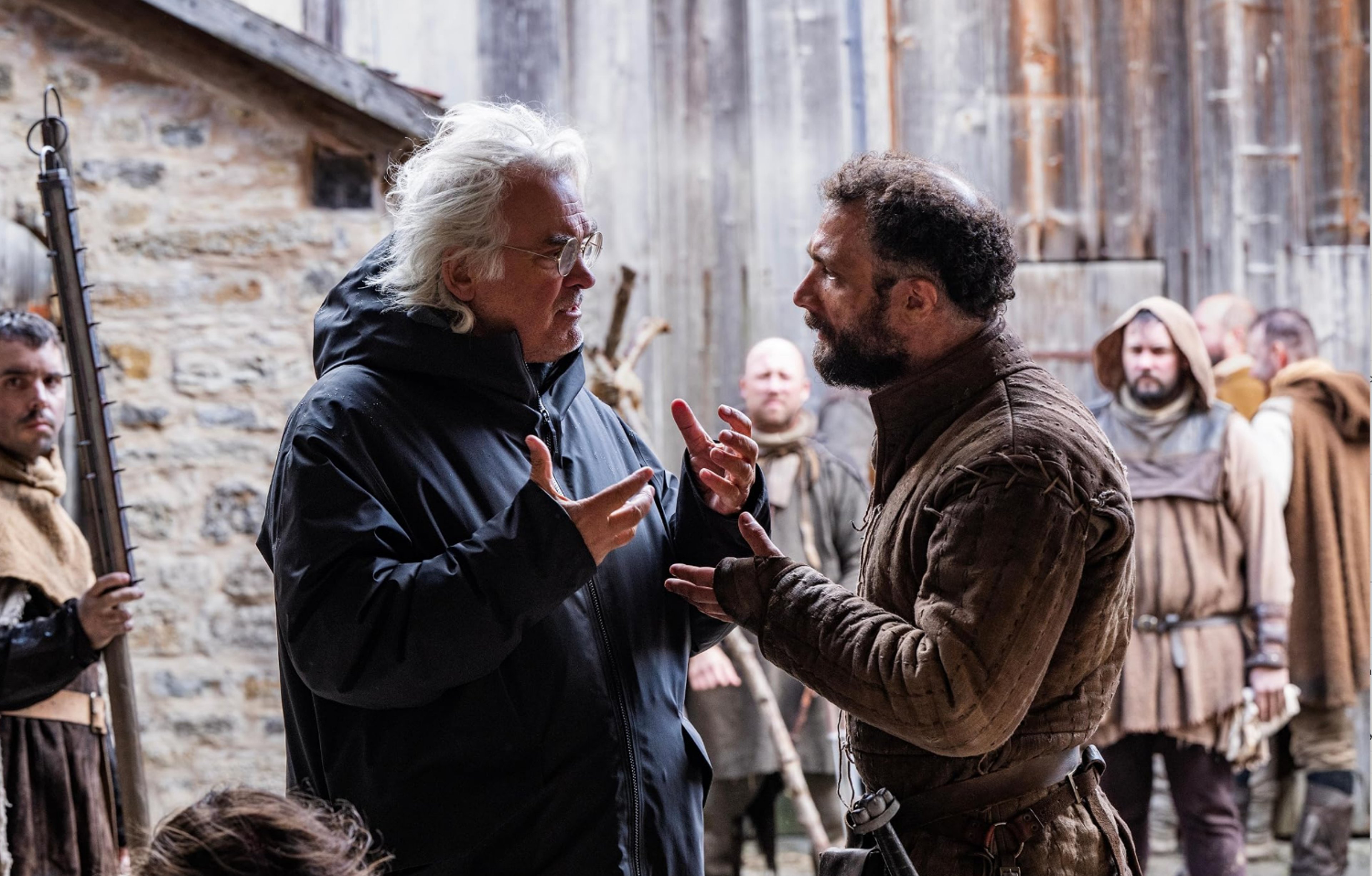
Paul Greengrass and Cosmo Jarvis on the set of The Uprising
It is also a very complicated story in the sense that with revolt comes terrible violence.
Anarchic rebellions by their nature are about tearing down. It's very easy, particularly in movies, to romanticize rebellion. And rebellions are very good at romanticizing themselves. But all rebellions, all revolutions have a dark side because, by their nature, order is torn down. All the rules and boundaries disappear and you have a descent into violence. You can only form the ledger for any revolution after it's occurred. Looking back, I think that the ledger for the Peasants' Revolt was profound, you know. Many historians identify it as the moment when the concept of individual rights and representation comes center stage.
What was the world like in 1381?
The first thing is that it was a world sharply divided between the haves and the have-nots. The medieval world was the rich man in his castle and the poor man out in the fields. There was no middle. When the Black Death wiped out half the population in Europe, it destroyed all the certainties and became the precondition for the near revolution that followed. John Ball, who was one of the main characters in the film, famously said, “When Adam delved and Eve span, who then was the gentleman?” That in a nutshell describes the Peasants' Revolt. Reading John Ball’s biography gave me the idea for Garfield’s character, the Ploughman. Ball wrote, “Now is the time for the great rebellion. Every miller, every plowman, now is the time.” I decided that I didn’t want to write the story of the known figures like Ball or Wat Tyler but to create a character who was just an ordinary farmer. Because it was the ordinary farmers, the ordinary members of small villages and towns, they were the people who rose up.
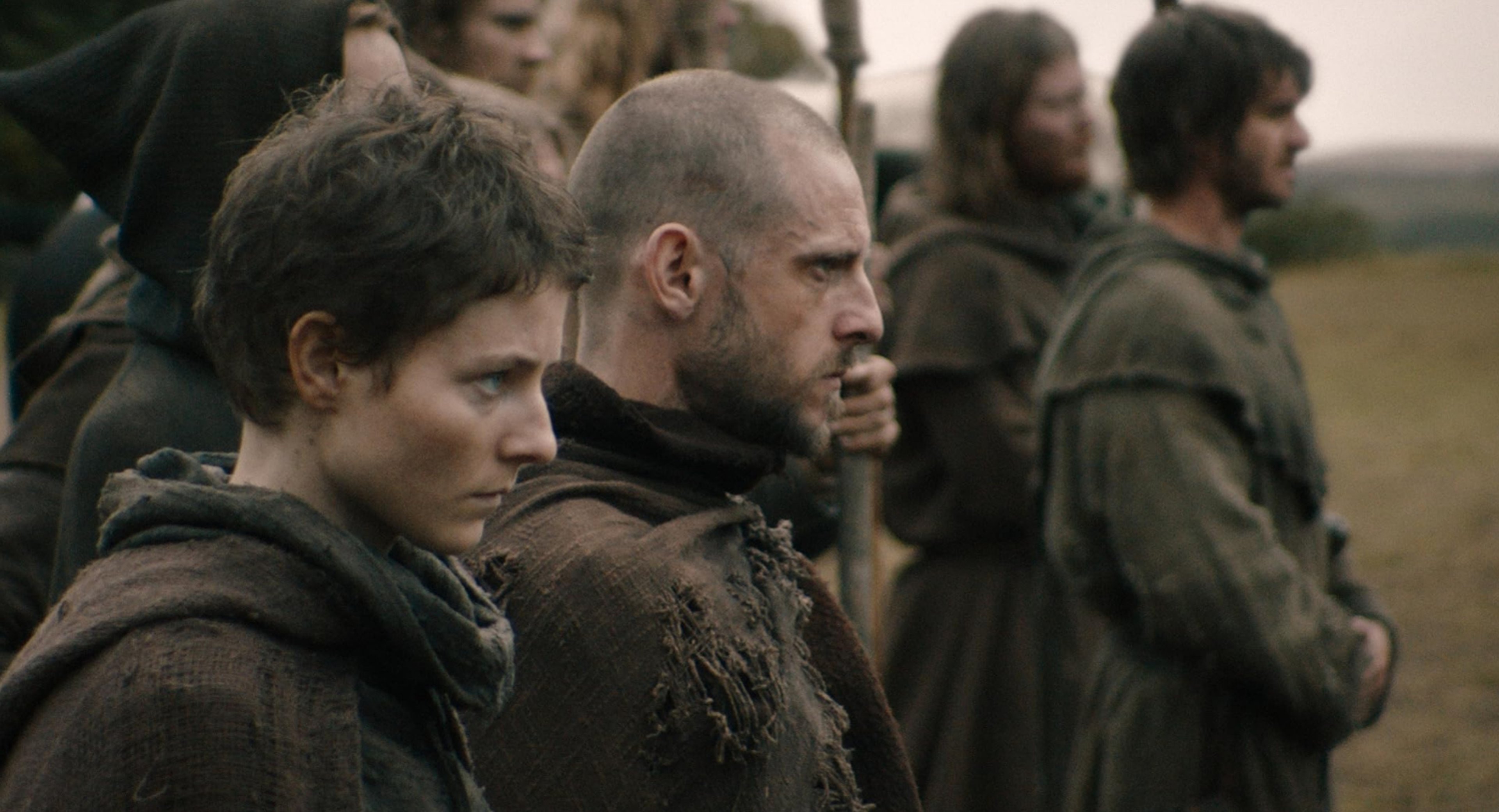
Thomasin McKenzie and Jamie Bell in The Uprising
You worked with the historian Dan Jones on the screenplay?
Dan wrote Summer of Blood which is one of the best books on the Peasants' Revolt. He’s written many books about the medieval world and his brilliance makes the medieval world come alive. He's able to mix great scholarship with great storytelling. I wanted to make a great big epic— people casting everything aside in this desperate attempt to change the world and oligarchs desperately trying to protect what they have. Dan and I bonded on that. He proved a great spiritual mentor and a constant inspiration.
What surprised you most about that period?
You think of the medieval world as a place of strange beliefs, mysticism, extreme religiosity, and a harsh divide between wealth and poverty. All of those things are true, but the more you look at it, the more you see similarities with today. For one, they shared our sense of the world being off-kilter, unbalanced, breaking apart.
Were there films that helped you frame this story?
A film that was very much in my mind was Spartacus with Kirk Douglas. I remember watching it when I started to write. I was interested cinematically in other stories of rebellion, stories of figures who stand up against tyranny, like Ridley Scott’s Gladiator. Cinema has always been fascinated by stories of rebellion and the conflict between justice and tyranny.
How do you see the relationship between the Ploughman and Richard II?
Both Ploughman and the King begin the story without agency and, over the course of the film, become strong leaders but in very different ways. In many ways the story of the film is the story of those two characters engaging with each other.
You shot a lot of the film in Germany.
We shot some of the village scenes at Bad Windsheim, which is essentially a series of old villages that had been preserved. One of them is a medieval village which gave us a place to shoot and base ourselves. Also, we went to Nuremberg, which has very old buildings, most notably the cathedral. We were able to live there and do a lot of our castle work and interiors. Being there enabled us to feel like we were in a medieval world.
Can you talk about creating medieval London?
These days, you can shoot anywhere on a blue-screen stage and create anything you want. Or you go to a real location and you're 100% real. We weren't able to do that and had to navigate somewhere in the middle. We were very lucky in Nuremberg, which, from the mayor to the people in charge of the cathedral, was really welcoming. We used three or four buildings, including the Cathedral and turned them into a variety of different locations, including Canterbury Cathedral and the Tower of London.
This is ultimately an action film.
If you're going to make a story about a revolution in the medieval world, which is not a period that readily comes to mind to most people, you've got to work in ways that people understand. People understood and loved Game of Thrones because it brought that world to life by making it a world of power and intrigue. For this story, you have to play into action cinema. You need your heroes to be able to run and fight.
What made Andrew Garfield so perfect for this role?
In a film like this you really want an actor like Garfield, someone like his character who leads. He inspired everybody around him with his unbelievable commitment and his good humor and his ability to nail it. This was a physically demanding film which required a lot of choreography of very difficult work. His skills as a physical actor were superlative. He was absolutely astonishing.
Can you talk about the character of Alice (played by Thomasin McKenzie)?
There were lots of women involved in the revolt like Alice. In my story, I wanted her to be a nun, a follower of John Ball. When she meets Ploughman, she’s a much more radical figure. But there's chemistry between them. When she reveals what had happened to her in the film, you realize that everyone who went on that march would've had a similar story of rage and resentment.
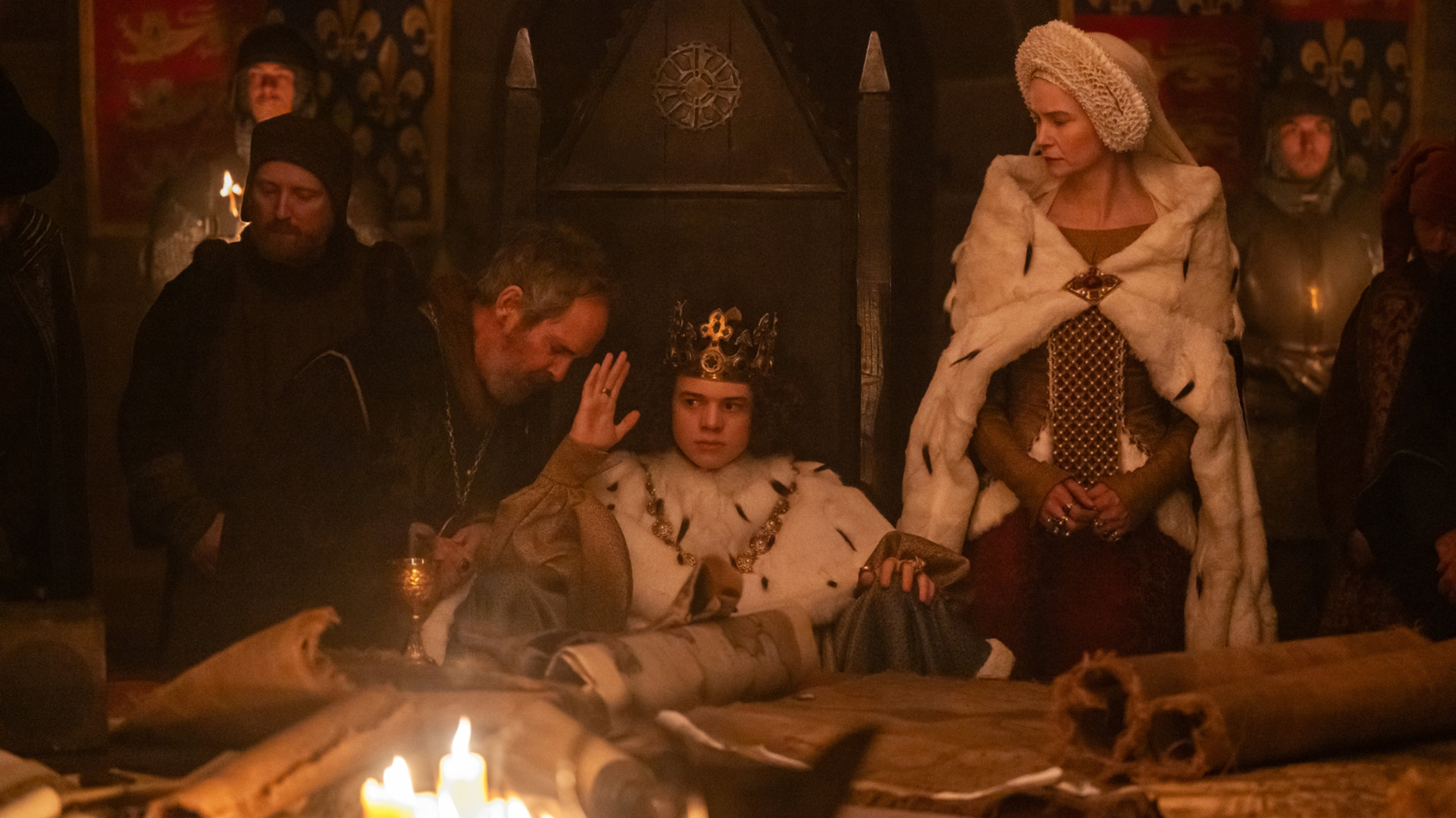
Tom Hollander, Woody Norman, Katherine Waterston in The Uprising
Woody Norman’s performance as Richard II is striking.
I needed a young actor because Richard was only 14. The character of Richard in this film is effectively the Ploughman’s antagonist. And he's got to go on a journey one way, and then go on a journey the other. When Woody put all his robes on, I asked him, “How do you feel?” He said, “I love this. Everybody just does exactly what I want. I click my fingers and they do it. I'm gonna wear this all the time from here on.” He was terrific in the role. He had that sinuous ability to be both victim and tyrant.
How did you approach visual effects?
This had to be a big visual-effects film because it needed to recreate the medieval world. I sat down with my director of photography (Pål Ulvik Rokseth) and the visual effects supervisor (Murray Barber) and planned it knowing what the final picture needed to look like. During production we were creating the center of the picture, and then Murray would set that action in its environment. It was an incredibly multifaceted production process to end up with a film delivered with this amount of visual-effects complexity.
This interview has been edited and condensed for clarity.
