How the Director of Sense and Sensibility Rediscovered the Beauty of Jane Austen’s World
An exclusive Q&A with director Georgia Oakley
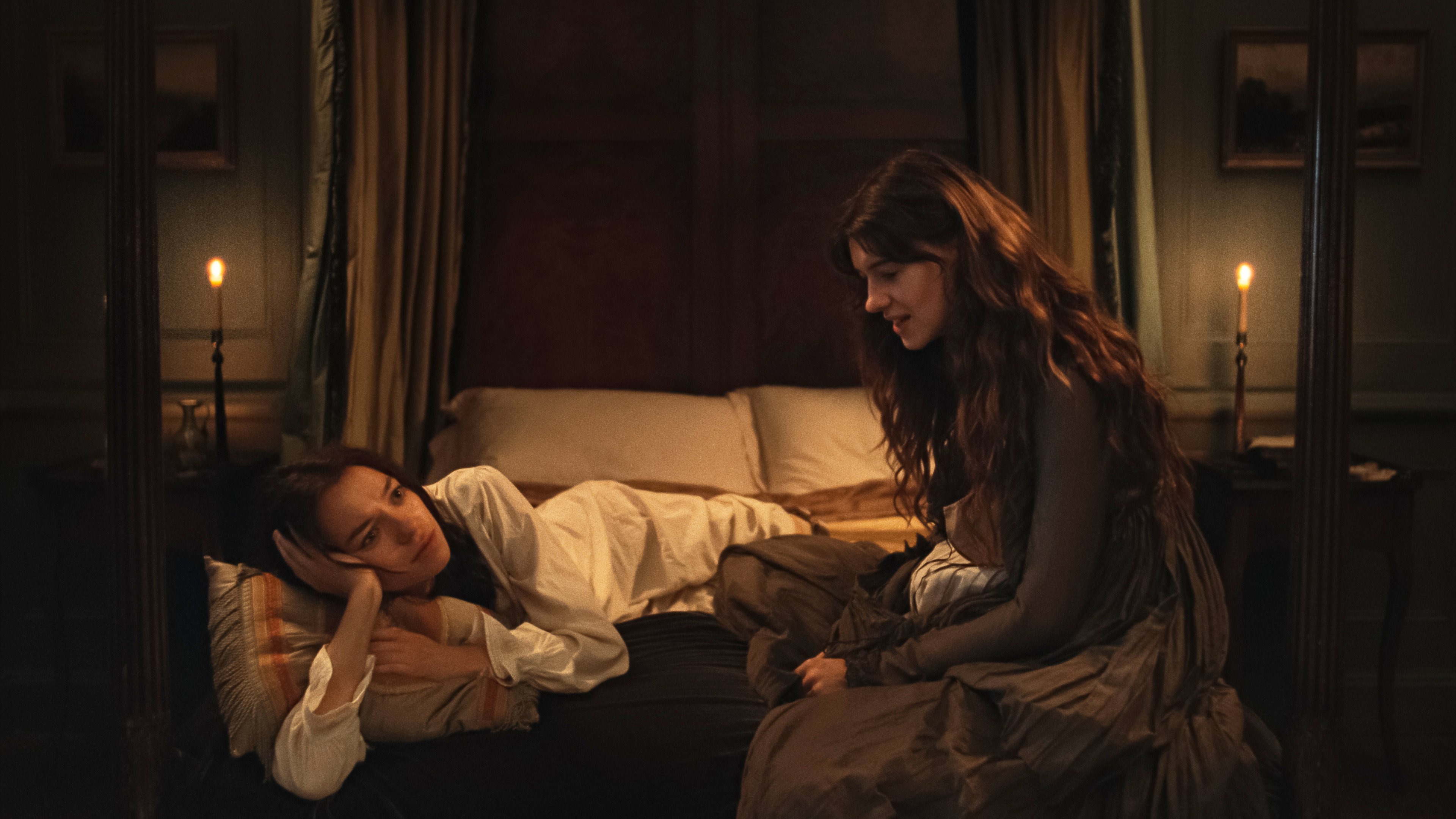
In Sense and Sensibility, Georgia Oakley gives Jane Austen’s first novel a fresh new interpretation. After her husband dies, Mrs. Dashwood is forced to move with her three daughters from their stately home in Norland Park to the rustic, slightly cramped Barton Cottage. Reduced in circumstances and living in a new world, the two elder sisters, Elinor (Daisy Edgar-Jones) and Marianne (Esmé Creed-Miles), take on the complexity of romance, real estate, fortune, and friendships—each in their own unique way. With a remarkable cast, including George MacKay, Caitríona Balfe, Frank Dillane, Herbert Nordrum, Bodhi Rae Breathnatch, Tom Brooke, and Fiona Shaw, the film captures Austen’s world with a bracing realism and lyrical sense of nature that, writes the Next Best Picture, “creates a new lens through which to view the story, making this feel like a version that will open up the world of Jane Austen to the next generation.”
We talked with Oakley about how she cast Elinor and Marianne, why she shot on film, and what makes Austen’s stories as poignant now as they were 200 years ago.
Get tickets for Sense and Sensibility, now playing in theaters!
The official trailer for Sense and Sensibility
What attracted you to directing a new adaptation of Sense and Sensibility?
I was drawn to the fact that, while circumstances for young women have changed dramatically in the 200 years since Austen wrote the novel, some of the fundamental contradictions surrounding what it means to be a young woman haven’t changed nearly as much as we might like to think. I wasn’t interested in remaking Austen because I felt she needed updating for a modern audience. Quite the opposite: I wanted to make this film because I think she already understood something that remains remarkably contemporary. Young women are still having to negotiate the space between the lives they want for themselves and the lives society makes materially possible for them. That tension felt as urgent and relevant to me now as it must have been in Austen’s time.
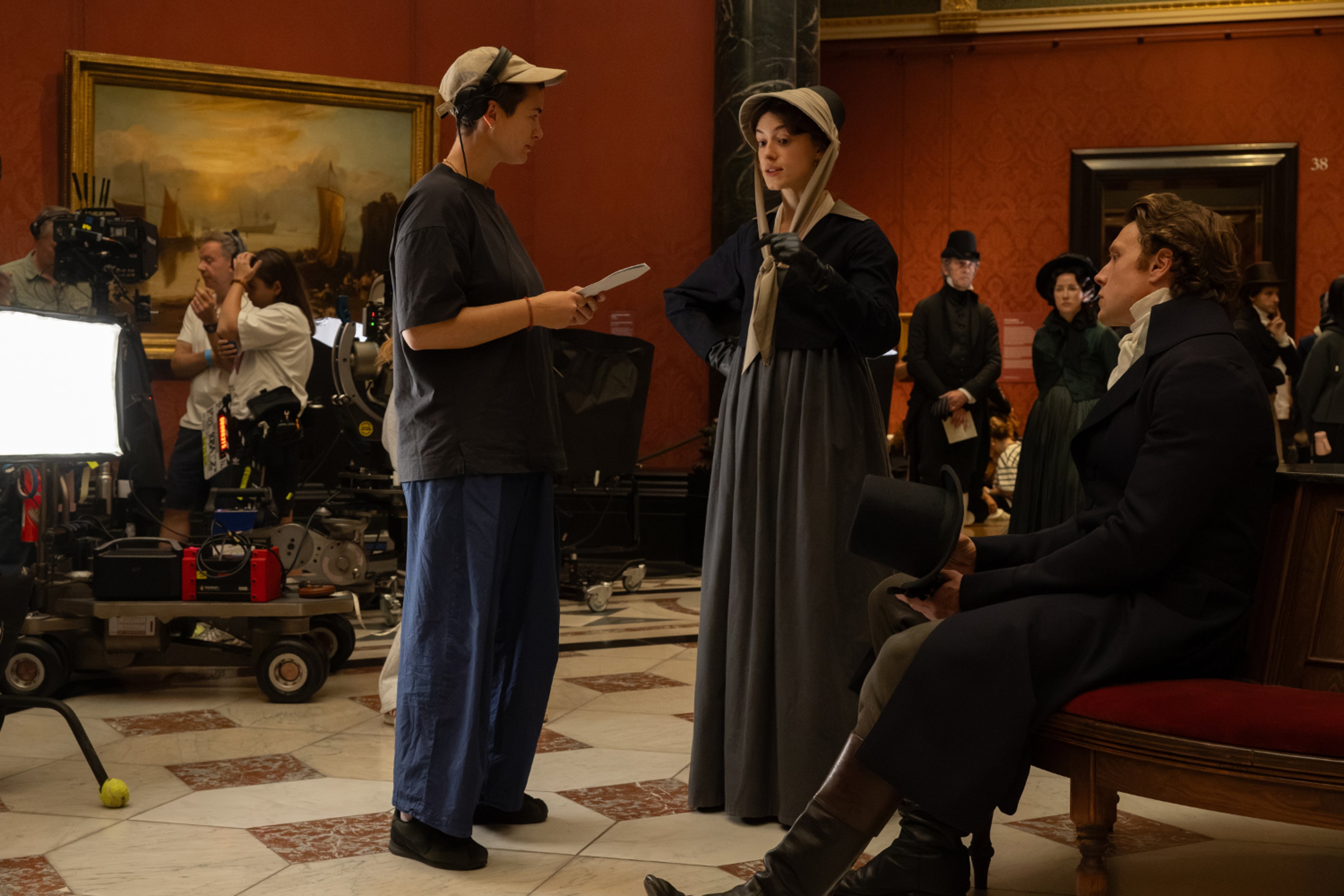
Georgia Oakley, Daisy Edgar-Jones, and George MacKay on the set of Sense and Sensibility
What did you feel was the heart of the story?
For me, the heart of the story has always been the relationship between the sisters. Elinor and Marianne’s bond is complicated, intense, and often exasperating, but underpinned by an unwavering devotion to one another. There’s a tenderness to it, but also a real capacity for cruelty. They hurt and misunderstand each other, yet they’re also each other’s greatest source of comfort and, ultimately, salvation. To me, that is the novel’s most profound love story, one that feels far more compelling and truthful than any romantic courtship. I wanted to bring that relationship to the forefront of the film and capture the beauty, complexity and volatility of a love that is not simply an added dimension of their lives, but fundamental to them.
Since the relationship between Elinor and Marianne is the heart of the story, how did you go about casting those roles?
I started by casting Daisy Edgar-Jones as Elinor. I’d been a fan of her work in Normal People and Under the Banner of Heaven, and I knew she had the quiet power I was looking for: an ability to convey restraint that can, in an instant, give way to something of undeniable force. From there, casting director Kharmel Cochrane and I set about finding the Marianne who would complement Daisy’s Elinor. Esmé Creed-Miles’s name came up quite early, and when she finally auditioned, she surprised me with a completely different interpretation of Marianne from what I’d seen up to that point. She really moved me, and her command of Austen’s language was entirely her own.
Luckily for me, Daisy and Esmé had worked together before. When I finally brought them together, there was already a palpable sisterly affection between them. They were playful and silly with one another almost immediately, and the dynamic of older and younger sisters seemed to have established itself quite naturally. In rehearsals, I felt I was building on something that was already there rather than trying to manufacture it. I remember leaving that first meeting feeling energized. I knew we’d found our sisters.
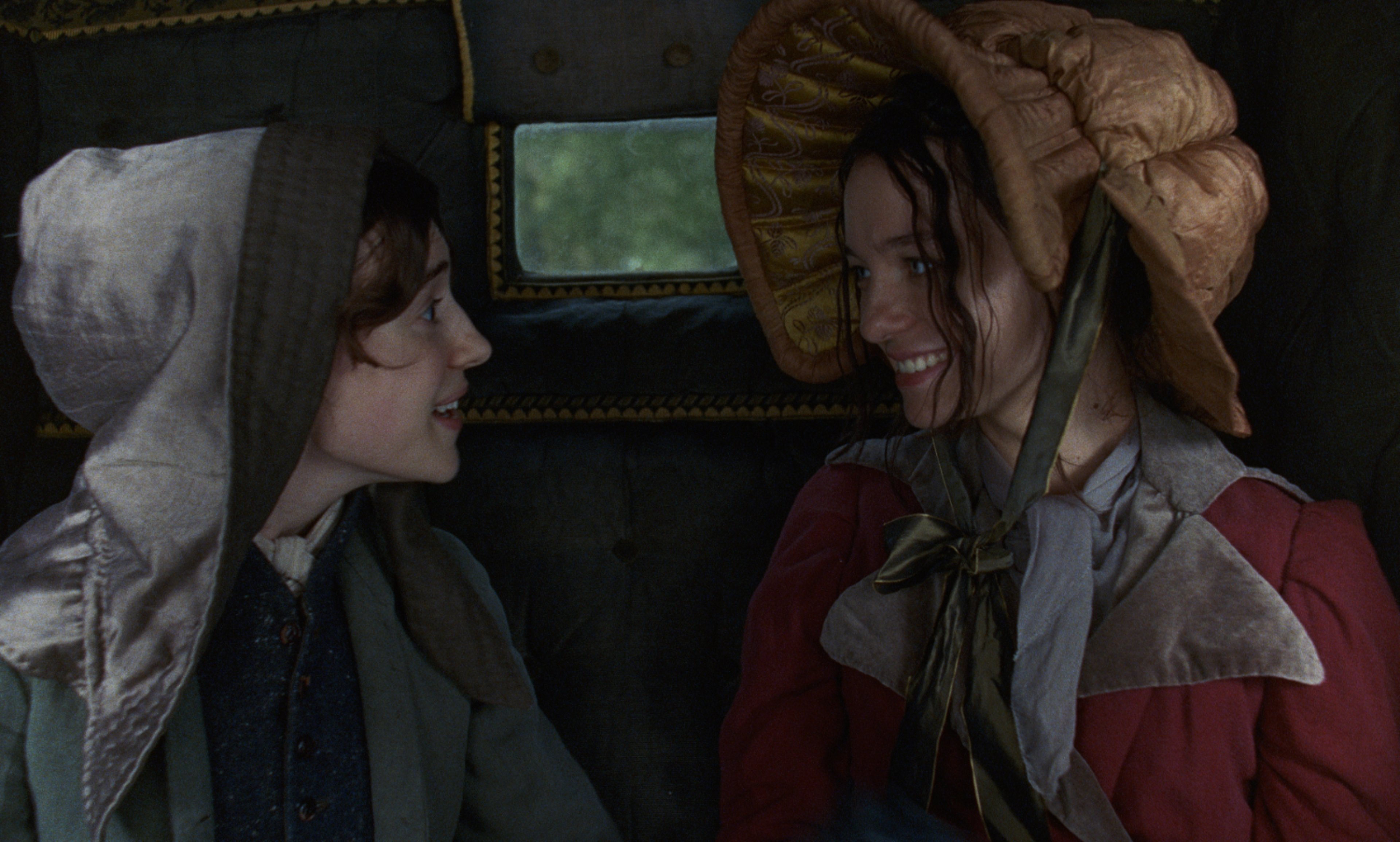
Daisy Edgar-Jones and Esmé Creed-Miles in Sense and Sensibility
Can you talk about how you cast some of the other roles, such as Mrs. Dashwood, Edward Ferrars, and Willoughby?
I’d been a fan of George MacKay’s work for a long time and felt he had exactly the right qualities for our version of Edward. I was particularly excited to discover that he hadn’t read the novel or seen any previous adaptations, so he was approaching our script entirely on its own terms. He was also enthusiastic about working with Daisy, and that mutual respect gave them a lovely foundation from which to build the relationship between Edward and Elinor.
Caitríona Balfe was someone whose work I’d been following for some time. It wasn’t necessarily easy to persuade her to play the mother of three older daughters, but thankfully she’d seen my film Blue Jean, which gave us a point of connection. I wanted Mrs. Dashwood to feel almost like another sister. That was how I’d read her in the novel, and it also felt historically plausible: she would have been relatively close in age to Brandon, rather than belonging to a distinctly older generation represented by someone like Mrs. Jennings.
Frank Dillane came in to audition for Willoughby, and I was immediately struck by his playfulness, which seemed to match Esmé’s energy beautifully. He brings a real empathy to the character because he refuses to play him as a straightforward villain. That was important to me. I wanted the audience to go on the journey with Marianne, to understand why she falls for Willoughby rather than dismissing her from the outset as foolish or easily deceived. For that relationship to work, we had to believe in his appeal as much as she does.
Colonel Brandon was a difficult role to cast. Herbert Nordrum’s name had come up quite early, although I remembered him from The Worst Person in the World and initially imagined his energy might be quite different from the character as I’d conceived him. But when I eventually met him, I saw a soulful gentleness and a quiet wisdom that immediately made me understand how he could inhabit Brandon. It was a lovely reminder of how much an actor can reveal about a character you thought you already knew.
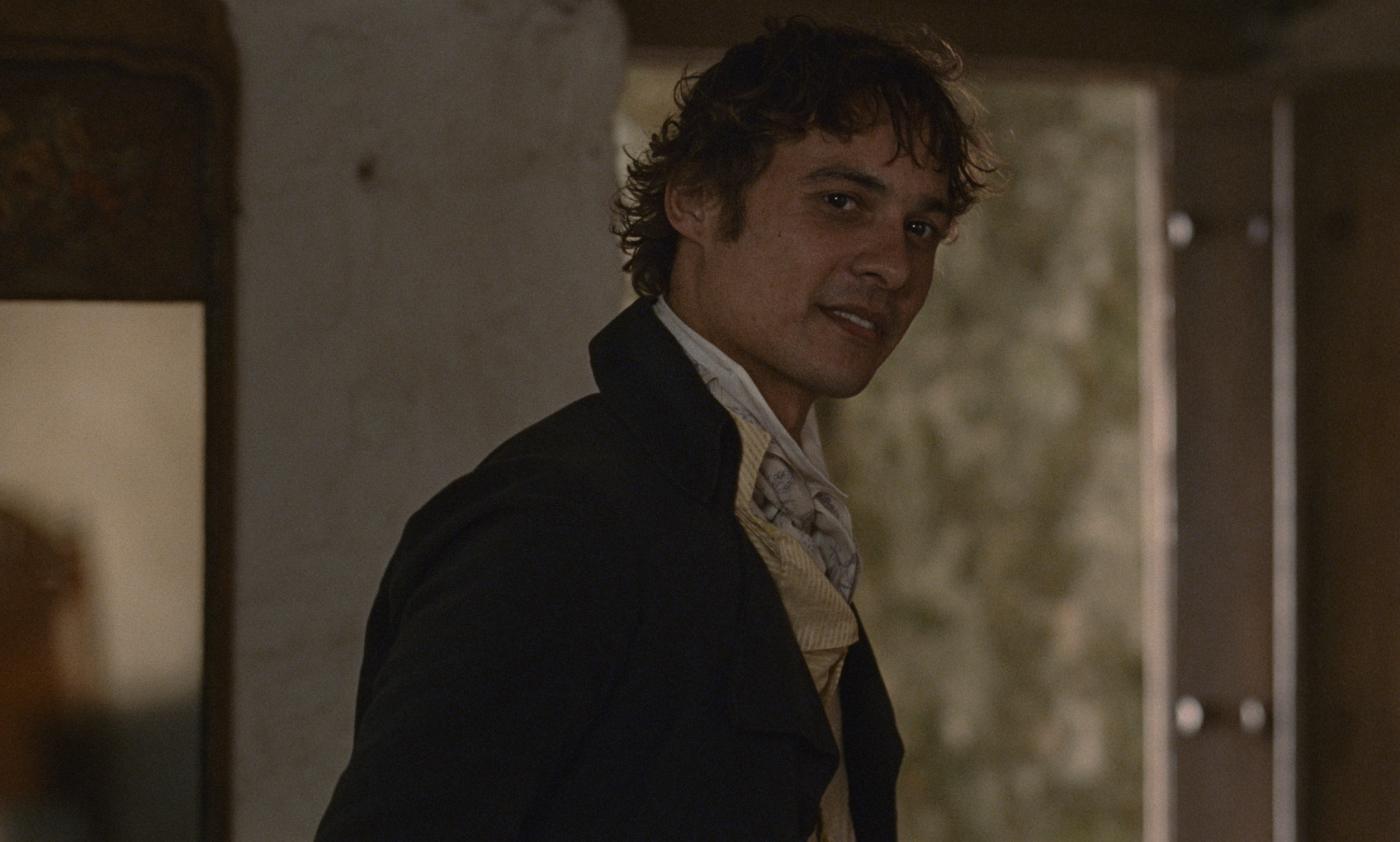
Frank Dillane in Sense and Sensibility
How did you go about finding your locations and how did you dress them to fit the story?
When we found the cottage we chose for Barton, it was little more than an abandoned stone shell, riddled with mold. But it had the qualities I was looking for. I wanted it to feel like an authentic coastal home of the period, where damp lingered in the walls, salt blew in from the sea, and clothes rarely had the chance to dry properly. You could imagine hearing the wind through the chimney, the animals outside, and the everyday sounds of family life carrying from one room to the next. I was equally interested in avoiding the idea that the grander houses were necessarily more comfortable simply because they were more imposing. Norland needed to feel lived in and much loved, but not particularly well maintained. It was important that the house carried the traces of family life rather than feeling like a pristine country-house fantasy. Across all the locations, I wanted to resist the temptation to romanticize the period. These were real homes in which people lived, worked, worried, and loved one another. The material realities of those spaces—their dampness, their cold, their wear and tear—were part of the story, and I wanted the audience to feel them.
How did you work with cinematographer Arnaud Potier to create the film’s soft, painterly quality?
Arnaud and I share a love of naturalistic lighting, intimate, earthy imagery, and shooting on film. We spent many weeks in prep discussing how we could photograph the film in a way that gave it a lived-in quality, something tactile and human rather than overly polished or idealized. We wanted the world to feel as though it existed beyond the frame, with all the imperfections and subtleties that come with real life. The softness of the image was important, but so was its texture. We weren’t trying to create a picture-perfect version of the Regency period; we wanted something more immediate and emotionally grounded.
The overall look and palette developed through a close collaboration between Arnaud, our production designer Francesca Di Mottola, and me. We were constantly thinking about how the colors, textures, and quality of light could work together to create a coherent world, while still allowing each location and character to have its own distinct atmosphere. Ultimately, the visual language needed to serve the emotional life of the film rather than simply illustrate the period.
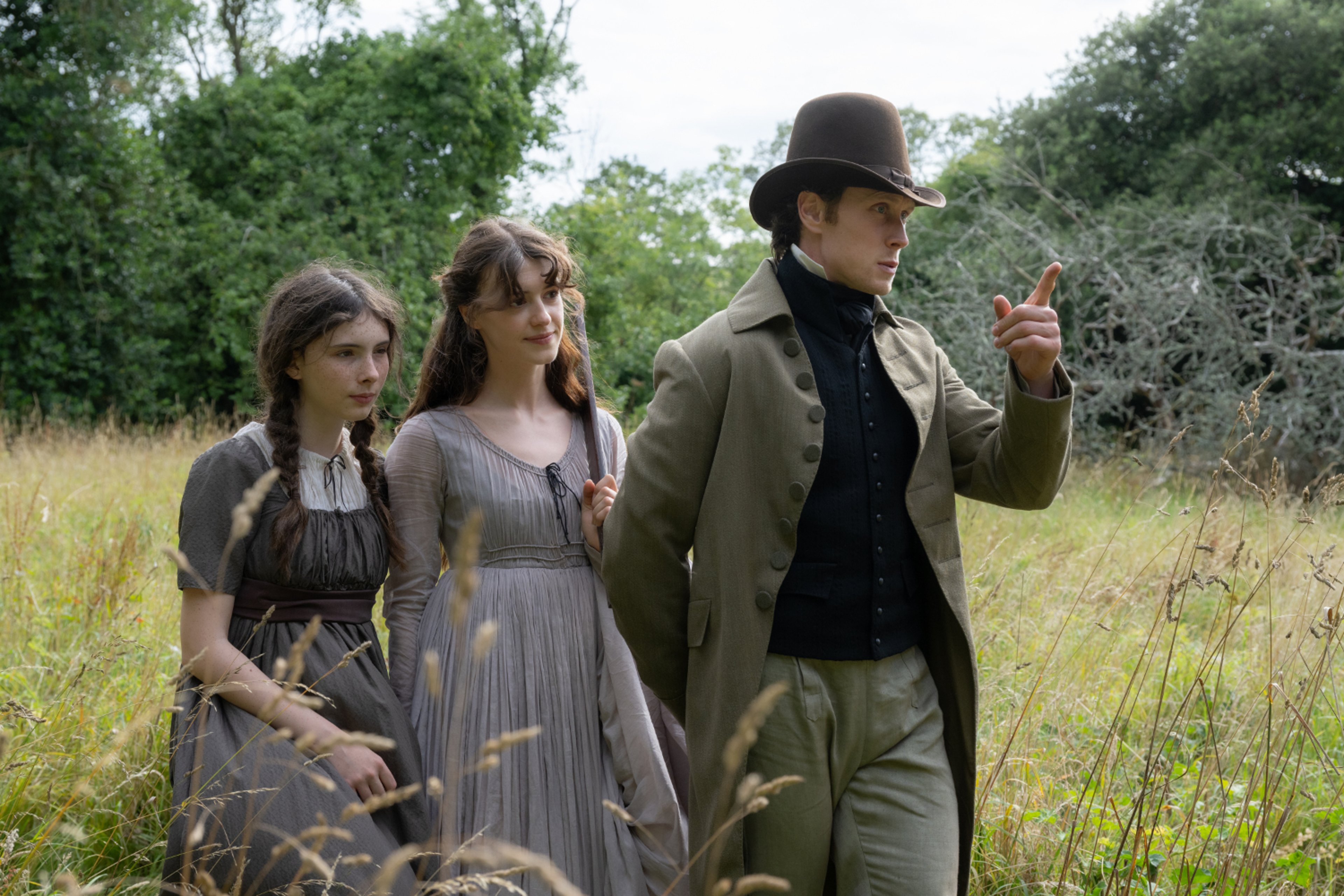
Bodhi Rae Breathnatch, Daisy Edgar-Jones, and George MacKay in Sense and Sensibility
What creative direction did you give Grace Snell about the costuming?
Grace and I had many conversations about how to create a sense of intimacy and a slightly looser, more unbuttoned version of the period. I wanted the clothes to feel lived in, personal and practical, rather than like costumes that had been put on for the benefit of the camera. One part of that approach was to build a wardrobe for each character in which garments could be shared between the sisters, altered and reworked throughout the film. As the Dashwoods’ circumstances change, so do their needs and their relationship with their clothes. I liked the idea that a dress might take on a different life, or that we might recognize a familiar piece worn in a new way. It allows the material reality of their reduced circumstances to become part of the storytelling without having to spell everything out. We wanted to keep the costumes as naturalistic as possible, using natural dyes and avoiding patterns wherever we could. We also explored how color and cut could communicate the different social and economic positions of the characters. Someone like Fanny Dashwood or Mrs. Jennings could inhabit a quite different visual world from the Dashwood sisters. Those distinctions were subtle, but important. The costumes needed to tell us something about the women wearing them, as well as the world they occupied.
How did you work with Roger Goula to create the film’s score?
I loved the fact that Roger Goula hadn’t scored a period film like this before. In a sense, we were stepping into the unknown together, which felt exciting. I didn’t want the score to simply announce the period or tell the audience how to feel. I wanted it to have an emotional life of its own, something that could sit alongside the performances without overwhelming them. During the shoot, Roger began composing a series of sketches inspired by watching the rushes. They weren’t written for particular scenes, which gave them a wonderful rawness and spontaneity. They were responses to the material rather than pieces designed to fulfil a specific narrative function, and many of those early sketches eventually found their way into the final score. One piece, in particular, became a kind of starting point for me: the sketch I eventually used during the sequence in which the Dashwoods leave Norland. There was something about the strings—their fragility, their emotional directness—that immediately resonated with me. I remember feeling that we’d found the beginning of the film’s musical language. From there, we could develop a score that felt rooted in the period but spoke to the characters’ inner lives in a way that was immediate and deeply felt.
What would you like audiences to take away from the film?
Every generation finds its own Austen, and this film is simply mine. It isn’t a definitive statement, nor is it an attempt to correct the record once and for all. It’s an offering: my attempt to sit with the story, to feel its anger and tenderness, its contradictions and its moments of unexpected joy. I hope audiences come away feeling that Austen is not a distant or ornamental figure, safely contained within the past, but a writer full of questions about the world we inhabit. Her understanding of love, money, power, family and the limits placed on women’s lives still has the capacity to unsettle and move us. I hope people feel the force of the relationship between Elinor and Marianne: the idea that love is not always graceful or uncomplicated, but can be difficult, demanding, and utterly essential.
This interview has been edited and condensed for clarity.
