How Hot Spot’s Director Captured Our Modern World in her Futuristic Fantasy
An exclusive Q&A with director Agnieszka Smoczyńska
In Hot Spot, Agnieszka Smoczyńska creates a strange dystopian world ruled by a sentient AI and slowly slipping into ruin. When Djonny (Andrzej Konopka), a private eye, who lives with his wife, Ayka (Reika Kirishima), and their son, Zen (George Aurimas Cris), in a desert bunker, is called in to investigate a murder, he finds the mystery extends beyond the crime to the hypnotic spell that Rana (Noomi Rapace), the leader of a group of rebel refugees, is casting on him and the world around them. Fueled by renegade ’80s sci-fi classics like Total Recall and Mad Max, Hot Spot sports a story written by Robert Bolesto that is a futuristic adventure that, Smoczyńska says in the production notes, “somehow decodes the DNA of life nowadays.”
As in her previous features like The Silent Twins, Smoczyńska uses her singular style and expansive imagination to help us see our world around us in profoundly new ways. We spoke with Smoczyńska about what drew her to this story and how she brought it to the screen.
The official trailer for Hot Spot
What excited you about directing Bolesto’s screenplay for Hot Spot?
In his screenplay, Robert Bolesto described and captured the shared emotions in today’s world, all the anxieties that we are feeling but aren’t quite able to name—be it the AI wars, the climate crisis, or the sensation of being overwhelmed by today’s world.
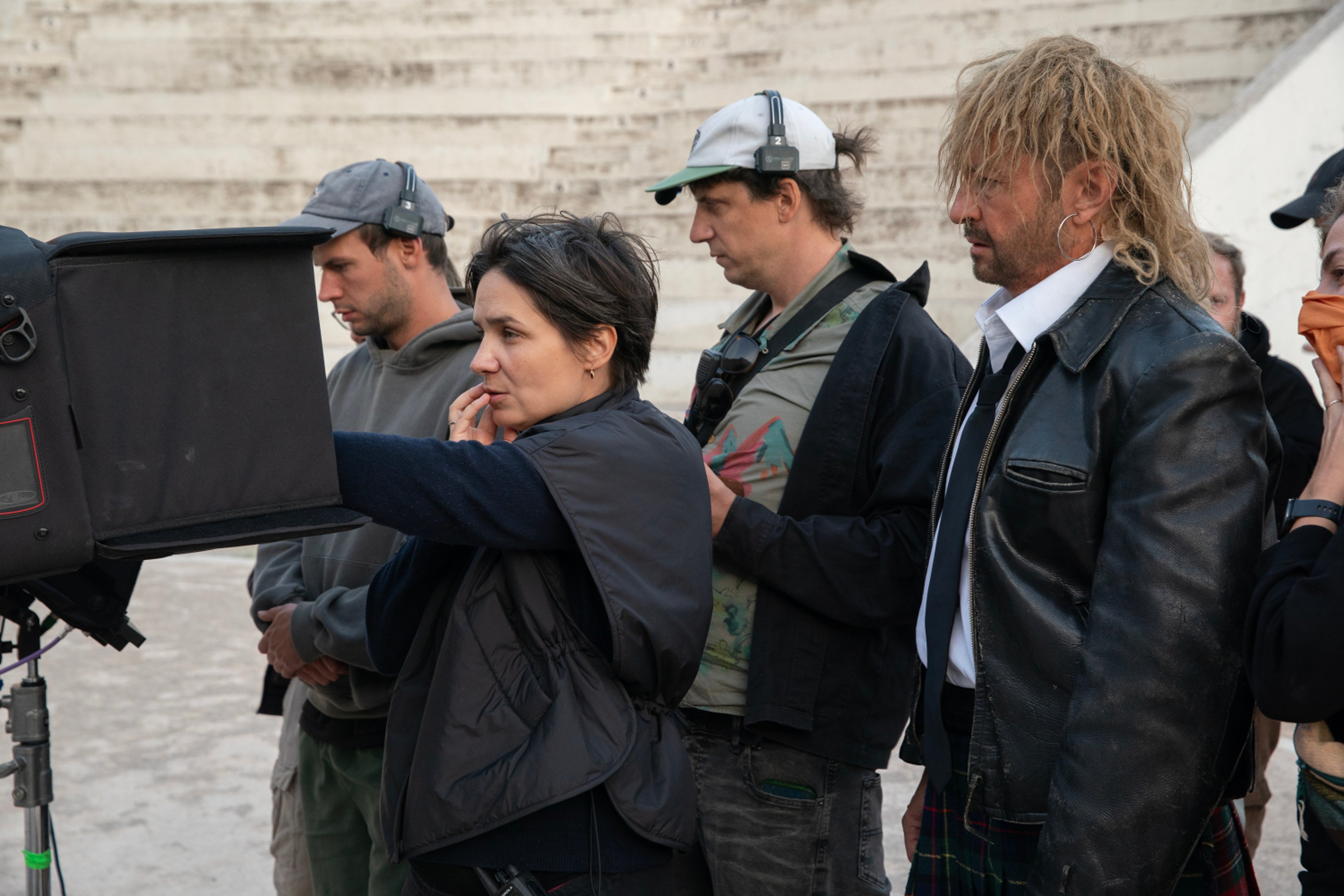
Director Agnieszka Smoczyńska and Andrzej Konopka on the set of Hot Spot
How much did the screenplay change over the course of production?
The script was changing and evolving—the important core was the way we are telling the story: surreal, as if all of it was the protagonist’s nightmare.
The film’s look seems to echo Hollywood sci-fi films of the 80s and 90s.
I grew up watching the 1980s movies on VHS tapes. They were mainly entertainment—saturated, kitschy, cliché. But they also helped us understand our times and described it through metaphor.
Can you talk about casting the three lead actors?
Andrzej carries a sort of mystery and isn’t afraid to confront his deepest fears. I appreciate the dichotomy that he brought to the character: the hard, masculine outer shell and the vulnerability inside. Noomi is a rebel; she offers both anger and tenderness, and Reika possesses a spiritual aura, as well as fragility. She communicates with her eyes. It was incredibly important to me that each of the cast comes from a vastly different cultural background, while at the same time, they communicate via broken English. Together they constitute a community which isn’t based in the shared past. A new social identity emerges, an identity linked by something other than the common language, culture, or history.
There is a real visceral quality to the film.
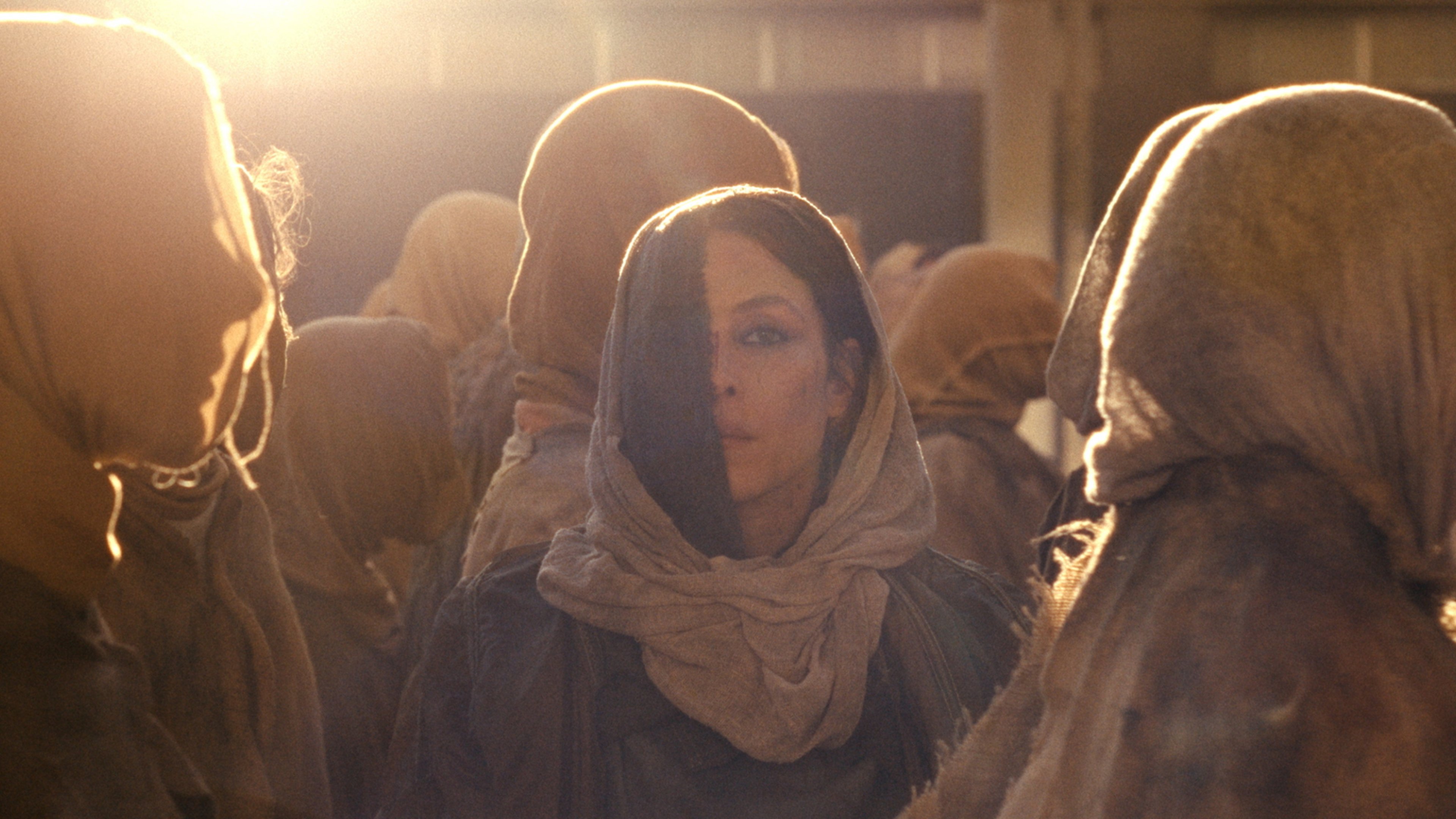
It was important to me that the visuals take over the gravitas of the story and that’s primarily why we decided to set the world in Greece. Greece is facing a real existential threat from wild fires and the scarcity of water. The locations— an abandoned airport, an ancient theater of Ellinikon, and the burnt forest—were essential. They all speak to the heart of this world.
Working with the director of photography, Kuba Kijowski, we tried to portray the heat, the drought visually. For example, the images are blown out and faded, so that one can actually feel that harsh, scorching climate.
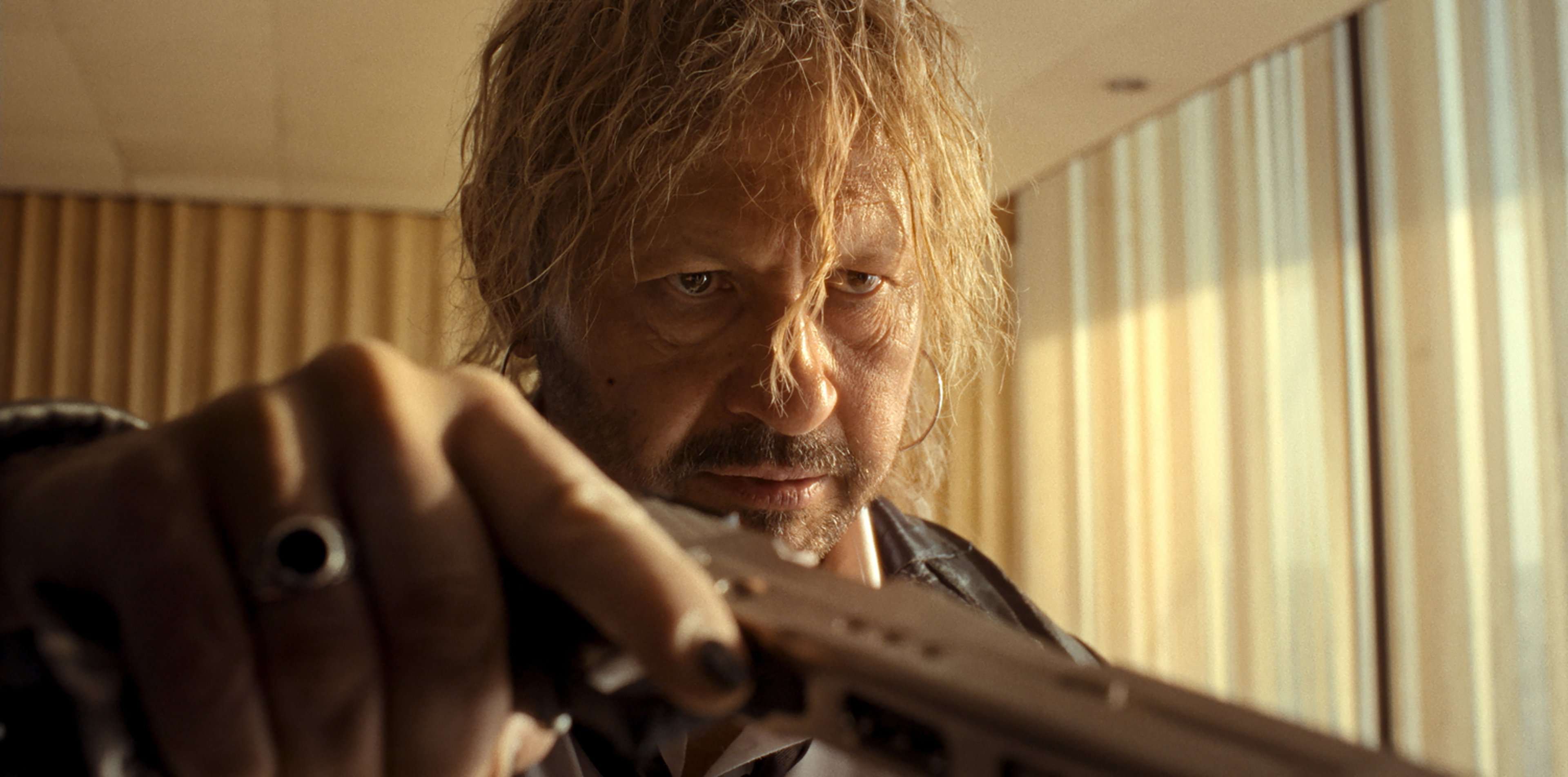
Andrzej Konopka in Hot Spot
What sort of visual references did Kijowski and you use for creating the film’s look?
We were inspired by the paintings of Mark Rothko. Rothko’s reds were the inspiration for the animation of The Head. Gerhard Richter and his off-set lithographs were another influence. Magdalena Abakanowicz and her canvas shell-like sculptures of Holocaust survivors inspired the look of the NeoSoul cult. To capture the landscape, we looked at photographs from the 1980s, especially those from Greece.
Can you talk about costume designer Katarzyna Lewinska’s unique approach?
Djonny’s costume was described in great detail in the script. It set the tone for the character and, in some ways, the film itself. I asked Tomek Popakul, who is a Polish animation artist and who created the Head animations, to draw us Djonny. His campy drawings that play with mainstream images of masculinity really showed us the character—Djonny as a cartoonish anti-detective of sorts. When our costume designer fitted Andrzej in a piece based on that, I knew that we had the character. Now, we just needed him to be emotionally truthful.
Many characters react to others via telepathy. How did you work with the actors to capture this?
We table-read those scenes ahead of time and recorded them, and then I played them for the actors during the filming of the scenes. With the scene when Djonny is in the car alone, panicking, I was in the car with him, feeding him Ayka’s lines.
Can you talk about how you crafted the film’s soundscape?
For me sound is an incredibly important element of storytelling. In Hot Spot, I began collaborating with our sound designer as soon as we started working on the script. In post, we worked closely together, approaching sound design as if it were another character of the movie, especially in trying to illustrate the emotional state of the characters, like Djonny’s emotional crisis. For Rana, we used organic sounds mixed with computer-generated ones. Djonny’s character has his own musical themes. For Ayka, we focused on her singing voice.
What would you like audiences to take away from the film?
I would like the audiences to abandon the logic that they are used to in movies and allow themselves to get immersed in this hypnotic dream that we tried to create. I would love them to experience this world and come face to face with their own fears. Through witnessing the two days from Djonny’s life, through going with him into his deep existential crisis and the deconstruction of his own identity, as well as watching him let go of control and his fear for his loved ones, I want them to feel that there is always hope. There is always a path to set yourself free.
This interview has been edited and condensed for clarity.
