Hot Spot’s Production Design Tells a Story about the Fate of The World
An exclusive Q&A with production designer Anna Anosowicz
Set in the near future, Agnieszka Smoczyńska’s Hot Spot presents a world that has been transformed by climate change, political conflict, economic scarcity, and technological revolutions. In this dystopian landscape, Djonny (Andrzej Konopka), a private eye, who lives with his wife, Ayka (Reika Kirishima), and their son, Zen (George Aurimas Cris), finds his own life turned inside out after being called out to investigate a murder. The death of a refugee at a local camp leads him to Rana (Noomi Rapace), a mysterious rebel leader, whose strange hypnotic presence is subverting this fragile world.
To create this futuristic world, Smoczyńska turned to production designer Anna Anosowicz, with whom she had worked before on her TV series 1983.
We spoke with Anosowicz about finding the right locations and creating a futuristic world that bore traces of its downfall.
The official trailer for Hot Spot
How did you get involved with Hot Spot’s production design?
I knew Agnieszka from our previous collaborations on other projects, so I was excited when she first told me about Hot Spot in 2020.
What were your initial ideas about the creative direction of the production design?
From the beginning it was obvious that we had to create a feeling that the world had gone through a huge change, caused partly by the climate catastrophe and partly by changing political, social, technological, and moral rules. This change pushed people to give AI huge power to coordinate the world and lead them. Resources are scarce, so all recyclable materials are precious and saving water and energy is a necessity.
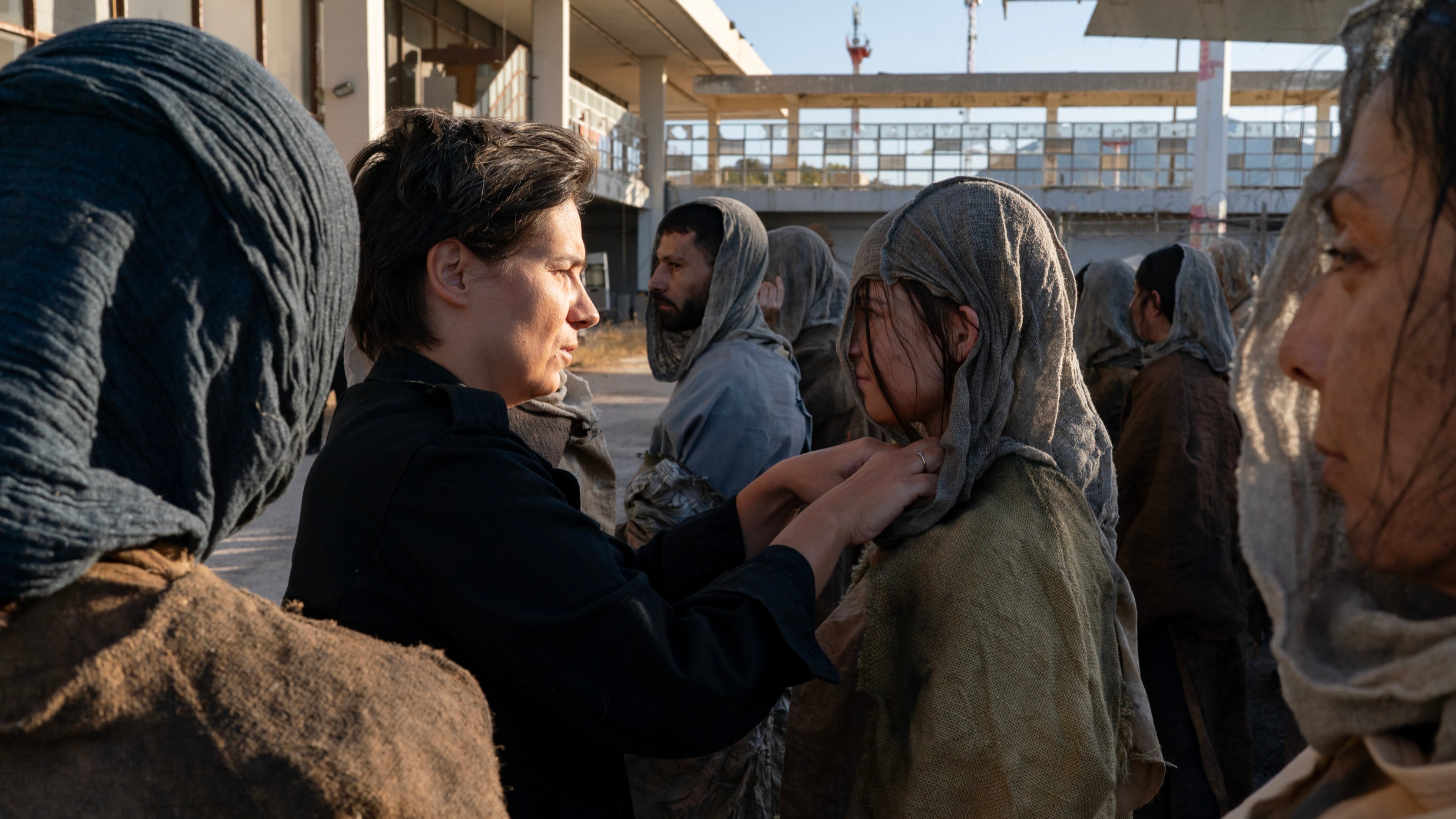
For us, this would be represented visually by a number of things. There is a lack of greenery in the frame. There are few written words or screens since all information is in the Head. There are wide, abandoned landscapes and people gather in camp cities. There is dirt everywhere caused by dust and sand. There is very little trash because everything is recycled or reused. Most buildings are either 21st-century architecture reused in a new way (like the refugees’ camp) and new buildings which are simple and practical (like Djonny’s house). All of our locations for the film were in Greece, both in Athens and Marathon.
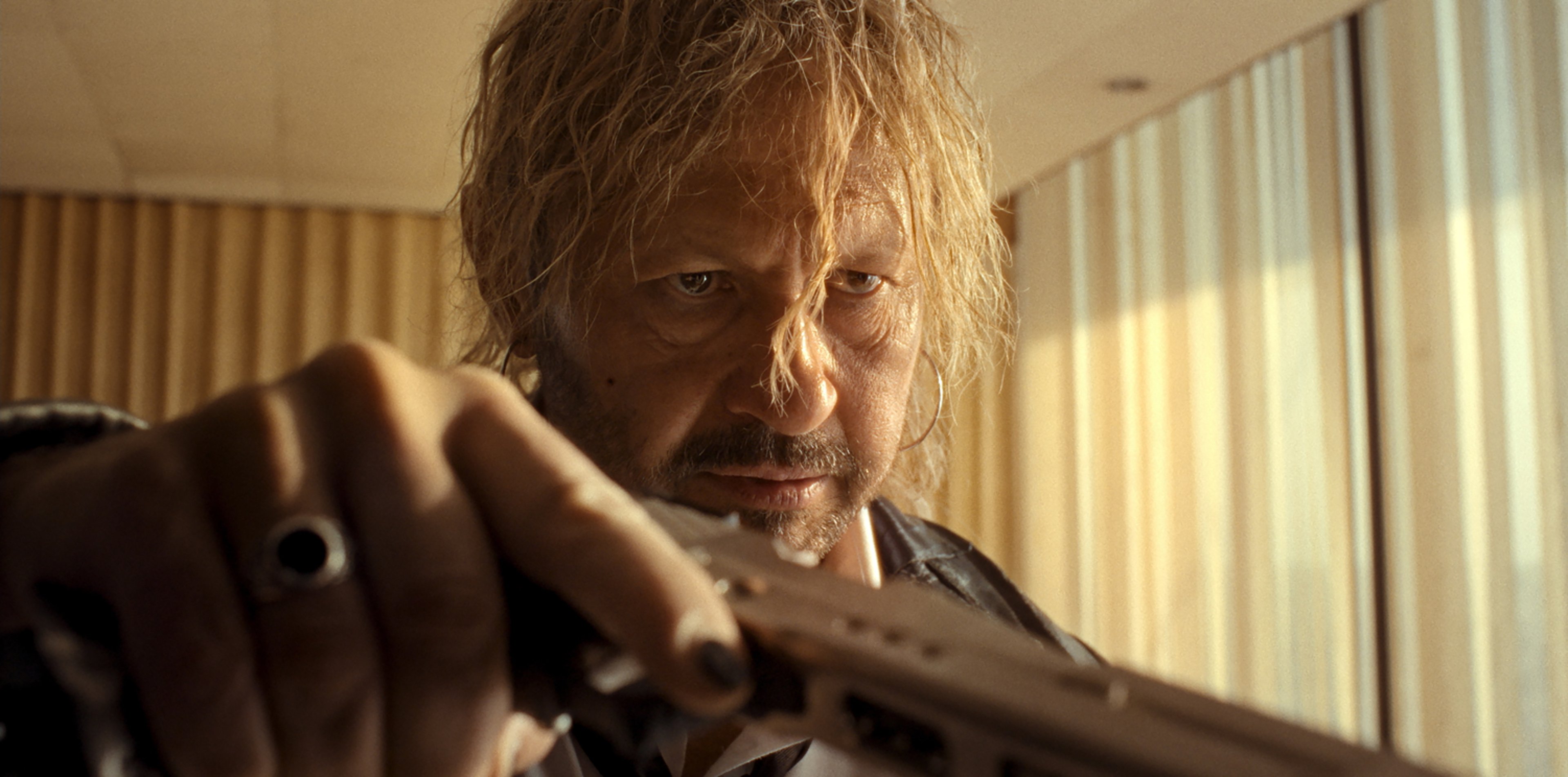
Andrzej Konopka in Hot Spot
Can you talk about the research you did on dystopian futures?
We’ve had several meetings with experts on future technologies in which we discussed how hardware, software, and wetware might be combined, talks that inspired the use and shape of biobots in the film. We also discussed the possible future of smart dust technology and the use of it in mapping and networking the society. Our goal was to enrich the fairy-tale nature of the story with elements grounded in science.
Can you talk about some of the more interesting locations?
Our first idea for the refugee camp was to use dry pools in the old Olympic village, but the minute we walked through the old Ellinikon International Airport outside of Athens, we knew we had found the right locale. In the Hot Spot world, the contrast between the past extravagance—now silent and mummified in the desert sun at the abandoned airport—and the current lack of resources was chilling. I was also thrilled that we brought a wrecked Boeing 747 to the set and organized the refugee village beneath it with oval tents. It created a picture of a giant mechanical bird spreading its wings. To keep in line with our design mandates, we had to make the whole facility free of signs, graphics, and any item that would have been recycled long ago.
Djonny’s house, on the other hand, was located in Megara, about 50 kilometers west of Athens. We needed a modern, concrete house that we could easily adapt for our autonomous house, equipped with a filter station system and maintained by biobots.
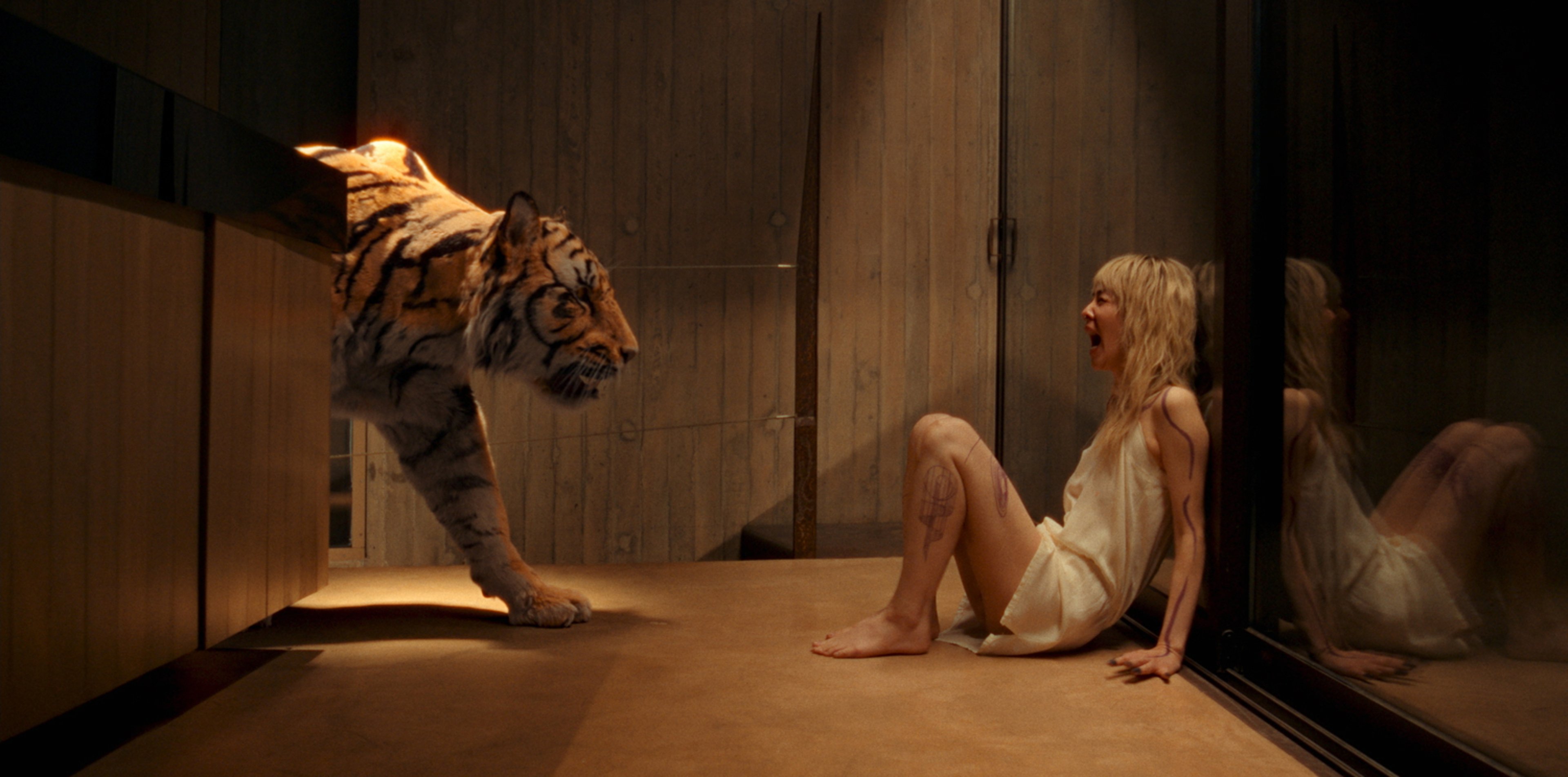
Reika Kirishima in Hot Spot
There is a dramatic contrast between high technology (driverless cars, non-speech communication, AI) and the decaying structures in the film.
In a world where population density is no longer a problem—abandoned and decaying structures are everywhere—21st-century buildings are left to decay on their own. There is no use wasting energy on them. But even with these high-tech things, like autonomous cars, the vehicles themselves are made from recycled material, since there is no point in producing something from scratch unless it’s absolutely necessary.
Often the production design of a character’s home gives the audience insight into the character. What do you think we learn about Djonny, Ayka, and Zen through the design of their home?
Djonny’s house is a very empty house. The kitchen is reduced to a ready-food-portions distributor and jelly dispenser. There are no devices providing entertainment because they are no longer needed. Everything you want to watch or to play is provided by the Head. There are only simple beds to sleep on. Zen’s bedroom is the only exception. He has wallpaper with a Garden of Eden filled with plants and animals. It has a special meaning in the whole story.
This interview has been edited and condensed for clarity.
