Hamnet Author’s Journey from Question to Novel to Movie
An exclusive Q&A with author and screenwriter Maggie O’Farrell
Chloé Zhao’s Hamnet explores the life of William Shakespeare (Paul Mescal) and his wife, Agnes (Jessie Buckley), in order to unwrap the remarkable mystery behind the creation of the play Hamlet. Adapted from Maggie O’Farrell’s National Book Critics Circle Award-winning novel of the same name, the film moves from the young couple’s romance and the raising of their family—including the birth of their twins, Judith and Hamnet—to the staging of Hamlet at the Globe Theater in 1600, a story that captures the inexplicable connection between life, death, and the power of theater.
In the production notes, Zhao remembers feeling that “Maggie had opened a portal with her book, a bridge for us to connect with Will in ways we haven’t before.” Zhao invited the novelist to co-write the film’s screenplay. Their work together produced the screenplay for the film that Rolling Stone described as a “rigorous, moving, and altogether transcendent take…[that] is every bit the book’s equal.”
The author of nine novels spanning diverse historical and cultural settings, O’Farrell has emerged as one of Britain's most engaging writers. Novelist Ann Patchett has called her “a miracle in every sense.” We spoke with O’Farrell for her inspiration for the novel, her experience collaborating on the screenplay, and the magic of film adaptations.
The official trailer for Hamnet
Much of your fiction is spun out of specific historical and cultural periods. What was the spark for Hamnet?
The best books that you can write often come from a set of questions without answers. The only way to answer them is to write a book about them. I had two questions that inspired this story. Why did Shakespeare give the name of his son to his best play? And, given that Shakespeare did that, how did Hamnet’s mother feel about it? I don’t know that I would have been thrilled by it. If she saw the play, what did she think? And if, as I believe, that Shakespeare was resurrecting his son in order to flesh out their role in his play, what was it like for him? There is a story that Shakespeare played the ghost in the first staging of the play. What an extraordinary thing.
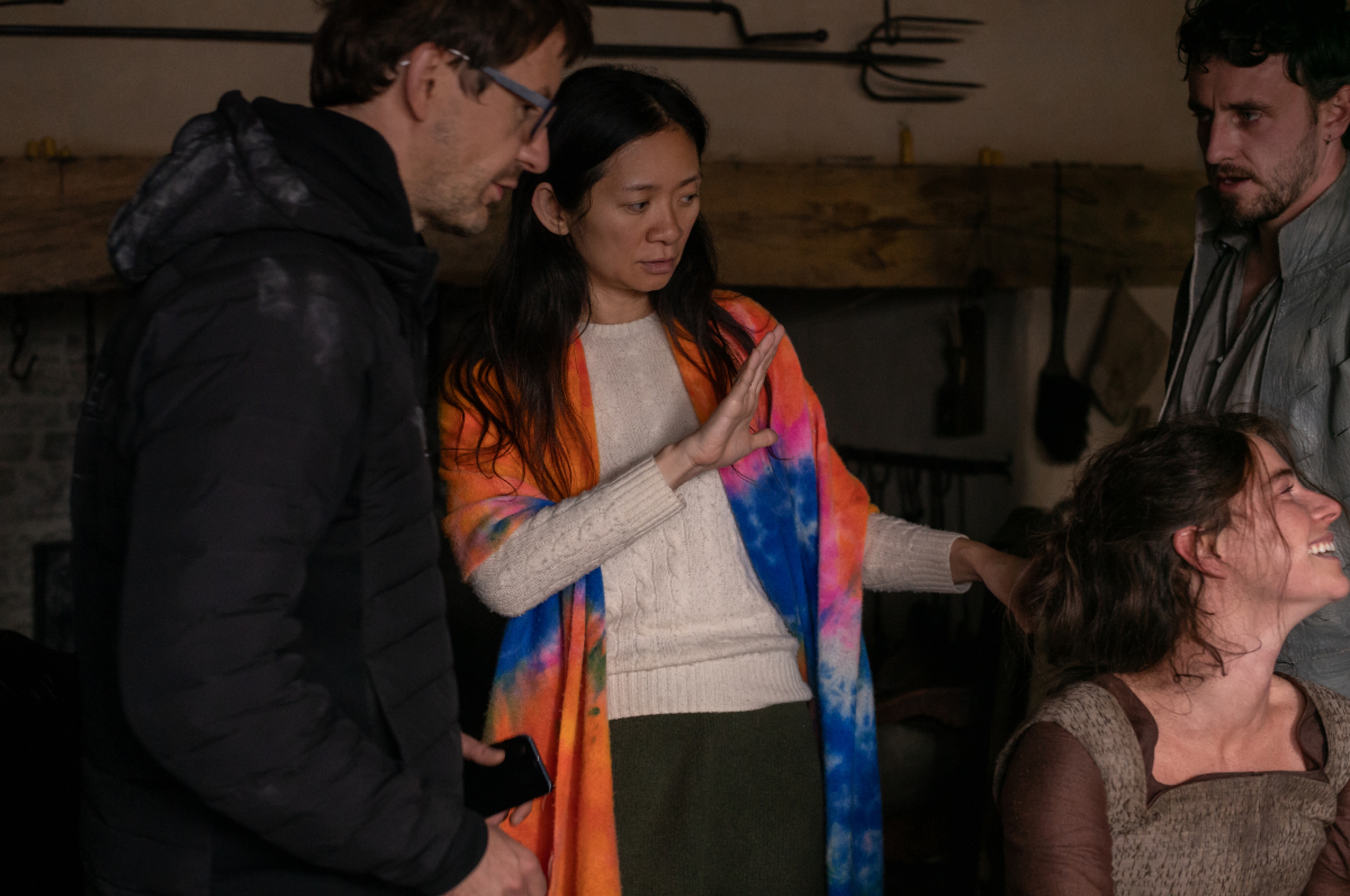
Cinematographer Łukasz Żal, Chloé Zhao, Jessie Buckley, and Paul Mescal on the set of Hamnet
When you learned that Chloé Zhao was going to direct Hamnet, what did you think?
I was really thrilled. I'd seen all her films and I knew instinctively that she wouldn’t make a conventional costume-y costume drama, which I never wanted any adaptation of Hamnet to be. Even now I get a little thrilled when I see how filthy Jessie’s fingernails are in the film. I love that. I also knew that she came from a background and a culture that isn't necessarily steeped in Shakespeare. That was very refreshing to me, because I knew she wasn't going to make an adoring, idolatrous film with Shakespeare center stage.
How did you end up co-writing the screenplay with Zhao and what was the process like?
When I heard that she wanted me to collaborate on the screenplay, my initial feeling was that I didn’t want to do it. I had already moved on to a different book. I’d never written a screenplay and I felt this was not for me. We got on a Zoom call together during which I was all prepared to tell her, “I'm very flattered, thanks so much, but I'm not going to do it, so the best of luck to you.” Chloé's a very persuasive person. I’m not quite sure what happened, but I think maybe she put a spell on me. By the end of the Zoom call, I shut my laptop, saying, “Yes, absolutely, we'll collaborate. I'll send you a first pass of the script in a month or two.” I was quite surprised. When I walked back into the kitchen, my husband said, “How did she take it?” “Oh, well, I’m actually doing it,” I told him. I'm very glad that I did.
How was the experience of writing your first screenplay?
I know how to construct a narrative on the page and in prose, but I didn't really have much sense of how that would translate to the screen. Chloé proved to be a very good guide. The first conversation we had was about what we needed to take away from the book. The first thing you have to do is to distill some 350 pages into a 90-page screenplay. It's a process of just stripping back, and stripping back, and stripping back, to get to the very pith of the story.
We also had to rearrange the chronology. The book moves back and forth from the time when Hamnet and Judith get ill to various points in their lives. That's fine on the page, but it doesn't translate well to the screen. Chloé had a very good sense of what she wanted. She knew which parts of the book she wanted to translate onto the screen and what would not work. It was a very collaborative process all the way through.
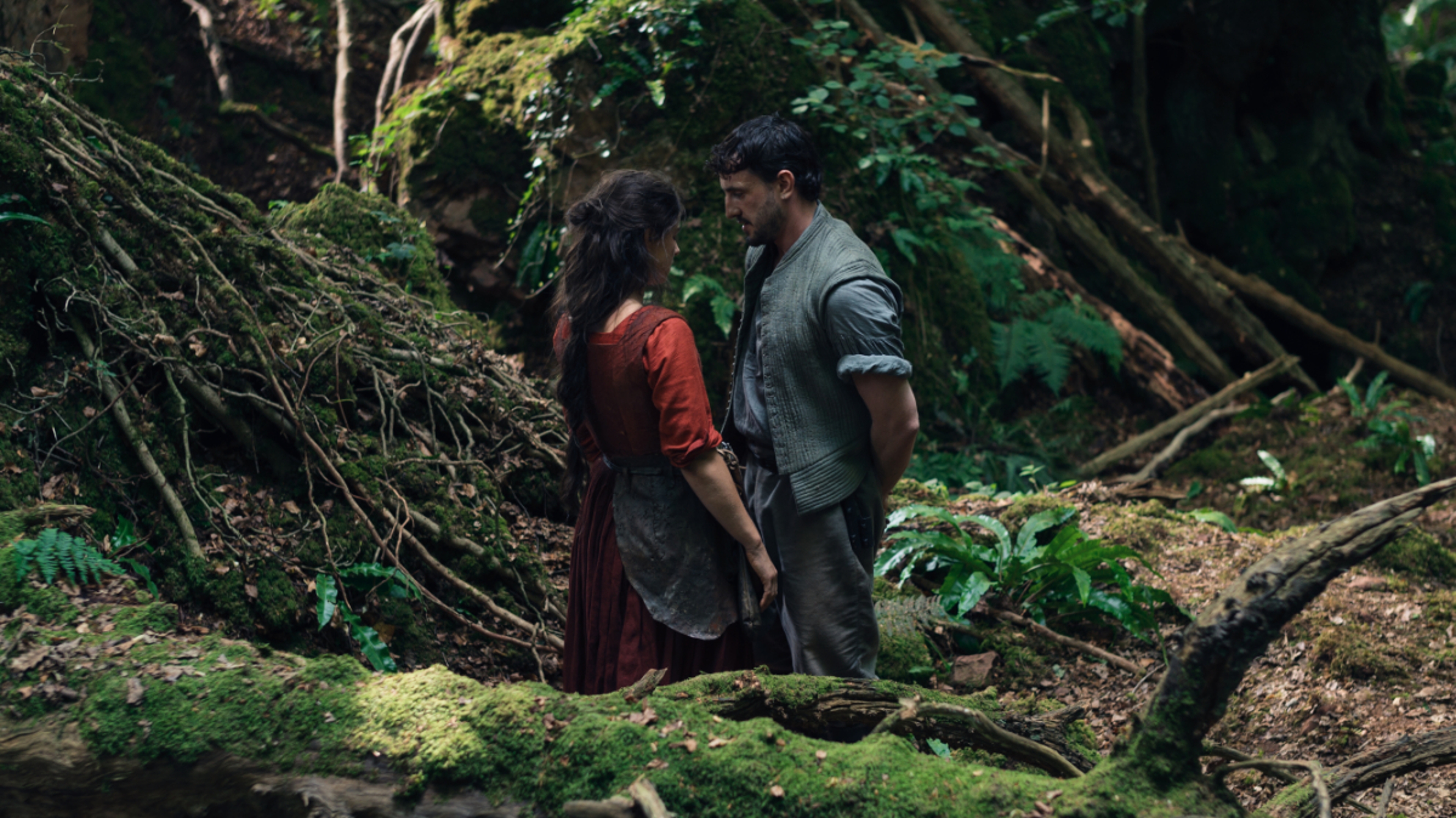
Jessie Buckley and Paul Mescal in Hamnet
What was your day-to-to-day process?
It was a script forged in the crucible of voice notes. Chloé's an amazing voice note leaver. During the writing process, she was in LA and I was mostly in Scotland, so we were many time zones apart. When I woke up in the morning and turned on my phone, it would start to ding with all the various voice notes that Chloé had left during the night, which varied in length from 30 seconds to 58 minutes. They were great. In the end, I feel that our different skills proved to be very complimentary.
One of the most interesting elements from book to movie is the pacing of the film.
Chloé and I had an awful lot of conversations about that. She had a very strong sense of how the film needs to be paced, and I had a strong sense of the narrative. For me, the narrative is kind of like beads on a thread. You have to make sure that they follow each other so the audience can find their way. But the pacing, how quickly we get there is part of the film.
What did you feel about the casting for your characters?
Paul Mescal was always my dream for William. I saw him when he was a student on the stage in Dublin at the Gate Theatre. He was playing Stephen Dedalus in A Portrait of the Artist as a Young Man. For me, there is a strong thematic link between James Joyce’s character and Hamlet. Paul has an amazing way of creating a character for whom what he says and does seem to be at odds with what is going on inside him. Chloé suggested Jessie for Agnes, which I felt was a stroke of genius. She is someone who can be filled with rage and great tenderness, sometimes at the same time.
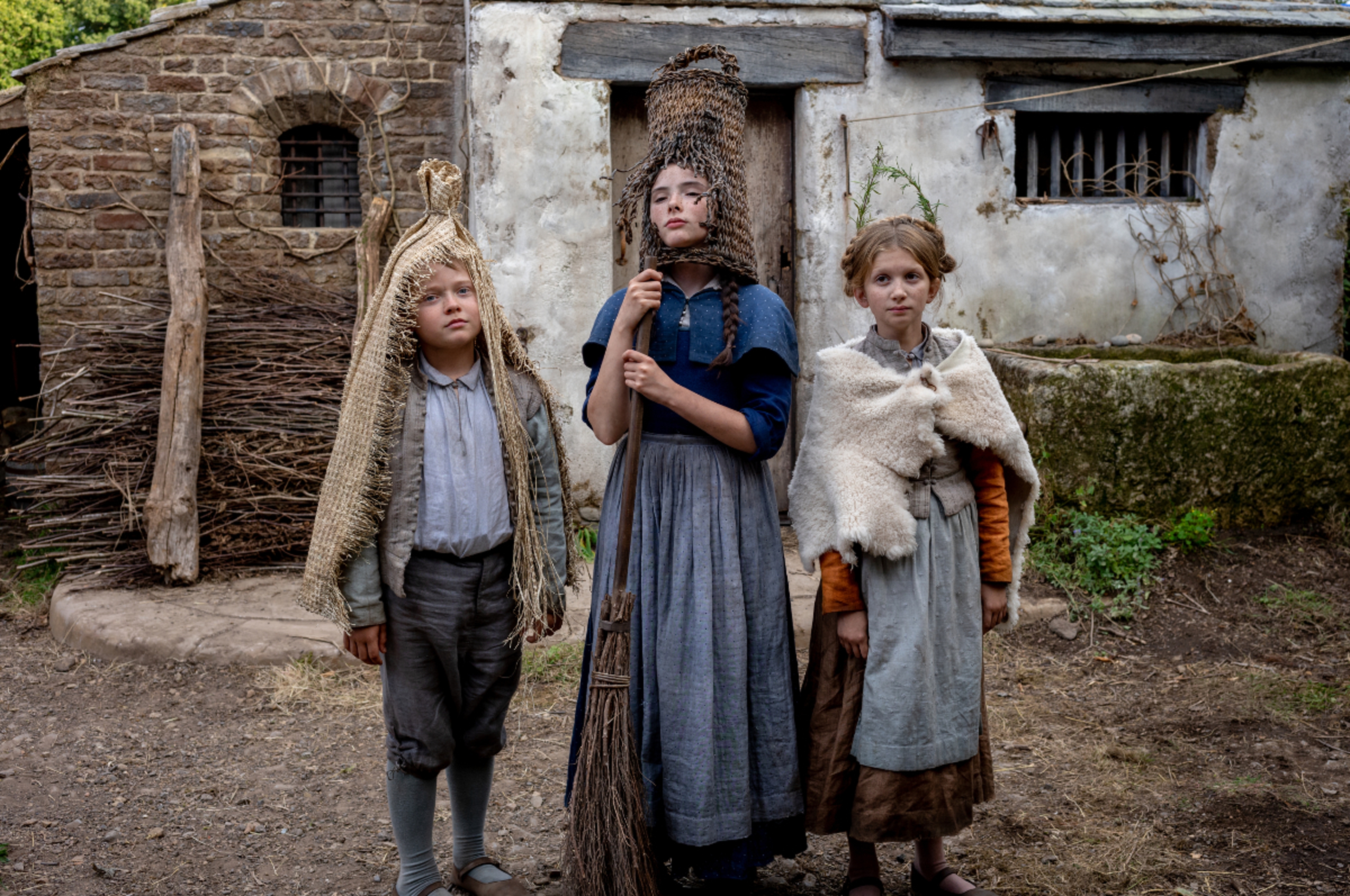
Jacobi Jupe, Bodhi Rae Breathnach, and Olivia Lynes in Hamnet
Some authors see something new in their work when it is adapted to film. What surprised you?
I'd seen all the rushes and I'd seen it in various editing suites, but when I first saw it as an audience, I hadn’t expected that they would be humorous, especially in the courtship between Will and Agnes. It was just great to hear laughter in the theater. The other thing was the power of seeing on screen the first production of Hamlet. It’s described in the book, but to see it was incredible. That we were able to fully unfurl the flag of the play and show people the connection between certain scenes and speeches to Shakespeare's biography was so joyful.
Was there anything revelatory in the performances?
There’s a point in the film when Agnes starts to howl in reaction to something that is happening. It was not described that way in the book, but it was absolutely perfect.
What do you hope audiences take away from the movie?
The main engine behind me writing the book was that I wanted more people to know about Hamnet, the boy. He's always been relegated to a footnote in his very famous father's story. I hope people get to know the person.
This interview has been edited and condensed for clarity.
