Finding the Compassion Between Sound and Silence in Midwinter Break’s Score
An exclusive Q&A with composer Hannah Peel
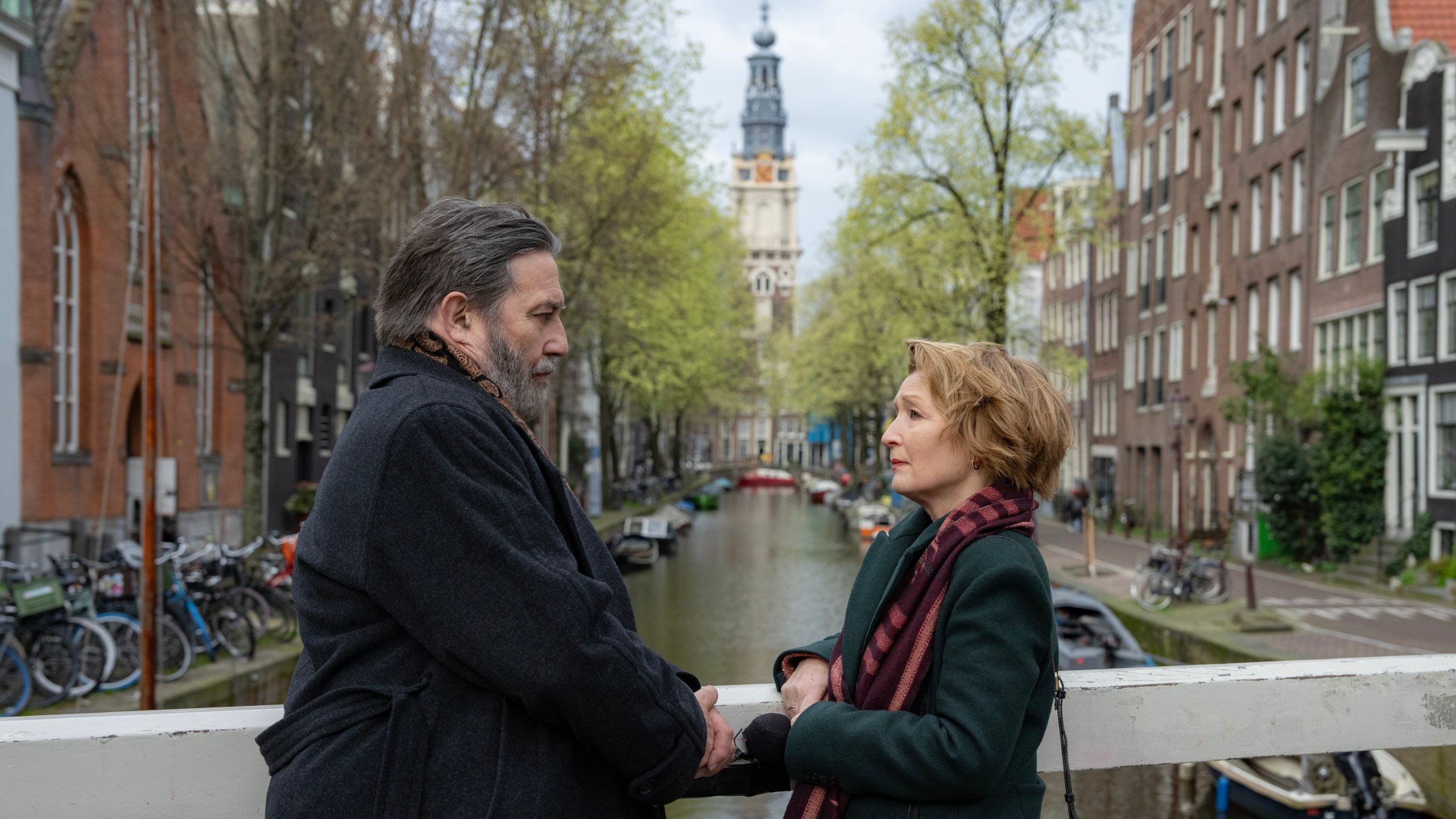
In Polly Findlay’s Midwinter Break, when Stella and Gerry (Lesley Manville and Ciarán Hinds), a long-married couple living in Glasgow, take an impromptu getaway to Amsterdam, the postcard scenery and time away invite both to reflect on their life together and the mysterious tragedy that forced them to leave Belfast years before. Adapted from Bernard MacLaverty’s acclaimed novel by the author and screenwriter Nick Payne, the film creates an almost musical arrangement of internal meditation, comfortable chatter, shared moments, and ineffable loneliness. The Associated Press wrote, “This is a relationship that’s all about the small moments and what’s left unsaid.”
To score the film, Findlay turned to the innovative composer Hannah Peel, having heard her innovative score for a theater piece. The award-winning Northern Irish composer has worked in TV, film, and theater creating scores noted for the way they cross boundaries between electronic, live instrumentation, and sound design. Her thoughtful approach in Midwinter Break created an intimate conversation with Findlay’s cinematic style. “Findlay keeps things as elegant as possible in the director’s chair, going in for close-ups wherever she can to let the actors’ faces tell the story and sparingly utilizing the potent emotionality of Hannah Peel’s score,” write Next Best Picture.
The official trailer for Midwinter Break
How did you get involved in scoring Midwinter Break?
I was the composer on a National Theatre staging of Brian Friel’s Dancing At Lughnasa in London and Polly had heard the music. She and the team then asked if I was interested in being part of the film. I hadn’t read the script or seen a cut at this point, but after the first few minutes of our meeting, I knew I wanted to be involved.
What did you see as your biggest creative challenge in scoring the film?
It wasn’t necessarily a challenge, but being from Northern Ireland and having to leave when young after witnessing bombs, I could personally understand some of the underlying trauma of the main characters. So, my instinct was mostly about honing in on that—figuring out how and what that would sound like; asking questions like what role does tradition play and how that is affected or changed when you leave your home.
You’ve said you wanted to evoke a conversation of light and darkness in the score.
The main instrumentation of the score primarily focuses around conversations between the piano and the cello. The score moves between major and minor melodies and chord patterns throughout. The beginning of the film is shaped by a lot more movement and lightness in the score, reflecting the surface feelings of the characters and their plans to go on a trip. Yet as the film progresses, space appears in the music like the holes in their relationship and it was important to move with the narrative to bring in darker tones and mark the growing difference between Stella discovering a sense of spirituality and Gerry’s darker dive into himself.
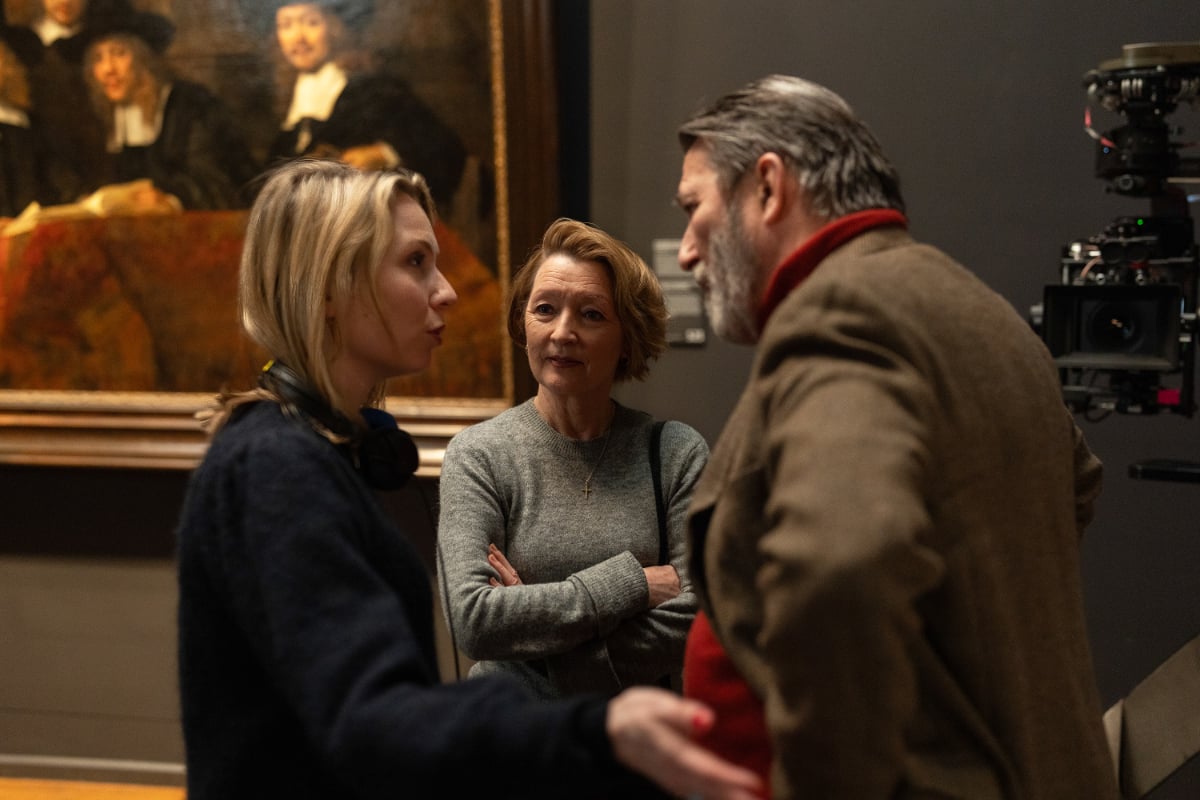
Polly Findlay, Lesley Manville, and Ciarán Hinds on the set of Midwinter Break
The performances in the film are very intimate, often relying on silence as much as dialogue. How did you work with that musically?
Often the conversation Polly and I had was focused on the way a music cue could enter and leave as much as the music itself. This was done on every level: Before starting and while composing, recording, and spending a valuable amount of time in the dub together with the whole team. We wanted to make sure every single note was placed with the right intention.
What are the different themes in the score?
We knew from the beginning that the music had to offer a sense of place and a strong musical grounding from where it could develop. Melody was so integral to this idea and so I spent a long time before scoring to picture, writing many piano ideas. I wanted something that could be singable and feel instantly at home and natural, like their long relationship. Two-thirds of those demos really stuck in our minds, so I started to develop everything for picture after that point. We carefully found moments that the themes fitted best and then worked around those key points.
The story takes place in Amsterdam, Glasgow, and Belfast. How did these places influence the score?
I had worked with the fabulous Scottish cellist Alice Allen previously and adored the way she moves fluidly between a classical western sound and traditional Celtic music. I needed the touch of tradition to be light yet ever present and by working with Alice, I felt that it would be a perfect combination to achieve this. I also recorded the strings and woodwind in Glasgow with musicians that regularly perform in that crossover world. I’ve recorded there many times now and love how open and sensitive the musicians are to music like this in Scotland.
How did you integrate the score with the Irish music played in the pubs in Amsterdam?
It’s such a rich part of musical history that there is no use in competing with it, so by just taking the subtle elements out of the stylistic inflections like slides and turns, I was able to make sure the score was about the characters and their emotional journey.
What sort of instrumentation did you use for the score?
Aside from myself on piano and Alice on cello, I recorded a string quintet, harp, clarinet, and soprano voice. We wanted an intimate quartet sound but the quintet was essential for the rich addition of a double bass. The playing style was also important, having a breathiness to bow styles meant that the strings could sit within intimate moments of the movie. The harpist, Esther Swift, is a wonderful folk singer and classical harpist so she instantly understood how I was approaching the parts.
What do you hope people take away from Midwinter Break?
Polly’s work is focused on detail and finding space between the noise. I hope people will see and enjoy the beauty in this and recognize how compassion and love for each other can continuously grow, no matter what age.
This interview has been edited and condensed for clarity.
