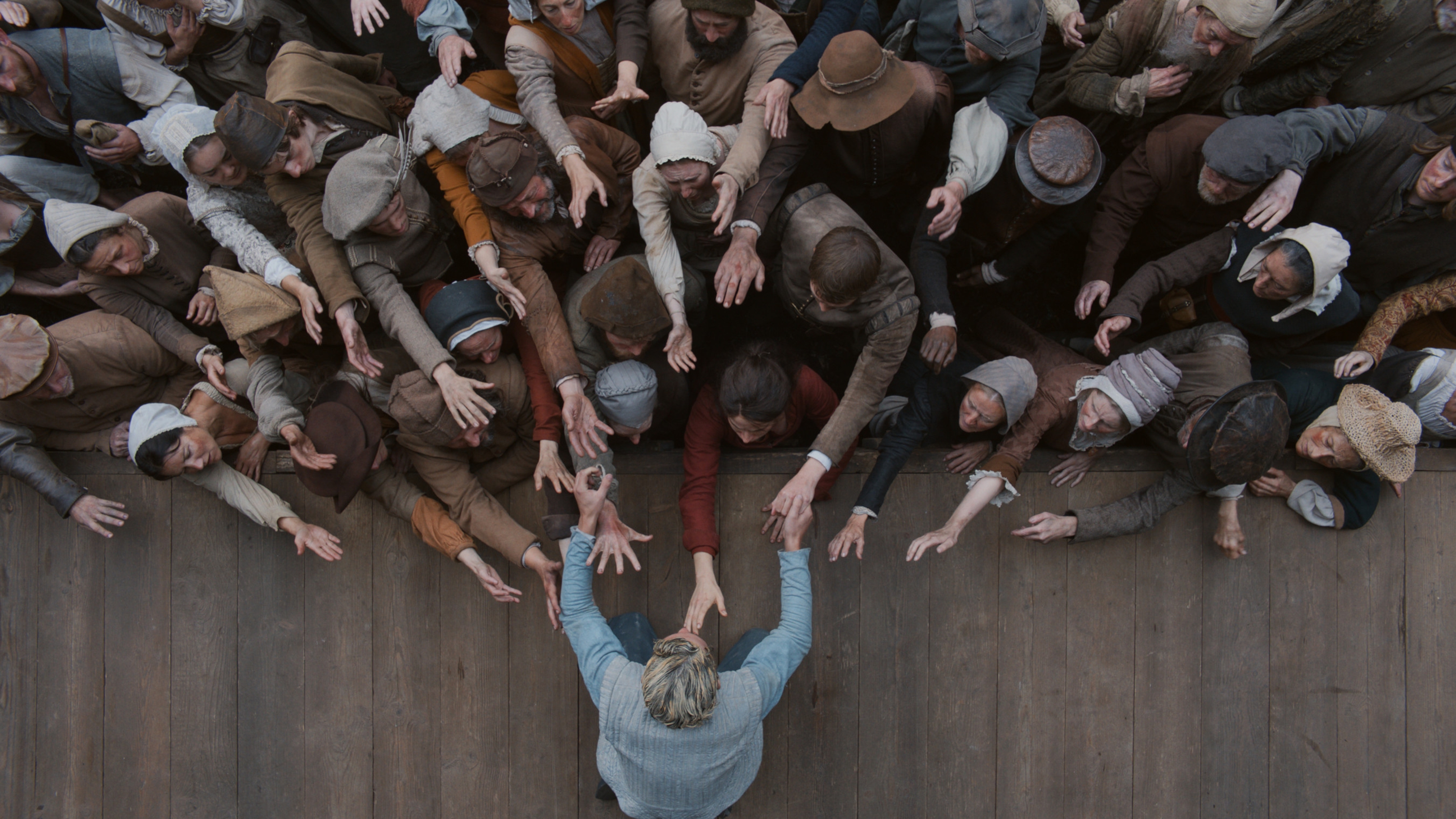
Connecting to the Musical Pulse of Hamnet
An exclusive Q&A with Composer Max Richter
In Chloé Zhao’s Hamnet—adapted from Maggie O’Farrell’s award-winning novel—a family’s joy and tragedy are transmuted into art and healing. After the young Will Shakespeare (Paul Mescal) falls in love with Agnes (Jessie Buckley), eventually marrying and creating a family, tragedy strikes. Working as a playwright in London, he transforms Agnes’ and his grief into his masterpiece, Hamlet.
Zhao turned to composer Max Richter to bring those deep emotions into the film’s score. In addition to his acclaimed original compositions, Richter has made a name scoring TV shows like The Leftovers and movies like Mary Queen of Scots. Jessie Buckley recalls in the production notes, “I feel like I’ve had so many moments with Max’s music where I’ve been transported to a place that I didn’t know before.” For Hamnet, Richter worked closely with Zhao to craft a score that matched the film’s emotive force. Film Stage writes, “This is an achingly beautiful film, one composer Max Richter underlines with a score that will live on on its own.“
We spoke with Richter about using Elizabethan musical traditions, employing period instruments, and reflecting the film’s emotions in his music.
The official trailer to Hamnet
How did you get involved working on the film?
The script came to me through my agent. I knew Chloé’s previous work like Nomadland and really admired her approach to storytelling. I thought the script was amazing. We met and talked about the story, the themes, and the world of the film—this was before they were even in production. Chloé and I felt completely aligned in terms of the overarching themes and how we might tackle them.
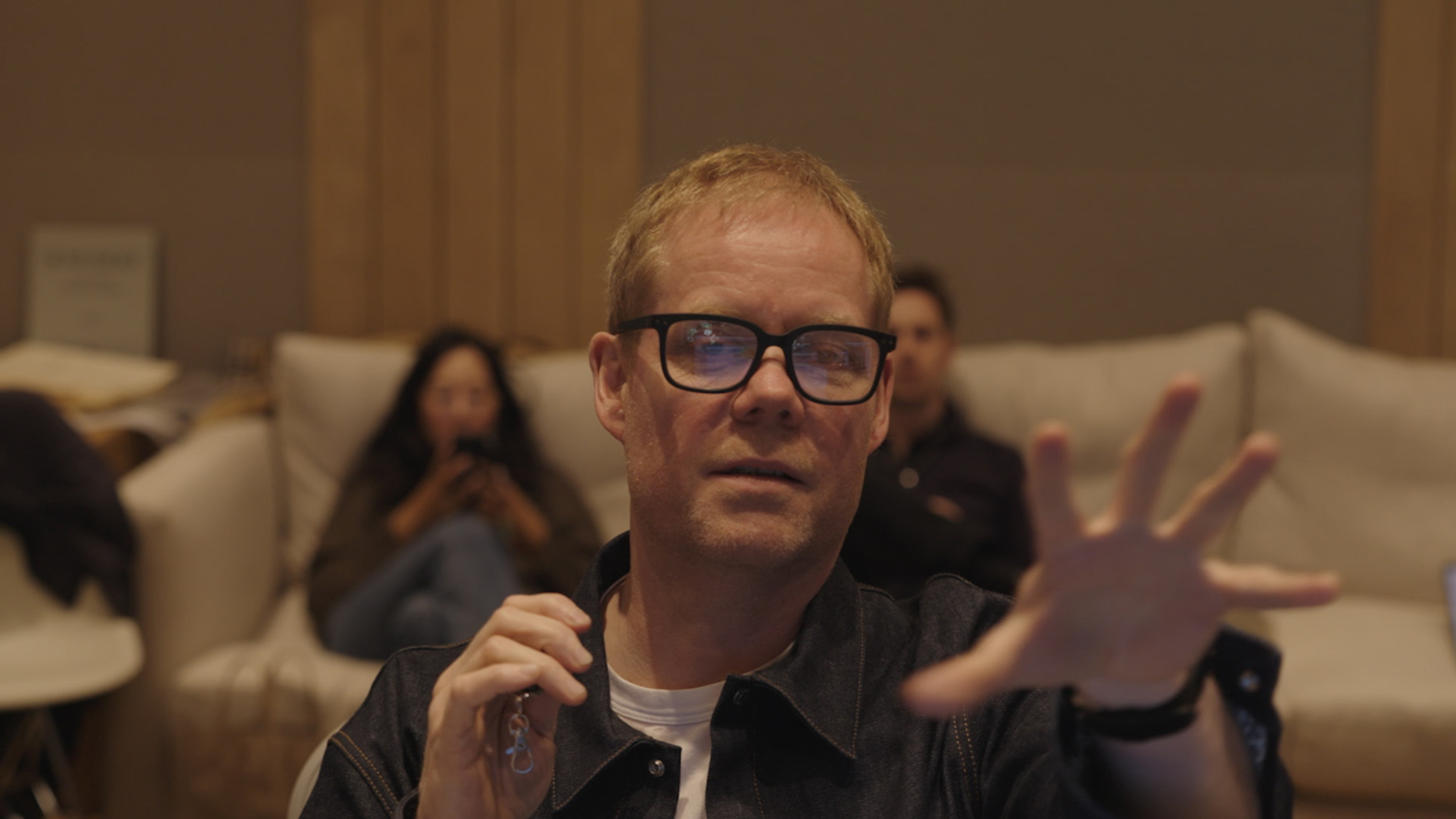
Composer Max Richter
Is it normal for you to write music before production?
When I read a script, I can tell immediately if it's going to excite and inspire me. Then I just started writing. My first impulse is really valuable. After reading the script for Hamnet, I was so intrigued by and drawn into this world that I immediately made about a half an hour of music. I sent over that to Chloé which she played on the set during rehearsal. That early music became part of the texture of the story making and world building quite early on.
You described being inspired by Elizabethan musical principles. Can you talk about what those are and how they guided your score?
Elizabethan music is one of the real high points of English classical music culture. You have this wonderful flowering of choral writing as well as fantastic instrumental writing. I had these two ideas in my head. One was that I wanted to evoke that Elizabethan choral tradition but not as a pastiche. I was interested in using the principles of communal choral singing as a way to signify community, the community of the family as well as that formed by the female perspective. The film is very much Agnes’ world and I wanted everything to feel like it was being viewed through the prism of Agnes' experience,
The other thing I took from Elizabethan music practice is some of the period string instruments—the nyckelharpa, the hurdy-gurdy, and other folkloristic instruments. I made different recordings of those and then built them into abstract versions of themselves. So instead of it being just a violin ensemble playing, it's the ghost of a violin ensemble playing—an electronic ghost of it.
Were there particular composers that inspired you?
Back in the day, I studied all of them at university and conservatoire. Those composers are deep in my bones, people like William Byrd, Thomas Tallis, and, of course, Thomas Morley, who may have written songs for Shakespeare. There was a whole community of musicians at that time who characterized the period.
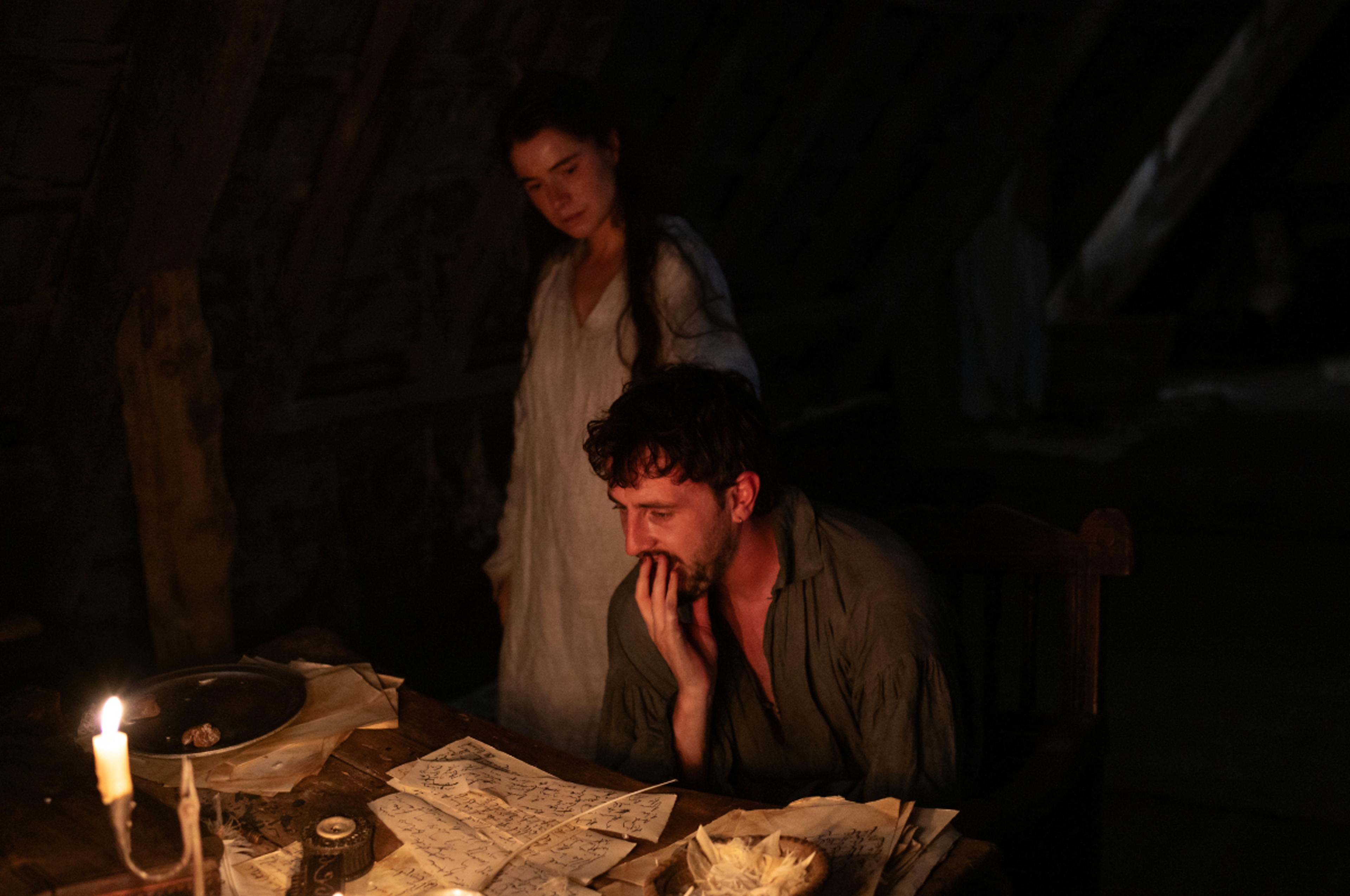
Jessie Buckley and Paul Mescal in Hamnet
The film has a remarkable sense of pacing. How much did the score set the film’s pace?
The pacing of the film develops a kind of inexorable force over time. But it's so carefully calibrated. For viewers, the film lands very emotionally, but its construction is incredibly clever and thought out. At some point, I felt like the score had to mirror that. The score works with time a lot in the film. There are sequences where you feel there's a little bit of movement, that the score is pushing time forward. For example, there’s a rehearsal scene in the Globe Theater where Will is pacing up and down, which I felt needed a bit of an energy push. The music does propel the narrative a little bit there. Mostly, however, the story plays in a sort of suspended dream narrative. I never wanted the music to get in the way of that.
Did you develop particular themes?
Mostly I wanted to score to connect to the central ideas, which for me—and I think for Chloé as well— are the relationships of the family, the female perspective, and motherhood in a cosmic as well as familial dimension. Agnes' character has deep personal connections with the people around her—her family, her children, her husband—but she also has this extraordinary connection to the earth and to the beyond. I was looking for ways to express that.
How did you translate that other worldly element into a musical theme?
I went with an abstract choral color for that. We used a choir which specializes in Renaissance and Elizabethan music. They have a very pure sound which I manipulated a bit more to give it the voice of the beyond, Hamlet’s “undiscovered country.”
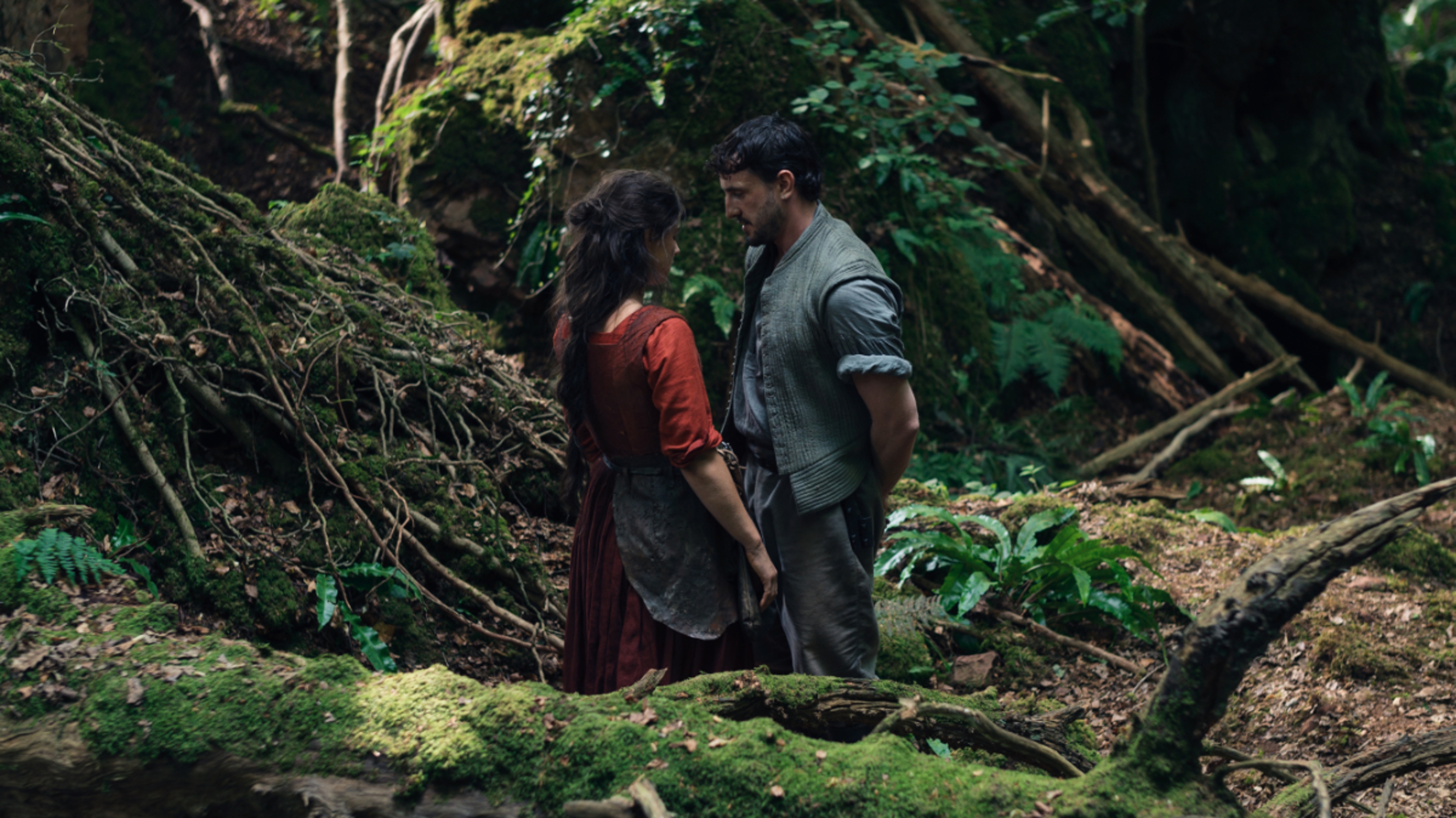
Jessie Buckley and Paul Mescal in Hamnet
Can you talk about the instrumentation?
The main color is the vocal color from the sessions with the Renaissance choir. which was almost all women. In the sequence when they go into the Globe Theater, I added a few men in the choir. I felt like Agnes going into the theater was her going into Will's world. Then there is a 60-piece string ensemble with some additional things—a bit of brass and a bit of low brass—but basically it's a string orchestra. Then there's a couple of solo instruments—a solo piano and solo harp. I added the piano because I felt it could express a kind of a delicacy within Agnes. It's very simple piano music. The harp is there when Will is telling the story of Orpheus because Orpheus played the lyre. Then, there are these electronic things which are made out of the organic Renaissance instruments. There's a fair bit of electronic music in the score actually, even though it feels very organic.
Zhao asked to use one of your earlier pieces, “On the Nature of Daylight,” in the film. How did that come about?
Chloé never knew how exactly she was going to end the film. In the script, Hamlet says, “the rest is silence.” End of film. We were getting towards the end of the shoot when Jessie sent Chloé my piece “On the Nature of Daylight.” After she listened to it on the way to set, Chloé had a new vision for the ending of the film. She rewrote the ending in response to that music. She had made so many amazing decisions in the production of this film, that I completely trusted her when she told me she wanted to end the movie with “On the Nature of Daylight.”
What do you want audiences to take away from the film?
What I think is so beautiful about the film is that it invites you to reflect on what's actually important in your life. Will is trapped in his world and there is this other world filled with his family and his relationships. The film really speaks to connecting to the truly important things in your life
This interview has been edited and condensed for clarity.
