Capturing the Feel of Rural Oregon in 2006 in Girls Like Girls
An exclusive Q&A with production designer Lindsey Moran
In Hayley Kiyoko's Girls Like Girls, Coley (Maya da Costa) has just moved to a small town in Oregon in 2006 after her mother’s death when she meets Sonya (Myra Molloy), a charismatic girl at the center of the town’s social circle. All summer, the two hang out—at each other’s homes, at the communal swimming hole, in the woods, at the local café—slowly finding themselves lost inside their own private world. The Hollywood Reporter writes, “It’s that experience — of discovering something you didn’t know you didn’t know, and finding yourself in the process — which Girls Like Girls captures so fully that it comes to seem, in spite of its familiarity, like a tiny revelation.”
To help bring their world to the screen, Kiyoko turned to production designer Lindsey Moran who not only crafted locations that capture the film’s period and place but also astutely highlight nuances in this romance’s social order. The New York Times writes, “their homes (production design by Lindsey Moran) speak subtly about their class distinctions.”
We spoke with Moran about how she captured Coley and Sonya’s world, molded locations to fit the characters, and personally connected to the story.
The official trailer for Girls Like Girls
How did you get involved with overseeing the production design of Girls Like Girls?
I interviewed with Hayley Kiyoko in early 2022, over a year before we started production. We got along really well and had a similar vision for the look of the film. Hayley has strong feelings about what she likes and doesn’t like, which I find very helpful in a director. It gave us a solid foundation to launch from as we dove into prep. Remaining open to change is something that’s important to us and something we are both very good at, which made for a great working relationship.
Can you talk about picking the film’s locations?
Location scouting on this film ate up a massive amount of prep. With every location we went to, we made a point of playing a game I call “If we had to.” There are many times when you see a location early in the scouting process that you might not be super interested in, but if you don’t give it the time of day while you’re there, you’ll have to spend precious prep time going back. That first place you saw might end up being your best option.
We scouted many different locations for the cafe and none of them felt quite right. The first place we looked at was called the Cherry Pit. It had the perfect layout for the action and was good for lighting, but none of us liked the look. After being disappointed by five other locations, we circled back to the Cherry Pit. To help change the country feel, we added a lot of large colorful elements. Thanks to the hard work of set decorator, Adrian Traquair, and assistant set decorator, Haylee Sawchuk, we got some amazing bright orange chairs and rented arcade machines that brought tons of color into the space. We built a community board to cover a giant mirror in the back, and our art director, Olga Devuyst, helped source some real neon signs that I was hell - bent on getting on camera. Olga and our graphic designer, Lizzie Jackson, came up with tons of colorful, fun graphics to cover the tables and add to the walls. The menu board and air conditioning signs were hand painted by a wonderful sign painter, Cam Sterling.
Many of the locations we scouted for the swimming hole were very far away. They were beautiful, but logistically impossible. The place we finally settled on had a massive rock you could jump from which added an element of danger that we really liked, but the location was full of random stuff and didn’t feel very natural. So, Olga and Adrian, Jason and Tyson Battye in greens, and Michael Stitt, Jeff Doll, and Jocelyn Dumont in construction and paint, along with the homeowners did a ton of work clearing the stuff, replanting trees, moving rocks, recovering an existing structure, and adding the beach areas.
At first, we had trouble finding a location for Coley’s house. Then suddenly, we found a house in our locations folder. I told our location department to get us there to scout it immediately. Hayley didn’t get the chance to look at photos before we went—which honestly made the scout even more fun. We looked around inside and out and liked it well enough. Hayley had been telling me she wanted a single-story house with Coley’s room upstairs, an architectural conundrum. The attic space in this single-story house was exactly what she had been describing for Coley’s room. She was beside herself, and we were off to the races.
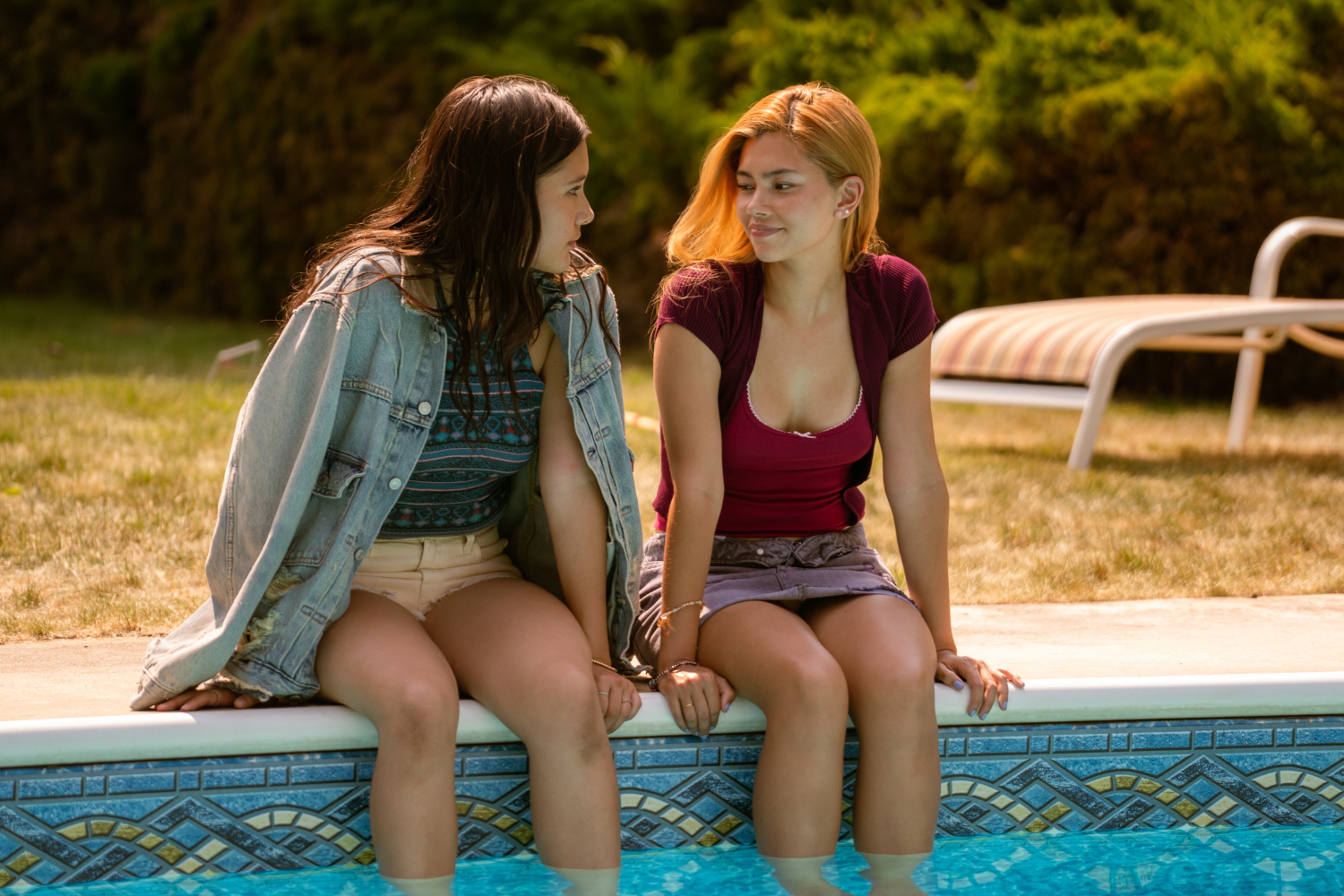
Our set decorator had scouted a house for a previous show that he thought might be a good fit for Sonya. The house had an upscale feel to set her apart economically from Coley and a huge pool in the back for that fabulous poster image. It was very bland in color which gave us a good neutral base to begin layering in Sonya’s princess peach dreamworld.
Maya da Costa and Myra Molloy in Girls Like Girls
How much was the production influenced by the music video?
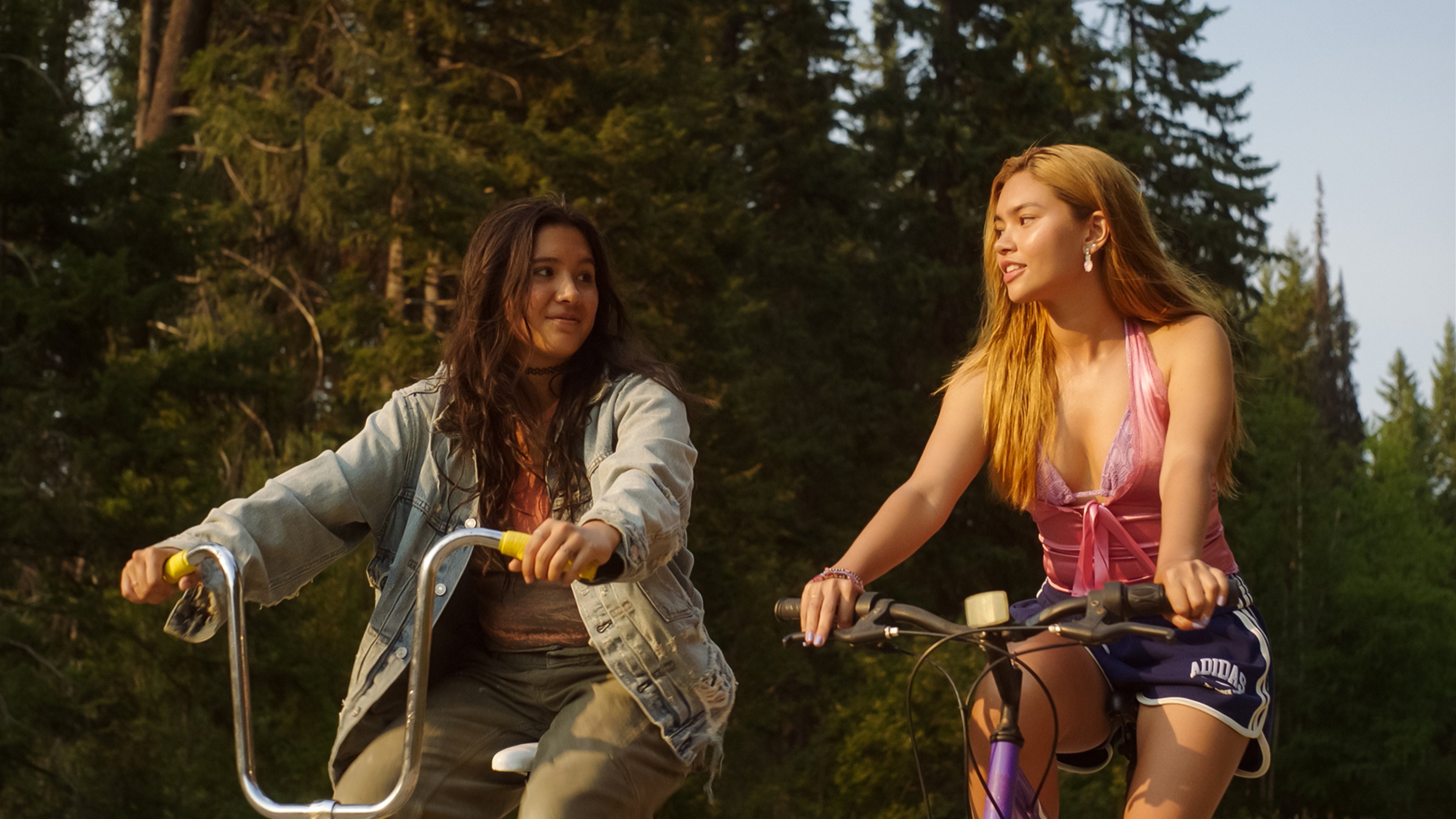
The music video was certainly a huge inspiration for us. Hayley wanted to keep its soft, golden, glow-y feel. The yellow bike from the music video became an icon of the Girls Like Girls world, so we went to great lengths to get the exact same model. It was not an easy task for our property master, Alyx Wilk. She found a matching make and model, but it was the wrong color. We had it rush shipped, driven across the Canadian border, and custom painted just in time.
The film is set in rural Oregon in 2006. How did you bring the story’s specific time and place into the production design?
Hayley has a very personal family connection to Kelowna. The town of Kelowna came as a package deal with the production company. The area was a perfect match for our fictional Pacific Northwest town. The greenery, country roads, neighborhoods, and feel of the small towns nearby were just right. We jokingly called our ambiguous location “the town of Oregon.”
Getting the period right—vehicles that didn’t feel like they’d been aged an extra 20 years—was a bit challenging in a place that didn’t have studio vehicle rentals. On top of that, we had some very specific requests when it came to colors and interior layouts.
Myra Molloy in Girls LIke Girls
The décor of the girls’ homes tells us a lot about their characters. What do we learn about Sonya and Coley from their bedrooms?
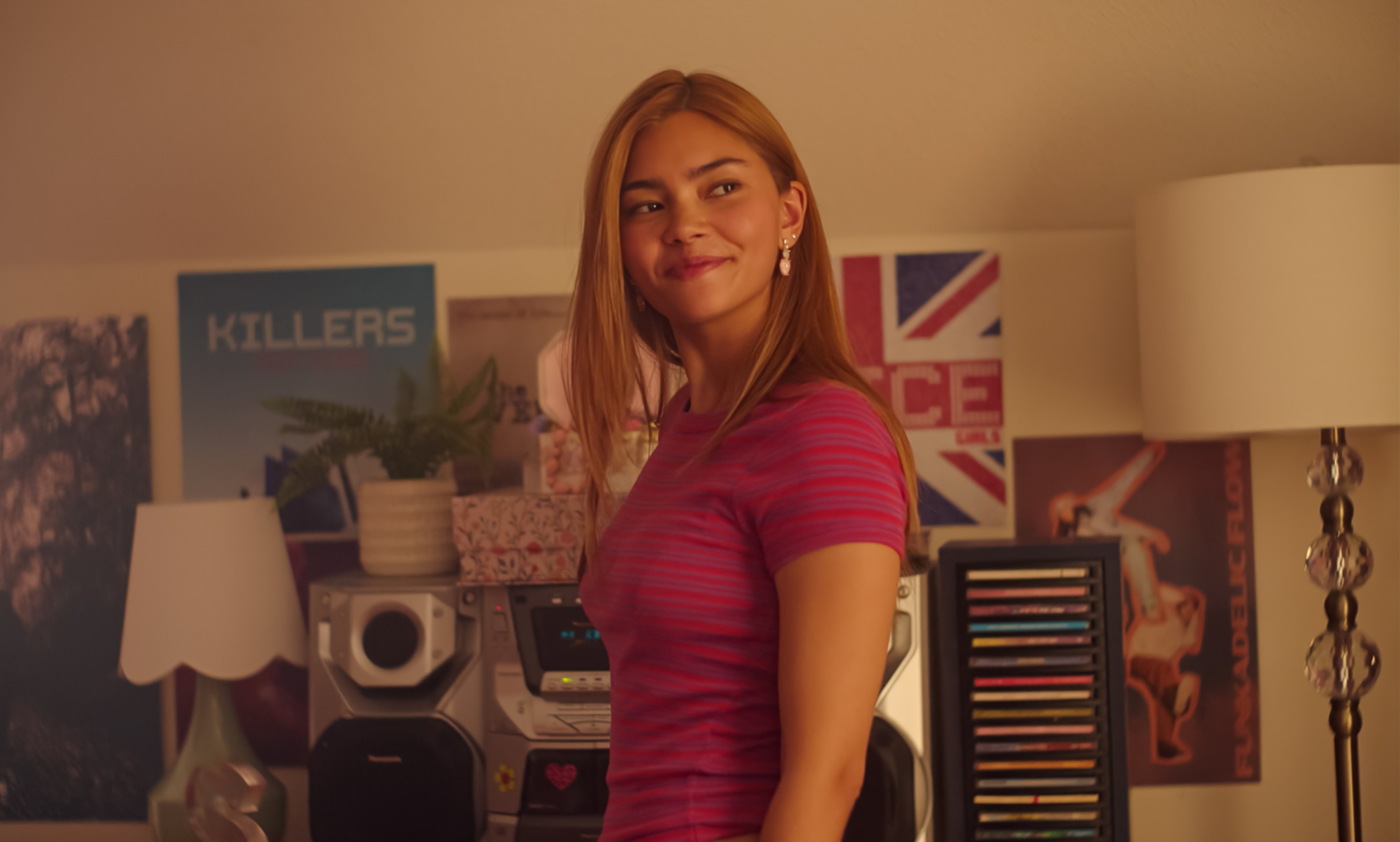
We wanted Sonya’s peach dreamworld to feel very lived-in. Small trinkets on every surface, mementos from her competition dancing, and photos of her and her friends growing up. She’s had the same bedroom all her life and it conveys a sense of community that she’s been building for years. All the things Sonya takes for granted are clearly contrasted in the things Coley doesn’t have. When the actors arrived, we gave them disposable cameras and asked them to take photos of themselves having fun so we could layer them into the set.
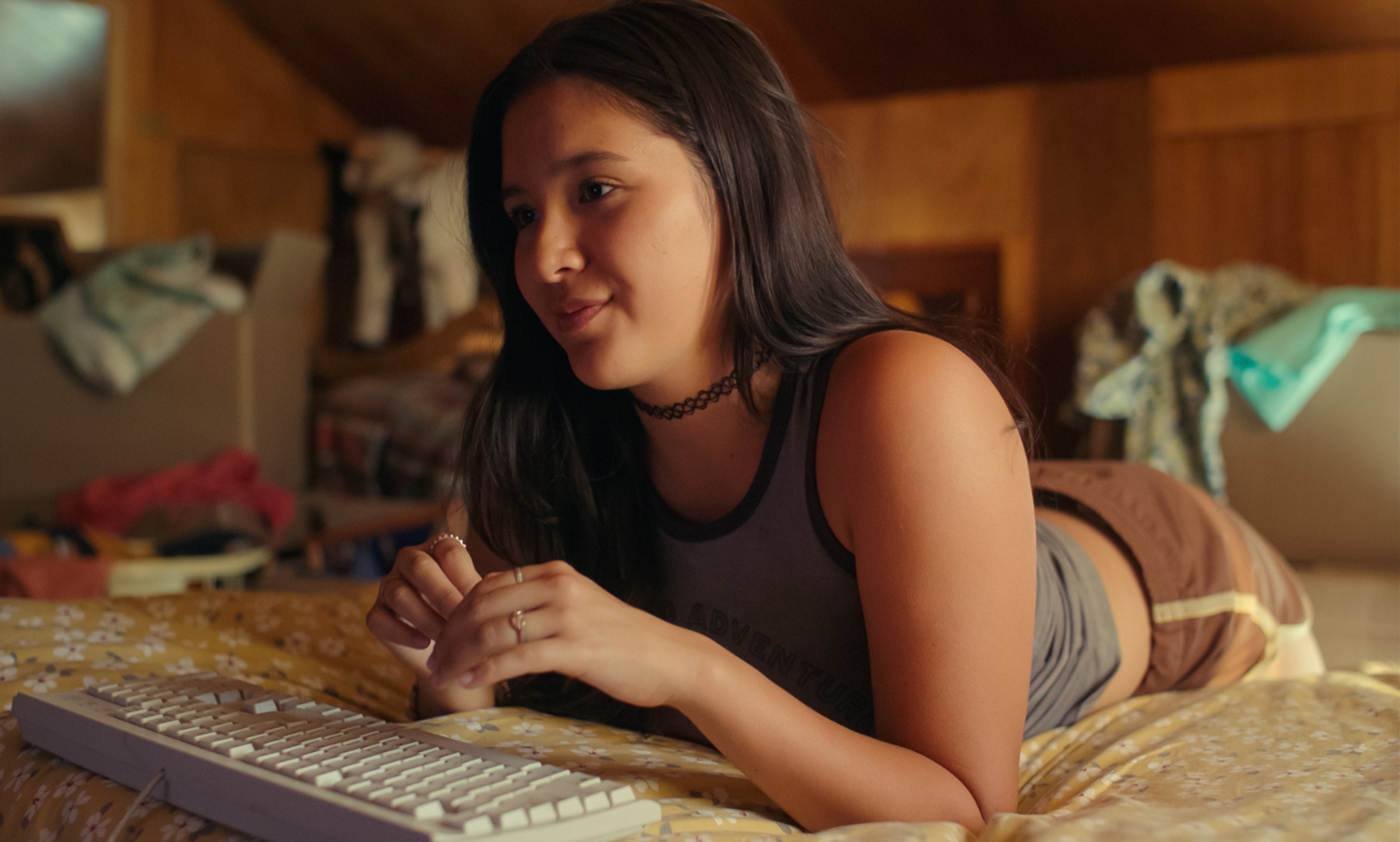
Coley’s attic needed to feel a bit oppressive, and the all-wood space we found definitely helped with that. Her room was intentionally an afterthought. I like to give spaces a history, as does our decorator, so we spent some time talking through what things you might find in the layers there. The concept was that her musician/jeweler dad moved back into his mother’s house after she passed away. There are certain things in the house that were left over from Coley’s grandma like the wallpaper in the living room. Downstairs you can find things from her dad’s world like the cowboy lamp, his current jewelry business, and some stuff from his previous life as a rocker/roadie. Everything is invading this space that she’s now been awkwardly plopped into. One of the main pitches to Hayley was that I wanted to show their space evolve.
How did the rural setting help you to choose the color palette for the homes and other locales?
Hayley, Sonja and I had many conversations about color for this film. We wanted the lighting and color palette to stay very soft, golden, glow-y, and nostalgic. The expert eye of our on-set dresser, Kennadee Wilkie, watched over every fold of the sheer curtains to ensure the lighting in Sonya’s room remained absolutely perfect. Nature definitely played a large role—golden sunshine, green trees, and calming water are a through line. We wanted each of the girls’ spaces to feel distinct. Sonya’s is bathed in peach, Coley’s in earth tones, Brooke’s in purple and bubblegum pink, Blake’s in blue, and SJ’s in ‘70s avocado and yellow. I raided Benjamin Moore’s paint sample drawers and tasked our art coordinator, Erin Hazlehurst, with duplicating my color charts for camera, set dec, props, and costumes, so that we were all on the same page. We called our palette off-rainbow (except for yellow), and kept everything mid-range in saturation. No high intensity or dead colors allowed. Then, we banned red from the film almost entirely. Whenever we saw it, the idea was there was something to pay attention to. We wanted the red of Sonya’s bikini and shorts to really draw your eye.
Maya da Costa in Girls Like Girls
In creating the production design, what was so different in 2006 rural Oregon than in contemporary America?
We decided to shine a light on the technology of the time period because, of course, kids are always on the leading edge. Computers were around, but they were mostly still clunky off-white boxes. Cellphones existed but were either flip phones, Nokia bricks, or sidekicks. Messaging had begun, but it was limited to AIM and everyone except for those lucky sidekick owners still had T-9 texting. It was through this medium that our characters felt both the giddiness of love and the sting of rejection. Getting those things right felt very important.
What do you hope audiences take away from the film?
More than anything this film is about accepting yourself, and that’s something everyone starts experiencing in their earliest relationships. The decisions we make about who we show up for shape who we become as we age. Like a lot of women, this film has scenes that could have been from my own high school experience, and that’s a big part of what attracted me to the script. Finding the look of this strong sapphic story about young love and acceptance was an absolute joy. There is beauty all around you, and also, it is you.
This interview has been edited and condensed for clarity.
