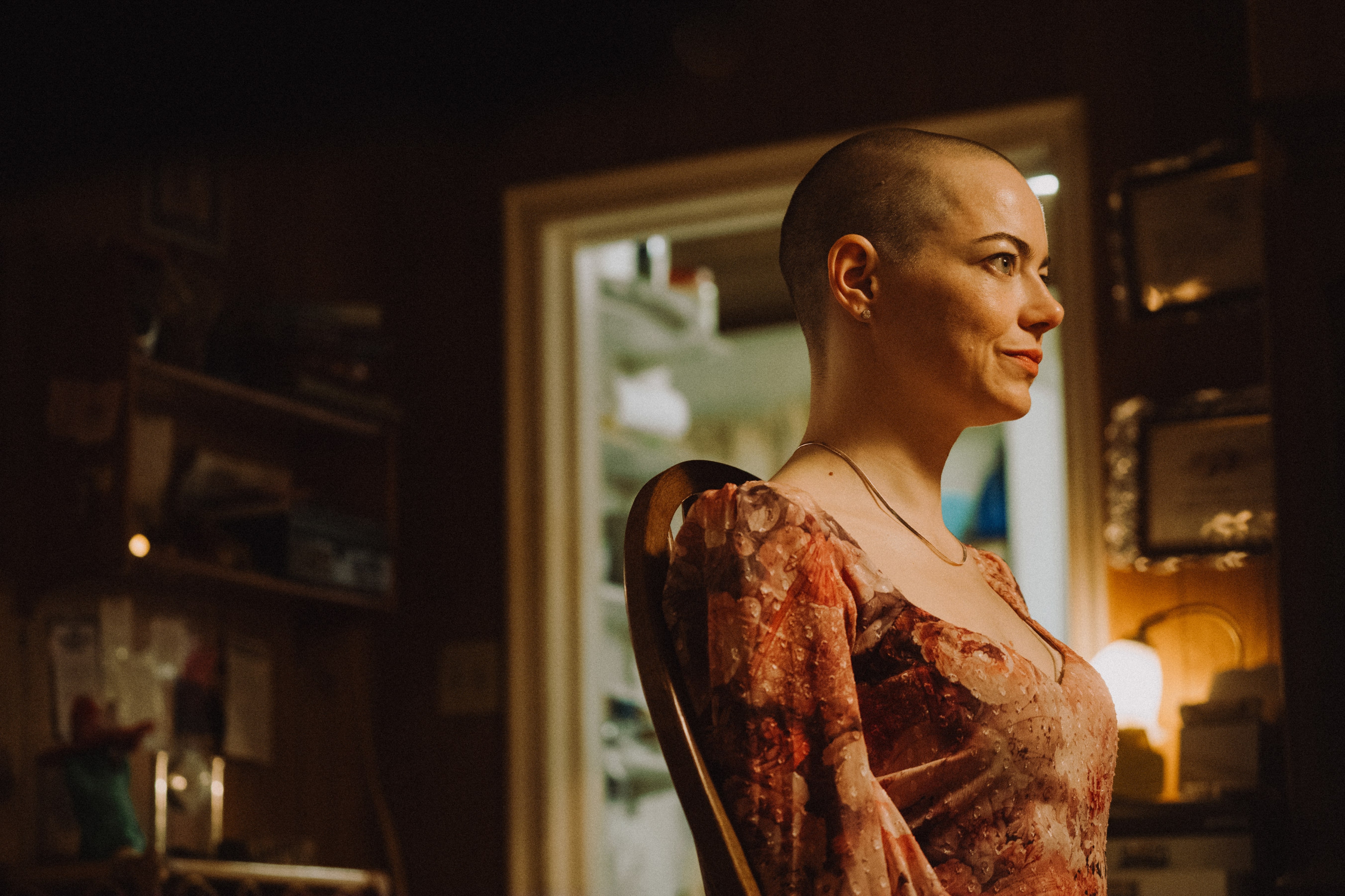
Bringing to Light Yorgos Lanthimos' Cinematic Vision in Bugonia
An exclusive Q&A with director of photography Robbie Ryan
In Bugonia, Yorgos Lanthimos weaves a complex sci-fi thriller through the luminous textures and heightened colors of his characters’ worlds. Emma Stone plays Michelle Fuller, the CEO of a major pharmaceutical company, who is kidnapped by Teddy (Jesse Plemons) and his cousin Don (Aidan Delbis) who believe she is an alien intent on destroying planet Earth. To heighten the fantastic nature of their story, Lanthimos and his director of photography, Robbie Ryan, shot on VistaVision—a high-resolution film format that brings a rich intensity to the image.
Twice nominated for an Academy Award® for Cinematography for his work on Lanthimos’ earlier films—The Favorite and Poor Things—Ryan intuitively knows how to translate the director’s vision to film. “One of contemporary cinema’s most talented cinematographers,” writes Little White Lies, Ryan “is firing on all cylinders, with the earthy greens, oranges and yellows that saturate Teddy and Don’s cluttered cottage a sharp contrast from the cool otherworldly sterility of Michelle’s glass mansion.”
We spoke with Ryan about realizing Lanthimos’ vision, shooting in natural light, and working with some very uncooperative bees.
The official trailer for Bugoina
How did Lanthimos describe this project to you?
Our relationship's very much about talking about cameras and lenses. He sent me the script and suggested that maybe we shoot it in a new format, film-wise. We tested different VistaVision cameras and then got ready to make this film on VistaVision
What was the reason that you thought that story would be aided by using VistaVision?
I have to emphasize that Yorgos is driving everything. He’s a fantastic photographer as well as a cinematographer, so when he told me we were going to shoot in the VistaVision format, I was, “Fantastic.” I was excited to try it out.
Why VistaVision for this film? Since 60% to 70% of this film is set in a basement, we wanted to make the most of that environment. I think Yorgos’ love of portrait photography made him realize that we could turn such a cramped environment to our advantage. VistaVision is a format that emphasizes the intimacy of the space, especially since we were going to be focusing on faces a lot. It really captures depth and detail.
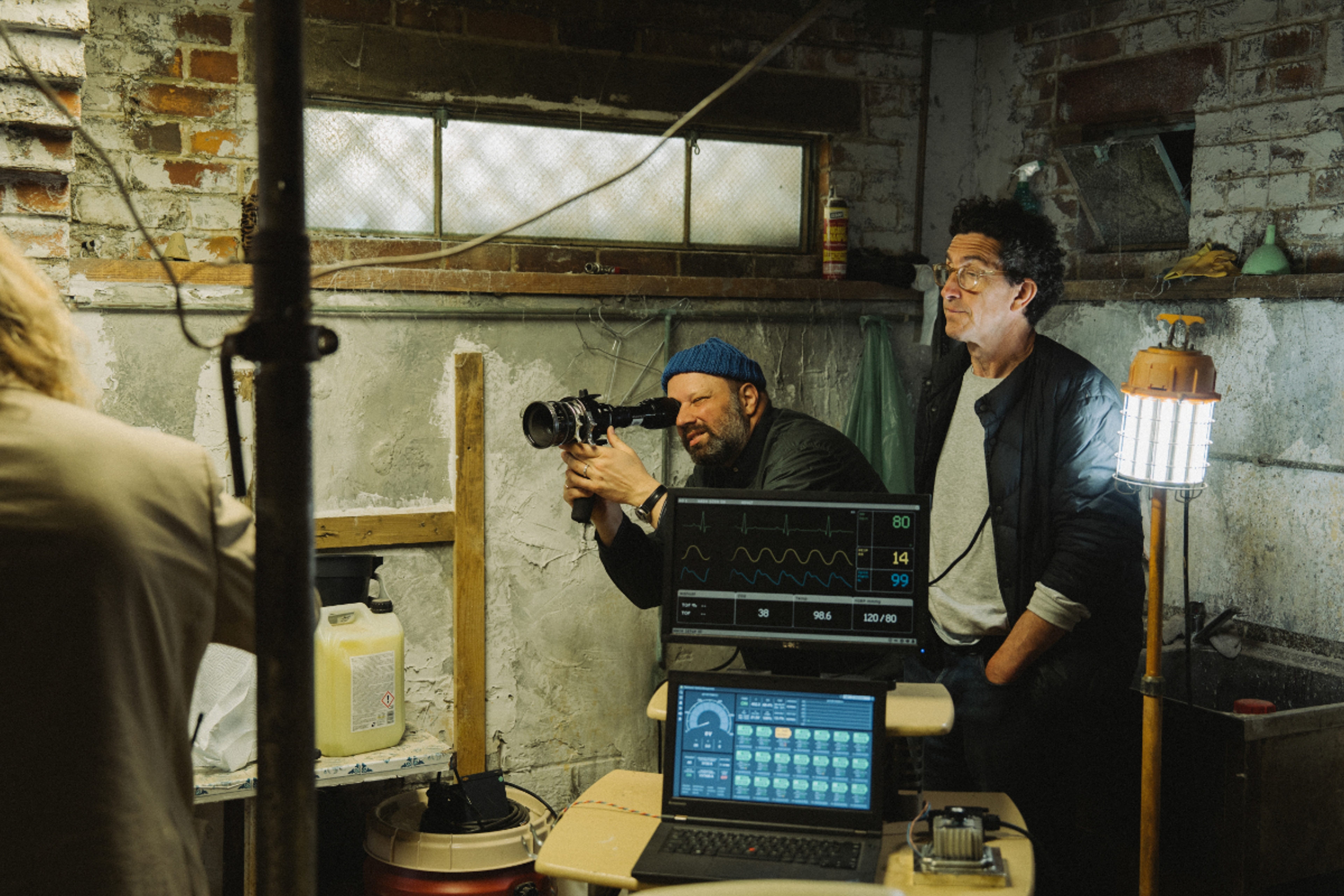
Yorgos Lanthimos and Robbie Ryan on the set of Bugonia
How did you shoot Michelle's world differently from Teddy’s?
It really came down to character. Michelle’s a powerhouse CEO—you don’t mess with her. She’s precise in everything she does. I love the montage at the beginning of the film where she wakes up, trains, eats breakfast, and uses her LED mask. Everything is perfectly timed.
We shot Teddy’s and Michelle’s worlds the same way technically, but what’s in front of the camera is so different. His house is ramshackle; hers has a hard, polished edge.
How did you handle lighting on the film?
Yorgos doesn't like film lights on set. I had a huge learning curve on The Favourite where he talked to me about shooting with candles and nothing else. I remember saying, “Yes, but you are going to need lights.” He just said, “No, no.” He didn’t allocate any money for the lights so we could get the budget to buy all the candles we would need. I learned then that here's a director who sees his cinema within a natural lighting environment.
When we were designing Bugonia, production designer James Price obviously had that in mind. He constructed the house to have windows in specific places so we could always be working in a natural-light aesthetic. Of course, we had lights in the basement because it's dark, but we pushed what would naturally be in the space. We had a fluorescent lighting scheme above. And we were able to use work lights and other practical lighting you'd find in a basement.
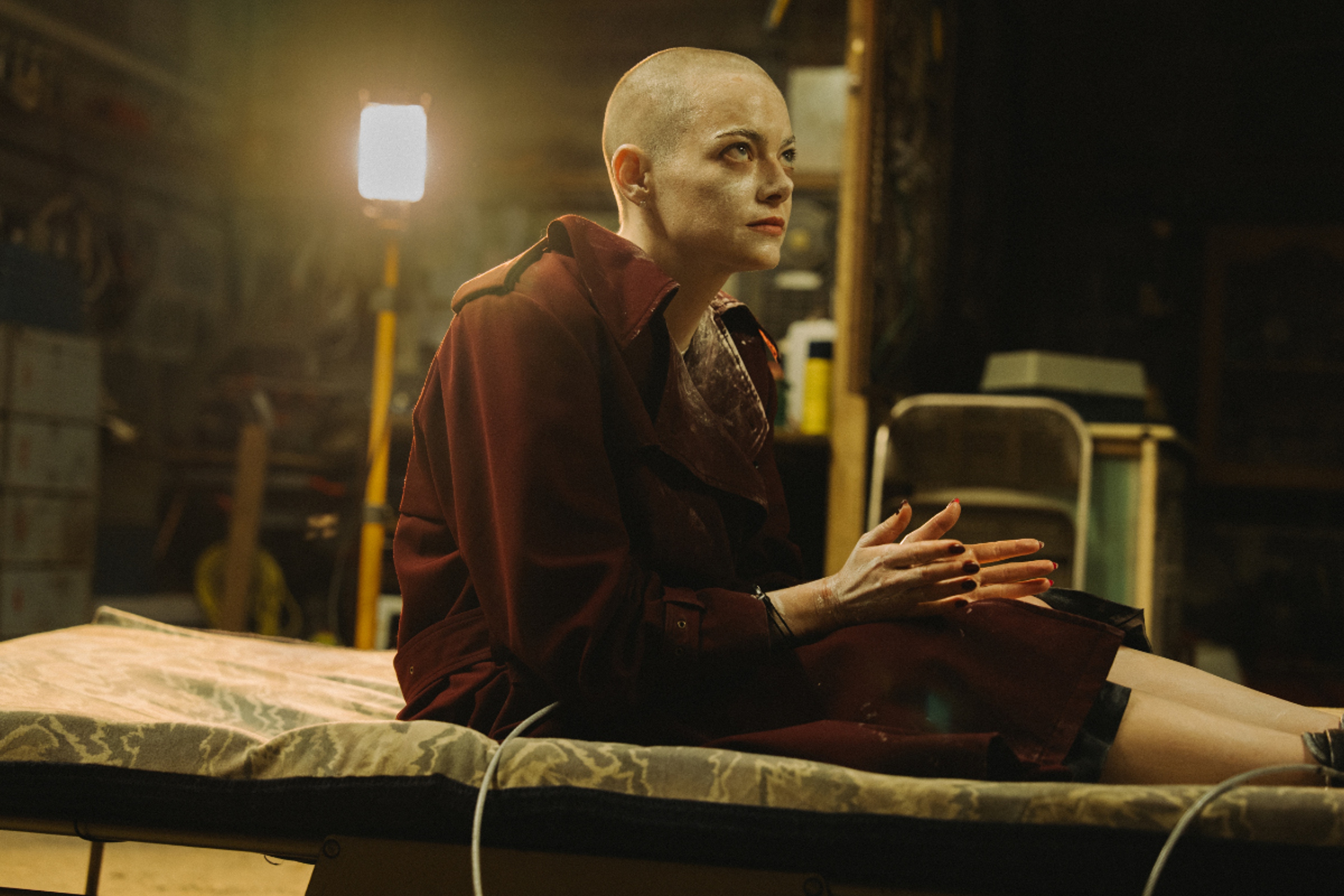
Emma Stone in Bugonia
Much of the film focuses on the struggle between Teddy and Michelle over their particular versions of reality. How did you use the camera work to convey that struggle?
It’s really apparent in our use of close-up shots. As we went back and forth between Teddy and Michelle, the camera creeped closer and closer. When the story is so smart and the performances are so on point, those increasingly tighter shots become completely engrossing in capturing their struggle.
It was a lot of work for the focus puller, Olga Abramson, who was under a lot of pressure to keep up— especially since Yorgos likes shallow focus. We got so close at points that the nose is in focus while the cheeks are blurred.
Lanthimos is such a visually creative director. How do you work with him?
The first time I worked with Yorgos was on The Favourite and I was quite nervous because he doesn't necessarily give you a lot of information. Onset, I was excited but unsure what would be the best way to suggest how to shoot a scene to him. At that time, Yorgos was taking a lot of stills on a digital camera. He took a picture, showed me the picture, and then asked me, “Should we shoot it like that?” It was great. When he’s on set, he’s choosing everything and I’m capable enough to keep up with him and get what he wants. That way he can relax and focus on the performances.
On set, everything is so natural, low key, and not complicated. Even in Poor Things, which was shot all in a studio but with no film lights. We used the natural daylight outside, or, if it's nighttime, we would use all the practical lamps in the location. I've adapted to that way of shooting and really enjoy it. And it's been a great learning curve for me. I've worked with other directors—like Ken Loach and Andrea Arnold—who have a similar aesthetic. They love to be able to be free and not have any constraints on set.
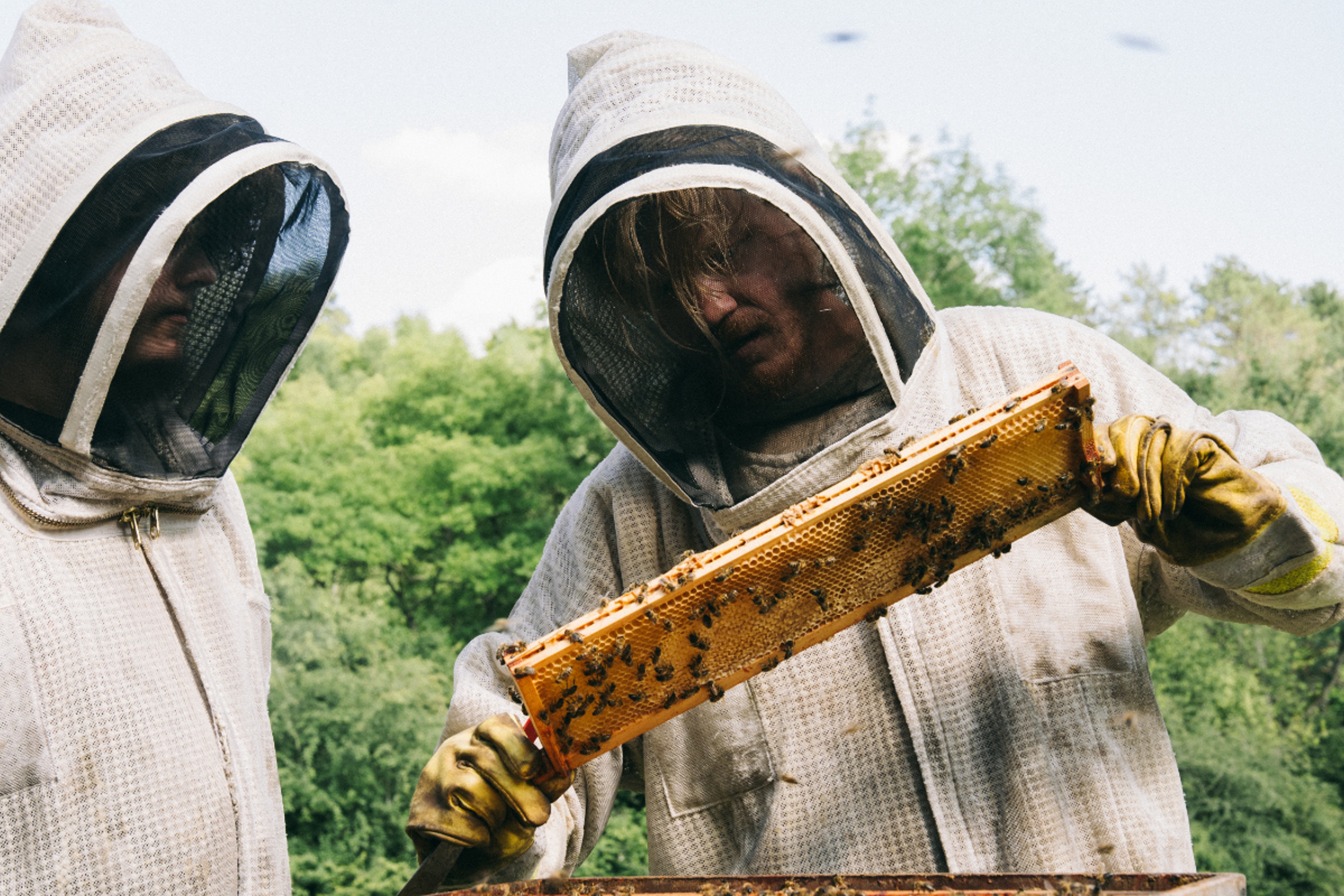
Aidan Delbis and Jesse Plemons in Bugonia
What was the most satisfying part of shooting this film for you?
The bees. We've got all these amazing actors, but the most petulant ones by far were the bees. Trying to get them to do what you wanted was a continually struggle. We placed a beehive on location for two to three weeks before shooting. By the time we shot, the bees were all settled in and there was a marked perimeter around the beehives that we were not allowed to cross because it might disturb them. We had beekeepers who kept them safe and even made sure it was quiet at different times. When it came time to shoot them, we had 30 crew members dressed up in beekeeper suits. It was a very hot summer's day and we felt like a bunch of space astronauts who had landed on a new planet. But the bees were not playing ball. It ended up being this funny day where we just sat down and waited for a bee to pollinate a flower which never happened.
Luckily, when we were filming in a completely different location, there were bees pollinating flowers by a security kiosk. We got the cameras out and we filmed all the bee shots there.
What do you hope audiences take away from the film?
Take care of the planet, man!
This interview has been edited and condensed for clarity.
