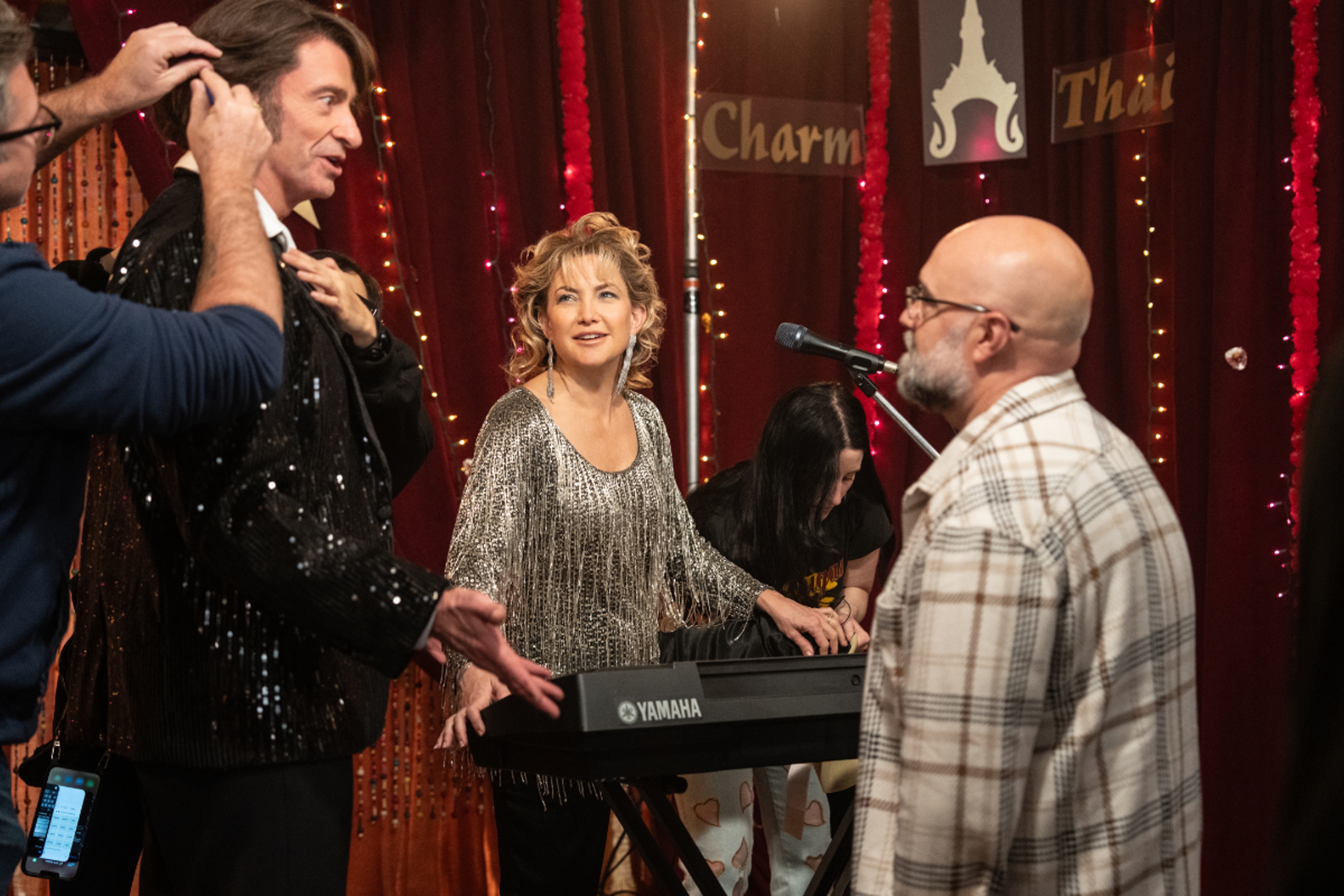
Bringing Lightning and Thunder to the Screen with Song Sung Blue
An exclusive Q&A with writer-director Craig Brewer
Adapted from Greg Kohs’ 2008 documentary of the same name, writer-director Craig Brewer’s Song Sung Blue brings to the screen the unforgettable real-life story of Mike and Claire Sardina (Hugh Jackman and Kate Hudson). While joining forces to form a Neil Diamond tribute band Lightning and Thunder, the two fell in love and married. Despite hard times and stage successes, the pair never let go of each other or their shared love for Neil Diamond.
Living in Memphis, Brewer makes music part of his life and films. From Hustle & Flow—which won an Academy Award® for Original Song—to his recent feature, Dolemite is My Name, Brewer uses music to move his characters and audiences. For Song Sung Blue, Mashable writes, “Through thoughtful storytelling, an impeccable cast, and a smartly chosen soundtrack that places the performances of Diamond's songs thematically, Brewer creates a drama that is uplifting, heart-wrenching, and wondrous all at once.”
We spoke with Brewer about the challenge of adapting a documentary, the enduring influence of Neil Diamond’s songs, and why this movie means so much to him.
Get tickets for Song Sung Blue—now playing in theaters everywhere!
The official trailer for Song Sung Blue
In adapting Greg Kohs’ 2008 documentary, what did you have to do?
It was very different from adapting a book or even just doing the life story of an important person. The documentary that Greg Kohs made involved people who nobody really knew. To adapt it, you have to find characters who are interesting and doing things that are compelling. In making the feature film, I identified certain elements that I thought were good set pieces or plot devices in the documentary. But really, the documentary provided me with a starting point from which to explore the subjects.
I got on a Zoom call with Claire Sardina and the kids to talk about their lives. I believed I knew how to get into the movie, but I needed to shorten the time span. I needed to compact a story that took 16 years to unfold to one that took about two or three years. I’ve adapted books before, but I will say adapting this documentary was not as easy as I thought it would be. I had to be creative and think of ways to bring into a single-scene things that might appear scattered. But I was so passionate about it that it felt good to do it right.
The story is remarkable in the way it incorporates so many different genres—musical, romance, drama.
I don’t know that my life, or anybody’s life, works in just one way. Some of my favorite songs, be they from The Beatles, Queen, or Eric Clapton, begin sad and build into something joyous. Neither a film, nor a song, needs to be a single tone. You can go from laughing to crying, as long as you're being honest and you approach the characters with respect.
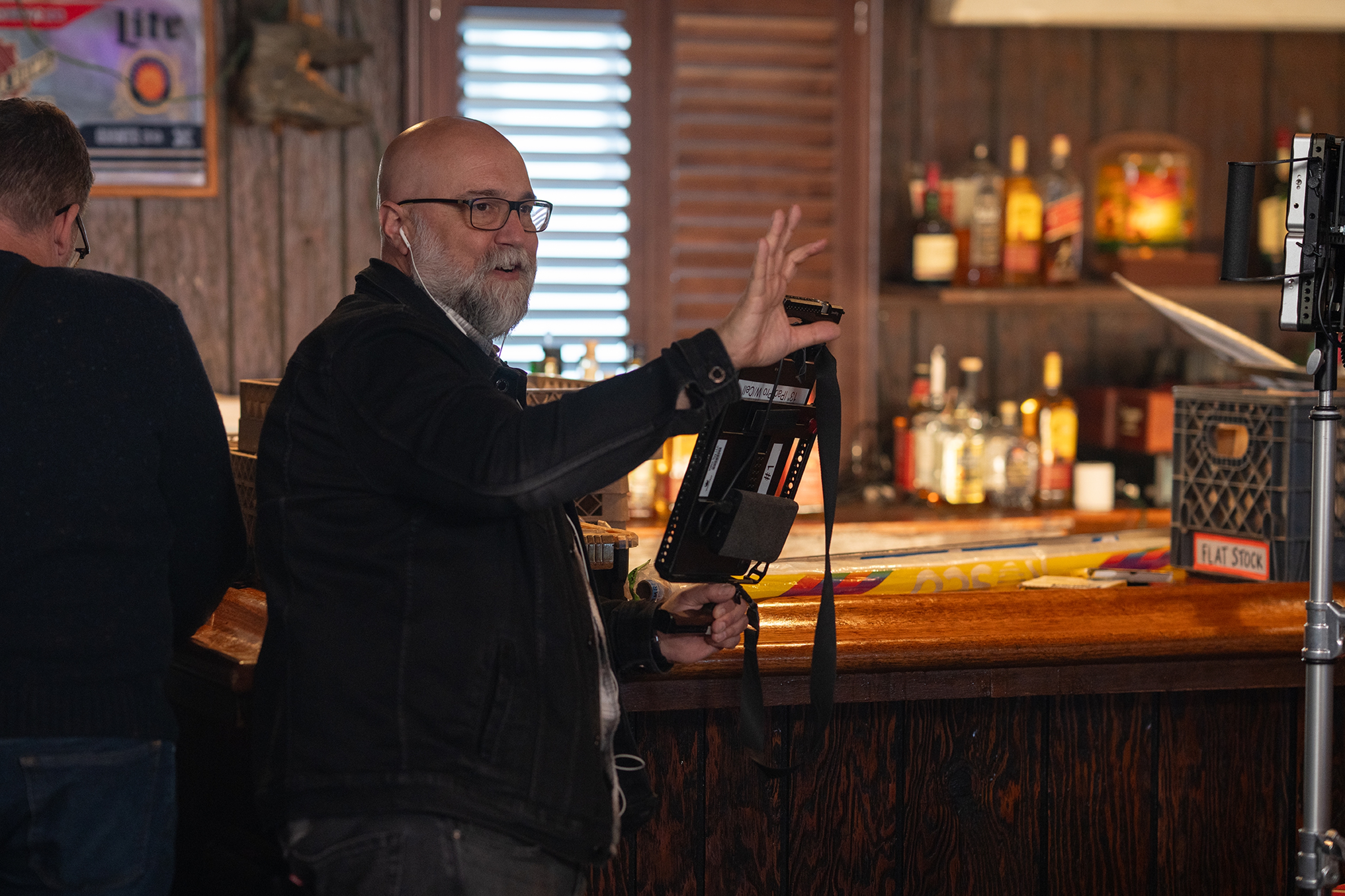
Craig Brewer on the set of Song Sung Blue
You wove the Neil Diamond songs so meaningfully into the fabric of the narrative. Can you talk about a few of them and how you placed them?
Early on, I felt that I would succeed as a storyteller if I could pay off what I saw in my head whenever I listened to the song “Holly Holy.” It’s a beautiful and majestic song. It starts off very simple, and then it builds into this emotionally rich, symphonic piece. I knew that I was going to use that song when Claire and Mike come back together after a traumatic experience. I felt that everything in the movie was going to be in service to that moment when we hear “Holly Holy,” including the incredible scene where they learn how to play “Play Me” or when they tour with “Sweet Caroline” or play “Forever in Blue Jeans” before an arena. It was all leading to “Holly Holy.”
The movie highlights how Neil Diamond’s songs have such a strong pull for audiences. Why do you think that is?
They are simple, but simple doesn’t mean easy. It doesn’t mean a lack of passion. Simple just means that it's mainlining something very true and very real. Neil Diamond's vocal range is so perfectly placed that anybody can sing along to his music. And I don’t mean that it’s a sing-along, even though he's got one of the most famous ones in history. If you are at a bar and “Sweet Caroline” comes on, you are going to sing out “bum, bum, bum” with everyone else. At the same time, a song like “I Am…I Said” is so perfectly itself. Lyrically it’s about confusion, isolation, and questioning one's identity. He sings it with such passion that when you sing along, you feel what he is writing about. That is what makes him such a great American songwriter. People just can't help but relate to his music.
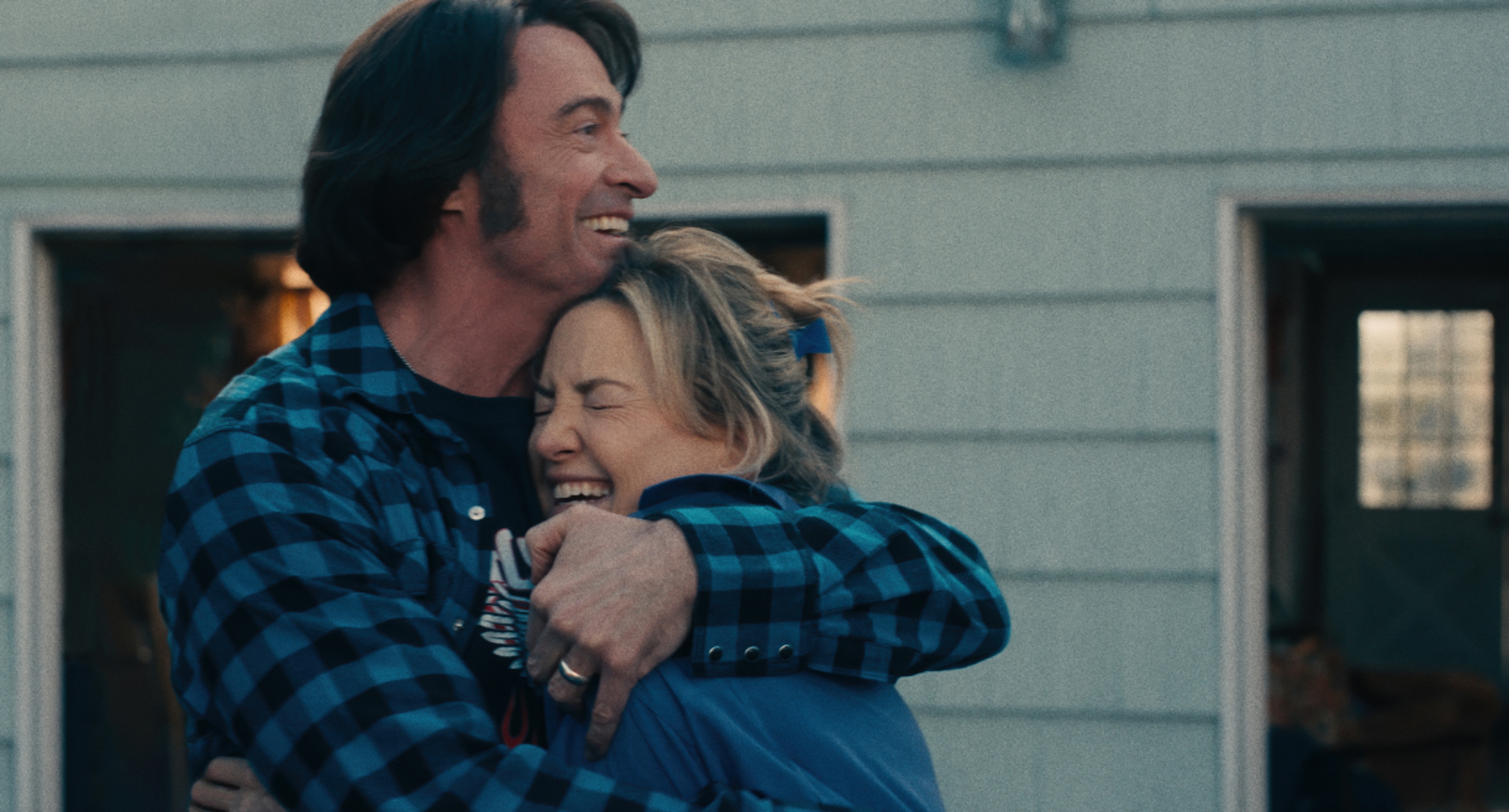
Hugh Jackman and Kate Hudson in Song Sung Blue
You have a moment when even Eddie Vedder joins them for a Neil Diamond number.
When the film takes place, Pearl Jam was huge and you would think, being a bit counterculture, they would not be into someone like Neil Diamond. I love that Eddie Vedder wanted to sing along with Neil Diamond because he loves great music and great songwriting.
How did you cast Hudson and Jackman for the leads?
From very early on, I saw Hugh as Mike Sardina. There are only a handful of people that could play Mike Sardina in terms of the vocal quality and being someone who people could relate to and have sympathy for. Hugh is the one that suggested Kate. I've known Kate for 20 years. I've been to her house numerous times with numerous scripts, trying to find the right project for us to do.
This one just came at the right time. Hugh told me to watch this interview in which Kate talked about how she wanted to stop waiting around for Hollywood to decide what roles she should play. She wanted to do music, write her own songs, and record an album. It was like she was auditioning for the film and didn’t even know it. Everything she was talking about in that interview was what Claire Sardina wrestled with.
The film glows like a classic Hollywood film. How did you get that special look in the film?
I can't say enough about Amy Vincent as a director of photography. What we do together is very special and unique because she is such a classic cinematographer. She produces such lush colors and fantastic saturation. But there’s also a bit of grit and grain that gives the film an element of lo-fi magic. Sometimes it's just slightly out-of-focus Christmas lights in the background. Sometimes it'll be an extreme close-up of somebody where you see all the lines in their face. She doesn’t glamorize who they are, but maybe in the distance, there might be a glowing orb of light just to remind you of the kind of magic that surrounds these characters.
How did you shoot the performances?
The concert sequences look electrifying. We got these late ‘80s PAR can lights and put gels on them instead of using LEDs that change color with a push of a button on your Bluetooth phone. When she lit the scenes, it suddenly felt like Purple Rain. It was like the movies I saw growing up. It's because somebody like Amy knows exactly what to do to achieve that. I can't say enough about our collaboration.
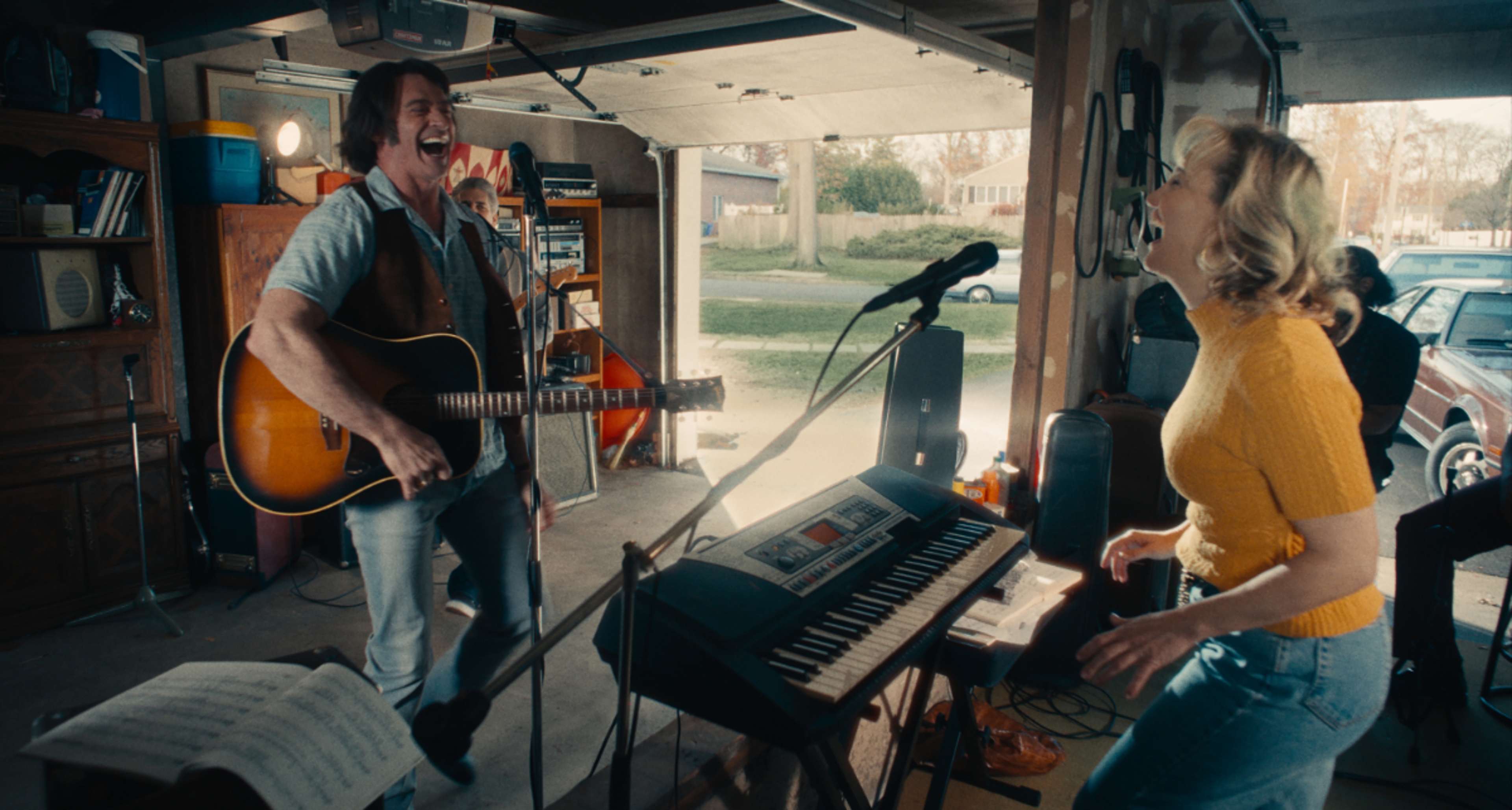
Hugh Jackman and Kate Hudson in Song Sung Blue
The film is clearly a period piece, but interestingly never feels like one.
The ‘90s were such an interesting time, especially when you deal with music. Grunge was basically a bunch of kids taking their dad's flannels and making them look cool with longer hair. You are dealing with a rejection of the ‘80s hair and faux leather and zipper. People embraced Nirvana and Soundgarden, but the music culture also loved Tony Bennett. They were like, “Don’t tell us who we are. We can love anybody.” To get the look of the film, we asked ourselves, “What is the heart of our movie?” When these characters get on stage, their costumes have sewing-machine sewed-in sequins that they put on their outfits. They wanted that glitz. They wanted that kitsch. They wanted that fun. The characters are very down-to-earth, grounded Midwesterners who lived normal lives but loved to perform.
How did you maintain a respect for the real people in the story?
Our crew was really devoted to the subjects in the story. Every day, I would talk to the crew, and sometimes they would be crying or shaking their head, saying, “I lived this. I felt what Mike Sardina felt.” In making the film, I received such support and grace from the family. From the start, I told them that as I develop this project, they are probably going to think, “That's not the way it happened.” I explained, “I have to take the whole expanse of your life, an opera-sized life, and condense it into the length of a pop song. I need to be sure we are telling the emotional truth and you need to assist me. Be my partner in this and give me stories that can fill in the story.” And they were there for the film.
What do you hope audiences take away from this film?
First and foremost, I hope families go see it. This is a movie you can take your parents and your kids to. It’s been a while since I’ve seen a film with so much feeling in it, where people are having a communal experience, and where they can laugh and cheer and cry and feel inspired. It’s a great film to experience with everybody.
This interview has been edited and condensed for clarity.
